Hindu-Muslim Clashes Rise in Nepal Amid Rising Tensions
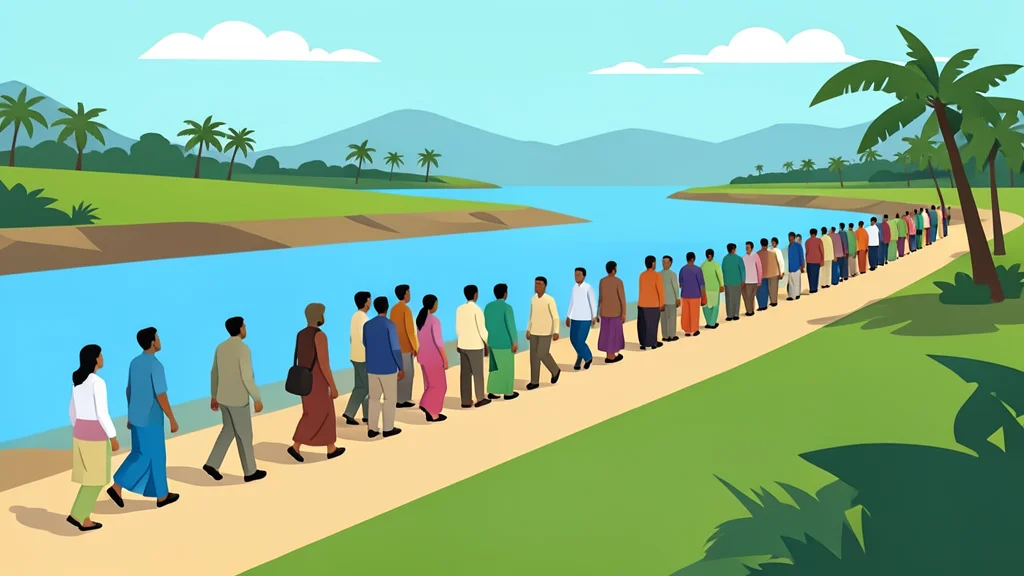
Violent clashes in Nepal's Tarai-Madhesh belt highlight a growing pattern of religious friction linked to broader regional political shifts.
Key points
- Four people died in clashes in Nepal's Tarai-Madhesh belt following a dispute over a Hindu procession in July.
- Nepal declared itself a secular state in 2015, ending its status as a Hindu kingdom, but retains protections for ancient religious practices.
- Hindu-Muslim clashes in Nepal have increased over the past decade, with two-thirds of documented incidents involving religious processions.
Violence flared across Nepal’s Tarai-Madhesh belt following a dispute over a Hindu religious procession in Sunsari district. The incident, which began with a scuffle between procession members and local residents, escalated into broader clashes where four people died and curfews were imposed to restore order.
According to The Diplomat, this event is part of a widening trend of Hindu-Muslim friction in the country. An investigation cited in the report identified 17 documented clashes over the past decade, with the majority involving religious processions or idol immersion rituals, suggesting a deepening polarization in communities that have historically coexisted with relative peace.
Historical Context of Secularism
Nepal’s legal status regarding religion has undergone significant transformation since its modern founding. While the 1962 constitution officially declared the nation a Hindu kingdom, the 2006 interim constitution and the subsequent 2015 charter formally established Nepal as a secular state, ending centuries of state-sponsored religious identity.
However, the 2015 constitution included a clause mandating the protection of religion and culture practiced since ancient times. This nuance has allowed conservative forces to reassert influence, particularly as the Maoist party lost electoral ground, creating a legal and cultural space for Hindu majoritarian ideas to gain traction.
Influence of Regional Politics
The rise of Hindu nationalist politics in neighboring India has exerted considerable pressure on Nepal’s internal dynamics. Following the election of Prime Minister Narendra Modi in 2014, there were open lobbying efforts in New Delhi to restore Nepal’s status as a Hindu state, coinciding with a period when Nepal was struggling to consolidate its secular republic identity.
India imposed a four-and-a-half-month blockade on Nepal during this period, a move widely interpreted as leverage to influence constitutional outcomes. Although the Hindu state status was not restored, the ideological spillover from India has continued, with Hindutva symbols and organizations reportedly making greater inroads into Nepali society.
Future Stability Concerns
Despite the historical harmony between Hindus and Muslims in Nepal, the recent increase in violent incidents suggests a fragile social fabric. The small Muslim minority, comprising about five percent of the population, faces heightened scrutiny and tension as religious identity becomes a more prominent political tool.
Observers are watching whether the Nepali government can enforce secular neutrality and prevent the escalation of religious conflicts. The coming months will be critical in determining if the state can maintain stability amidst these cross-border ideological pressures.