Xi's Washington Visit Leaves Europe Caught in Trade Crossfire
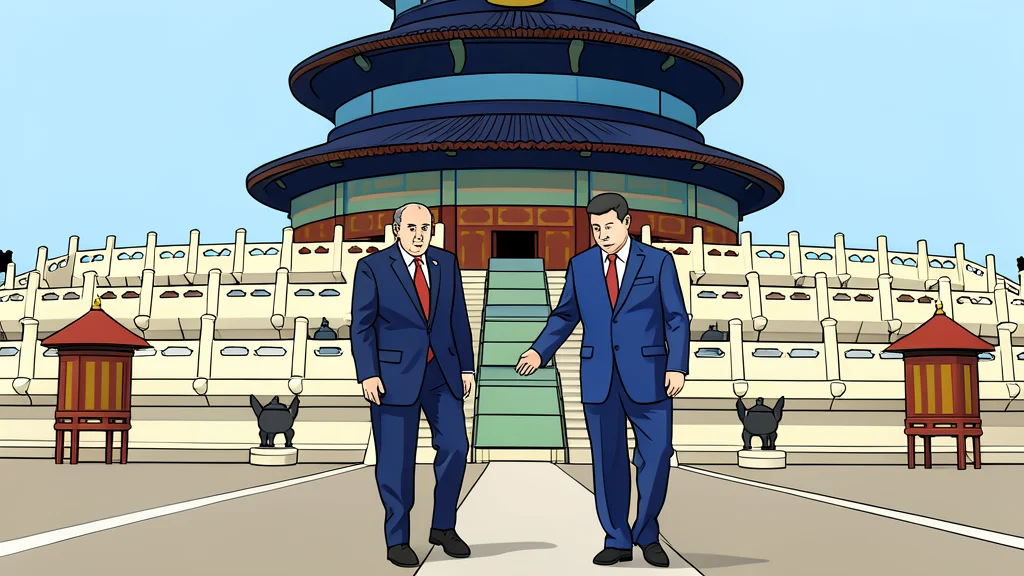
European leaders face a second industrial shock as US-China talks in Washington proceed amid ongoing strategic stalemate.
Key points
- Xi Jinping visits Washington this week for talks with Trump, with analysts describing the current state as a strategic stalemate.
- EU leaders warn of a second China shock driven by technological competition in batteries and green energy, threatening European industry.
- US and Chinese officials are discussing an AI notification mechanism to share security incident data amidst ongoing chip and rare earth export restrictions.
European policymakers find themselves increasingly squeezed between the erratic trade policies of the United States and the expanding export capacity of China. As President Xi Jinping travels to Washington this week for high-level talks with President Donald Trump, the European Union remains a key observer, though its influence over the outcome is limited.
According to Deutsche Welle, recent dialogues between German and Chinese business leaders in Düsseldorf highlighted the tension, with US-China rivalry remaining the dominant concern despite a focus on bilateral trade. The upcoming summit is viewed with cautious optimism, yet analysts suggest both Beijing and Washington are primarily seeking a strategic stalemate rather than a definitive breakthrough.
Strategic Stalemate Defines Current Dynamics
Mikko Huotari of the Berlin-based think tank MERICS described the current situation as a strategic stalemate where neither side requires an immediate resolution. He noted that Beijing operates on the assumption that the two powers will hold each other in check for the foreseeable future. This perspective aligns with reports that Xi Jinping seeks more time to consolidate domestic economic gains rather than a sweeping trade deal.
While a potential agreement could offer political advantages for the Republican party ahead of November’s midterm elections, such an outcome remains uncertain. Trump has indicated a willingness to discuss all topics during the visit, but the fundamental structural differences in economic policy continue to complicate any lasting resolution.
AI Competition Intensifies Global Tensions
The rivalry extends beyond traditional trade into the critical domain of artificial intelligence. The US government maintains export bans on high-performance chips, while Beijing restricts the export of rare earth elements essential for semiconductor production. These reciprocal measures have created a fragmented global technology landscape that complicates supply chains worldwide.
Despite these tensions, there is growing discussion regarding international guardrails for AI development. US Treasury Secretary Scott Bessent indicated that officials have explored creating a notification mechanism to share information on AI-related security incidents. This suggests a potential area of cooperation amidst broader competition over technological leadership.
Europe Faces Second Industrial Shock
European Commission President Ursula von der Leyen warned that a second China shock is already impacting the EU. Unlike the first shock driven by cheap consumer goods after China's WTO accession, this new phase stems from Chinese technological progress in batteries, green energy, and mobility. She described the resulting deindustrialization in European industrial heartlands as unsustainable.
The EU is navigating a complex policy path, seeking to transition to e-mobility while considering tariffs on low-cost Chinese electric vehicles. However, major European automakers like Volkswagen and BMW oppose punitive measures, citing the risk of retaliatory actions that could harm their own revenues. This internal division highlights the difficulty of formulating a unified European response.
A Chinese executive speaking anonymously at the Düsseldorf dialogue noted that China’s domestic consumption cannot absorb its current manufacturing output. This economic pressure drives an urgent need for foreign markets, placing additional strain on European industries that are already vulnerable to price competition. The coming weeks will test whether the US and China can manage this rivalry without further destabilizing the global economic order.