India and China Face Strategic Crossroads at BRICS

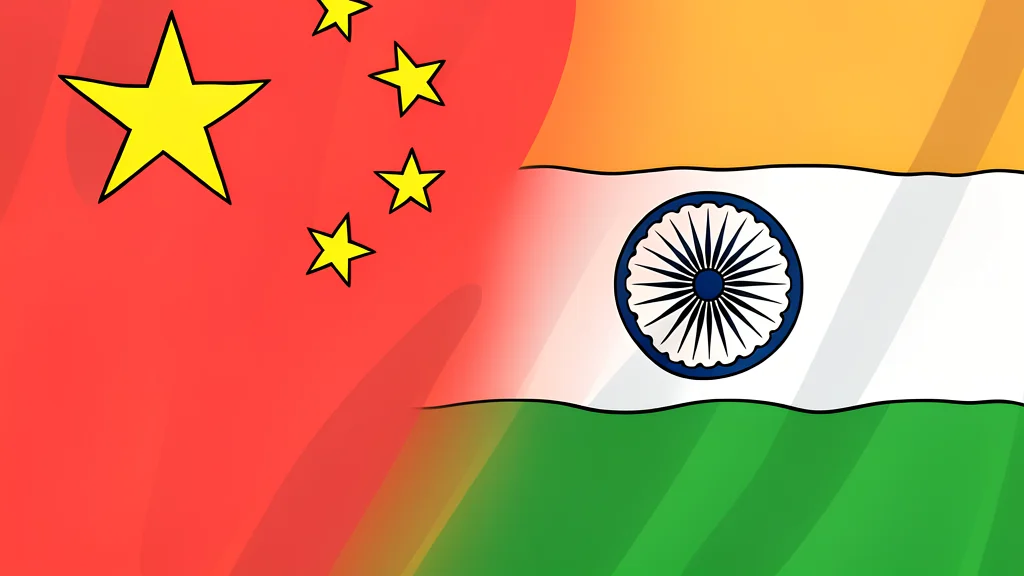
As Chinese President Xi Jinping arrives in New Delhi for the 18th BRICS Summit, political voices are urging both nations to prioritize resolving their long-standing border dispute to foster a more stable bilateral relationship.
Chinese President Xi Jinping has arrived in New Delhi to attend the 18th BRICS Summit, a visit that carries significant weight for bilateral relations. While the summit focuses on broader global cooperation, the unresolved territorial dispute along the Line of Actual Control (LAC) remains a central point of contention. According to Manish Tewari, a Congress member of parliament, settling this border issue is imperative if India and China wish to advance their partnership and play a greater role in global affairs.
Tewari noted that China has successfully resolved boundary disputes with ten of its twelve land neighbors, often through pragmatic negotiations. He highlighted that the process with Bhutan is ongoing, leaving India as the primary outstanding case. He argued that the current Special Representatives process has not made sufficient progress and that both nations need to ask what concrete steps are required to move beyond the current stalemate, especially as they seek to lead in Asia.
Reevaluating the Global South Concept
In his assessment, the expanded BRICS grouping may no longer strictly represent the Global South in the traditional sense. Tewari questioned whether major economies like China, Saudi Arabia, and the United Arab Emirates fit that classification given their economic scale and technological leadership. Instead, he suggested that BRICS has evolved into an issue-based coalition, bringing together nations that share interests in reforming international financial systems and establishing guardrails for emerging technologies.
This shift reflects a pragmatic approach to multilateralism in a turbulent global environment. By focusing on specific areas of convergence rather than broad ideological alignment, the bloc can address critical challenges such as global governance reforms. This perspective, reported by GN auto geopolitics/asia-pacific: India China border, underscores a move toward functional cooperation over rigid geopolitical categorization.
Strategic Implications for Regional Stability
The upcoming meeting between Prime Minister Narendra Modi and President Xi Jinping is expected to address these complex dynamics. While the BRICS summit provides a platform for dialogue, the underlying border tensions continue to influence the tone of bilateral interactions. Resolving these issues could pave the way for deeper economic and strategic ties, benefiting both nations and the broader region.
Diplomatic Watchpoints Ahead
Analysts will closely monitor the outcomes of the bilateral talks and any statements regarding the LAC dispute. The success of the 18th BRICS Summit in fostering concrete cooperation, particularly in technology and financial reform, will also be a key indicator of the bloc's evolving role. The coming days will reveal whether diplomatic efforts can translate into tangible progress on long-standing disputes.