India Links Ancient Wisdom to Modern Solar Expansion
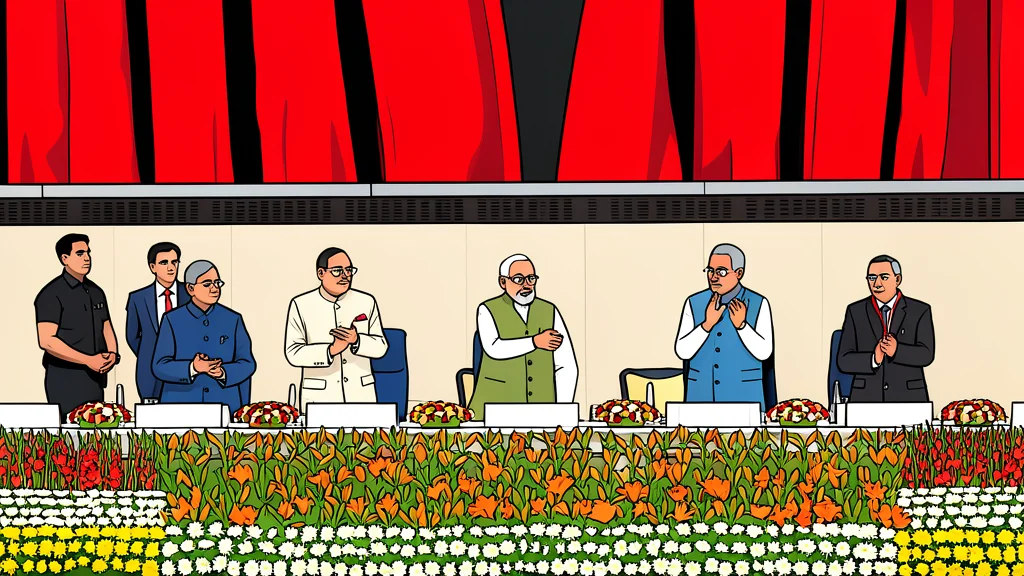
Prime Minister Narendra Modi framed India's climate strategy as a bridge between traditional ecological values and rapid renewable energy adoption during the inauguration of a major international conference in New Delhi.
Prime Minister Narendra Modi opened the International Conference on the Future of Environment and Climate Dynamics at Vigyan Bhawan, positioning India’s approach as a synthesis of historical cultural wisdom and contemporary technological execution. According to the Prime Minister, this blend allows the nation to address modern climate challenges while maintaining a distinct developmental trajectory that prioritizes both speed and sustainability.
The address emphasized a shift in the global narrative regarding carbon responsibility. Modi argued that historical emissions data often overlooks the per capita footprint of developing nations, noting that India’s contribution remains significantly below the global average. He highlighted that among G-20 members, India is the only country to have met its Paris Agreement commitments ahead of schedule, asserting that this performance is now a subject of international discussion.
Rethinking Global Carbon Narratives
Modi challenged what he described as a flawed international discourse that disproportionately blames developing countries for climate change. He pointed out that developed nations emit substantially more carbon per person than India, a disparity he argued is frequently ignored in global policy debates. By leveraging platforms like the International Solar Alliance and the Global Biofuel Alliance, the government aims to correct this perception and promote a more equitable view of environmental responsibility.
The Prime Minister cited specific initiatives such as the One Sun, One World, One Grid project and the International Big Cat Alliance as examples of India’s efforts to set new benchmarks. These multilateral frameworks are designed to foster cooperation while showcasing traditional environmental strengths, according to the remarks delivered at the conference.
Scaling Renewable Energy Infrastructure
A central focus of the address was the dramatic expansion of India’s solar capacity. Modi noted that the nation’s installed solar power has grown from two gigawatts a decade ago to over 160 gigawatts today. This growth has been driven by policies such as the PM Surya Ghar Muft Bijli Yojana, which has provided financial assistance to over five million households to install solar systems.
The government also highlighted the Kusum Yojana, which has facilitated the installation of solar pumps for three million farmers. Additionally, the completion of the One Nation-One Grid project has reportedly prevented 200 million tonnes of carbon emissions. These initiatives are part of a broader strategy to make homes centers of solar power generation and to diversify the energy mix.
Broadening the Clean Energy Mix
Beyond solar, the Prime Minister detailed significant advancements in wind and hydroelectric power, as well as a renewed focus on nuclear energy. He noted that the sector is now open to private players, a move intended to accelerate investment and innovation. These combined efforts have nearly quadrupled India’s non-fossil energy capacity in recent years.
The government also cited progress in cleaner coal technologies, such as gasification, and the launch of the country’s first hydrogen train. According to GN geopolitics/climate (en-US), these steps reflect a comprehensive approach to reducing carbon intensity across multiple sectors of the economy. The forward question remains how these domestic gains will translate into sustained influence on global climate negotiations.