Modi and Xi Prioritize Border Stability and Trade Balance in BRICS Talks
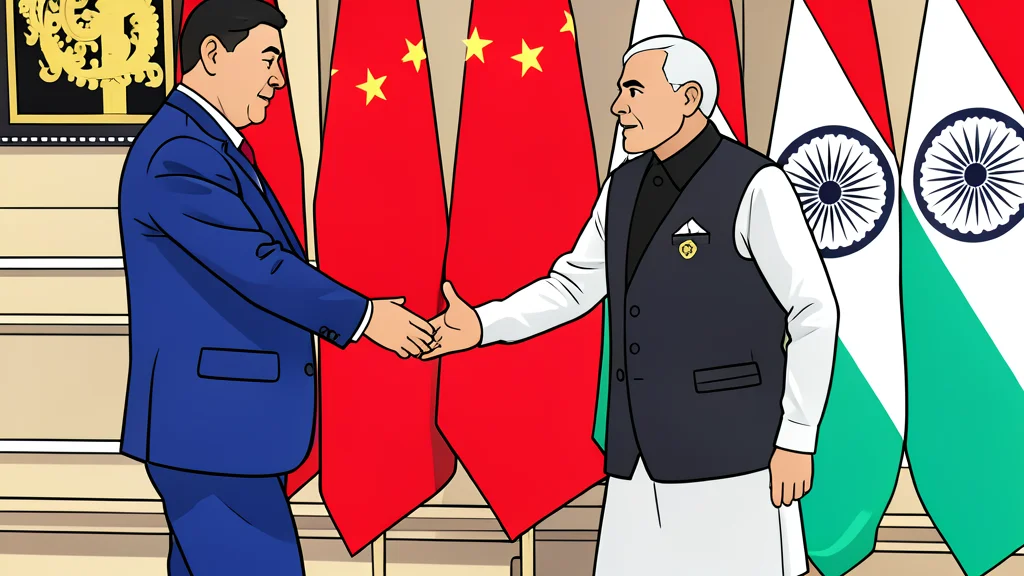
Leaders of India and China reaffirmed their commitment to long-term strategic cooperation during the BRICS Summit in New Delhi, focusing on border peace and economic reciprocity.
Prime Minister Narendra Modi and President Xi Jinping convened in New Delhi on Saturday to reaffirm the necessity of viewing India-China relations through a strategic and long-term lens. According to statements released by the Indian Ministry of External Affairs, both leaders emphasized that peace and tranquillity along the border are prerequisites for the continued development of bilateral ties. The discussion took place on the sidelines of the 18th BRICS Summit, where India also secured the adoption of the Delhi Declaration, a document outlining the grouping’s positions on global economic governance and security for the Global South.
The meeting serves to build upon the stabilization of ties observed since the previous encounter between the two leaders in Tianjin in August 2025. As reported by GN geopolitics/border, the latest talks are expected to provide a broader framework for improving economic relations. The agenda included addressing trade imbalances and enhancing the predictability of supply chains, with both sides committing to a fair and mutually acceptable resolution to boundary questions. The leaders agreed that existing differences should not escalate into disputes, adhering instead to established agreements on maintaining peace in border areas.
Addressing Structural Trade Imbalances
Trade remained a central component of the bilateral agenda, with specific attention directed toward structural imbalances. Data indicates that India-China bilateral trade reached $91.72 billion in the first half of 2026, yet the trade deficit widened to $67.1 billion. Chinese exports to India stood at $79.41 billion, significantly outpacing Indian exports of $12.31 billion. This disparity contributes to a wider challenge for New Delhi, which recorded a deficit of $226.1 billion in trade with BRICS countries in fiscal year 2026, a figure more than three times the level seen in 2021.
In response, New Delhi has repeatedly sought greater access to the Chinese market for key sectors such as pharmaceuticals and IT services. The Ministry of External Affairs noted that the two sides underlined the need to address these concerns while facilitating meaningful and predictable market access. By focusing on supply-chain issues and mutual economic interests, the leaders aimed to create a more balanced commercial environment that supports broader strategic cooperation.
Diplomatic Progress on Border Issues
On the boundary front, the leaders reaffirmed their commitment to a political resolution that is fair and reasonable. This stance follows a series of diplomatic engagements, including an August agreement between National Security Adviser Ajit Doval and Chinese Foreign Minister Wang Yi. That earlier consensus linked peace along the Line of Actual Control directly to the normalization of bilateral ties and included an eight-point framework for border management.
Xi Jinping highlighted the shared position of both nations as the world's most populous countries and key members of the Global South. He urged both sides to approach their relationship from a strategic perspective, keeping in mind its long-term development. Modi expressed gratitude for China’s support during India’s BRICS chairmanship and noted the opportunity to deepen bilateral cooperation. The visit marks Xi’s first trip to India in seven years, signaling a renewed effort to broaden engagement beyond immediate disputes.
Forward-Looking Economic and Social Ties
Beyond the core issues of border and trade, the leaders backed greater people-to-people exchanges and business linkages. This signals an intent to broaden engagement and foster mobility between the two nations. By prioritizing mutual respect, sensitivity, and interest, the two governments aim to stabilize their relationship. The focus on long-term development and the Global South suggests a desire to move away from reactive diplomacy toward a more structured and predictable partnership.
As the two nations look ahead, the success of these agreements will depend on the implementation of the discussed frameworks. Observers will watch for concrete steps in market access and border management protocols. The emphasis on strategic perspective and mutual benefit provides a foundation for future dialogue, potentially reducing tensions and enhancing economic integration in the coming months.