Myanmar Resistance Targets Junta Air Assets
Recent drone strikes on a key airbase signal a shift in Myanmar's conflict, challenging the military's long-held dominance of the skies.
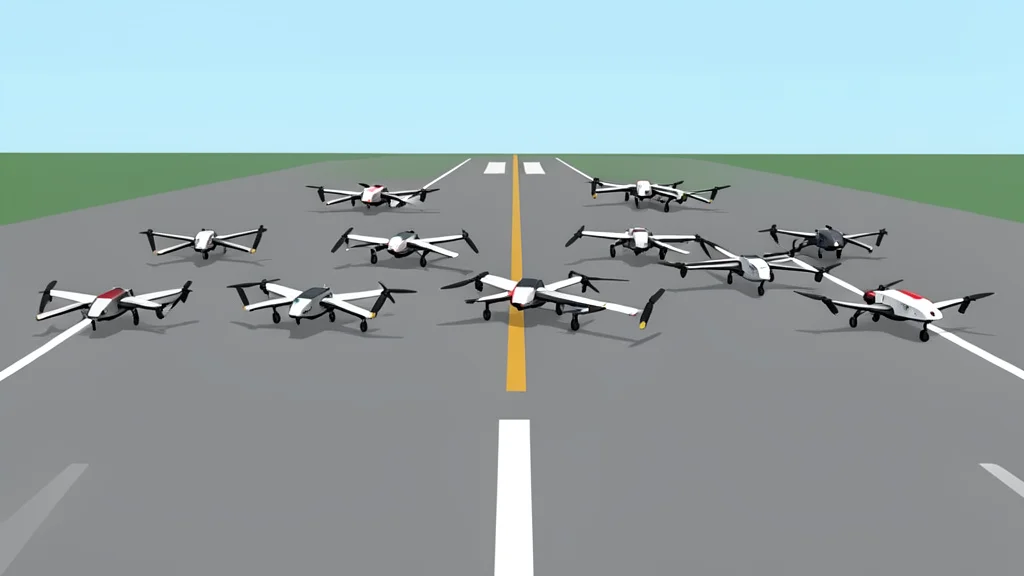
For more than five years, the Myanmar military has relied on air superiority to compensate for ground-level losses, using aircraft to strike resistance positions from safety. That dynamic was disrupted on September 10, when first-person-view drones targeted Tada-U Airbase, which shares infrastructure with Mandalay International Airport. According to the National Unity Government, the parallel civilian administration, the attack focused specifically on the military section where combat aircraft were stationed.
While state media claimed all six drones were intercepted without damage, the civilian airport remained closed for two days, highlighting the operational impact of the incident. This event marks a significant tactical shift, as resistance forces, which lack their own combat jets, have begun employing homemade unmanned systems to directly threaten the junta’s primary strategic asset. The move underscores a growing asymmetry in the conflict, where low-cost technology is challenging conventional military hardware.
Disputed Damage and Legal Claims
The military has accused the resistance of targeting civilian infrastructure, invoking international humanitarian law to frame the incident as a war crime. However, this legal posture stands in contrast to recent findings regarding the air force’s own conduct. The Independent Investigative Mechanism for Myanmar reported in August that there is a pattern of deliberate aerial attacks on civilian structures, including schools and hospitals. Critics note the irony of a force that has faced scrutiny for bombing residential areas now emphasizing compliance with Geneva Conventions.
A separate investigation by Myanmar Witness identified nearly one hundred incidents involving children in the recent months, with the Myanmar Air Force being the most frequently attributed actor. These reports suggest that while the junta seeks to legitimize its defense against drone strikes, it faces mounting evidence of its own violations in the ongoing campaign against resistance groups.
Shifting Tactics in the Air War
The strategic value of air power has allowed the junta to continue fighting in areas where ground troops cannot securely hold territory. According to ACLED, an independent conflict-monitoring group, air assets are increasingly used to clear paths for advancing troops and resupply isolated bases. By targeting the airfields that enable this capability, resistance forces aim to degrade the military’s ability to project force rapidly across the country.
Resistance units have adapted by assembling drones from commercial components, often of Chinese origin, and locally produced munitions. While the military possesses advanced counter-drone systems, including Russian-supplied air defense units and Chinese-made jammers, the decentralized nature of the drone attacks makes them difficult to fully neutralize. This evolution suggests that the conflict is moving toward a more complex aerial dimension, where both sides are experimenting with new technologies.
Expanding Scope of Unmanned Strikes
The use of drones is not limited to airfields. Reports indicate that forces led by the Kachin Independence Army have employed similar technology against military flotillas on the Irrawaddy River. These attacks reportedly damaged or destroyed significant portions of a convoy transporting troops and supplies. The expansion of drone usage to riverine operations suggests a broader application of unmanned systems across different theaters of the conflict.
As the resistance continues to refine its use of low-cost aerial assets, the junta faces a multi-front challenge to its logistical and offensive capabilities. The forward question now centers on whether the military can protect its remaining air assets and whether the resistance can sustain production of effective drones. Observers will watch for further incidents involving civilian infrastructure and the extent to which international bodies validate allegations of war crimes on both sides.