Pinglu Canal Opens as New Fishing Season Begins
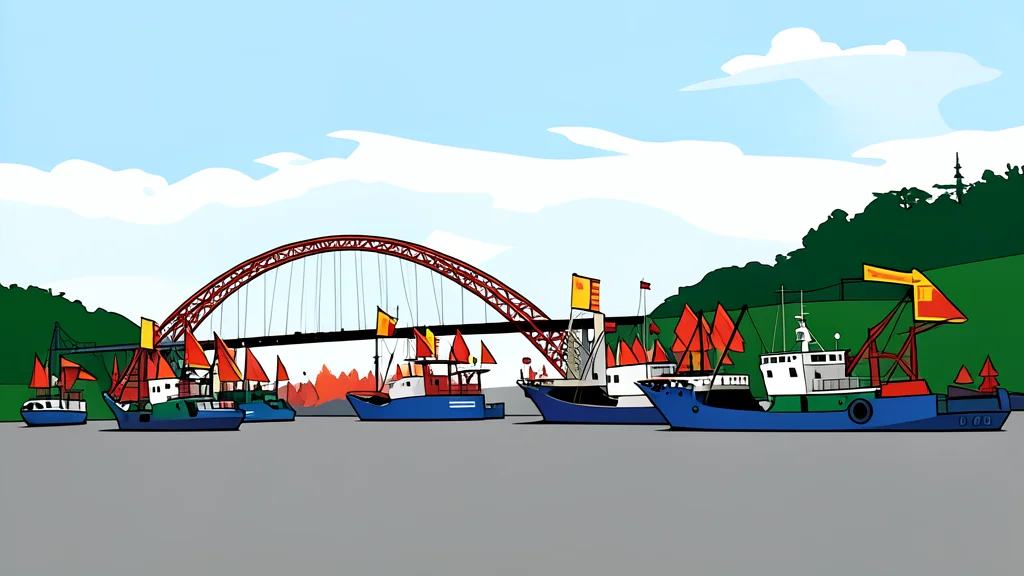
China has simultaneously resumed commercial fishing activities and inaugurated a major inland waterway, signaling a dual push toward maritime security and trade efficiency.
China marked a significant shift in its maritime and trade infrastructure this week with the simultaneous resumption of the annual fishing season and the opening of the Pinglu Canal. These two developments, occurring within days of one another, highlight the country's dual focus on securing domestic food supplies while expanding logistical pathways to international markets. The timing underscores a strategic alignment between traditional maritime industries and modern trade corridors.
According to reports from GN auto geopolitics/asia-pacific: South China Sea, the new fishing season commenced after a four-month summer moratorium, allowing vessels to return to the Yellow and East China seas. Concurrently, the 134.2-kilometer Pinglu Canal, a project costing approximately 10.83 billion U.S. dollars, officially began operations to connect the inland region of Guangxi to the Beibu Gulf. This infrastructure aims to provide a direct logistics shortcut for southwestern China to access Association of Southeast Asian Nations markets.
Resumption of Maritime Operations
The reopening of the fishing season was marked by a formal departure ceremony in Ningbo, Zhejiang Province, where over 1,000 vessels set sail for the East China Sea. Maritime and border inspection authorities were present to oversee the orderly departure, emphasizing the state’s continued focus on managing maritime activities. Fishermen had spent months preparing their vessels, repairing hulls, and stocking provisions for voyages that could last up to a month at sea.
This resumption completes the return of commercial fishing across all four major seas under Chinese jurisdiction, including the Bohai, Yellow, East China, and South China seas. The first catch from this new season is expected to reach consumers within days, signaling the end of the summer break. The coordinated nature of the departure, involving both commercial and patrol vessels, reflects the structured approach China takes to regulating its maritime industries.
Inland Logistics Expansion
The Pinglu Canal represents the first national-level river-to-sea project since 1949, designed to integrate southwestern China’s inland regions into global supply chains. The canal runs from Nanning to the Beibu Gulf, aligning with the New International Land-Sea Trade Corridor. Its opening is intended to reduce transportation costs and improve the flow of goods such as steel, auto parts, and chemical materials from China’s interior to coastal hubs.
The inaugural cargo shipment via the canal is expected to arrive at Vietnam’s Can Tho Port, a key hub in the Mekong Delta. This route facilitates direct trade between China and its largest ASEAN trading partner, Vietnam. The canal’s operation complements Vietnam’s efforts to upgrade its port infrastructure, including the construction of bonded warehouses and cold chain facilities to handle increased trade volumes.
Regional Trade Implications
China and ASEAN have maintained their status as each other’s largest trading partners, with annual volumes reaching 1.04 trillion U.S. dollars. The new canal is expected to further solidify these economic ties by offering an efficient alternative to land-based transport. For Vietnam, the increased connectivity promises to boost exports of fruits and aquatic products to the Chinese market, leveraging the canal’s direct maritime access.
The convergence of these two events—maritime resumption and canal opening—illustrates China’s broader strategy to enhance its logistical reach while maintaining control over its maritime zones. As the first vessels return with their catch and the first cargo ships navigate the new waterway, the region’s economic and strategic landscape shifts. Observers will closely monitor how these new routes affect trade dynamics in the South China Sea and beyond.