Yemen Conflict Displaces 57,000 Children in Two Weeks

Renewed fighting in western Yemen has displaced tens of thousands of families, severely disrupting access to healthcare and education for children.
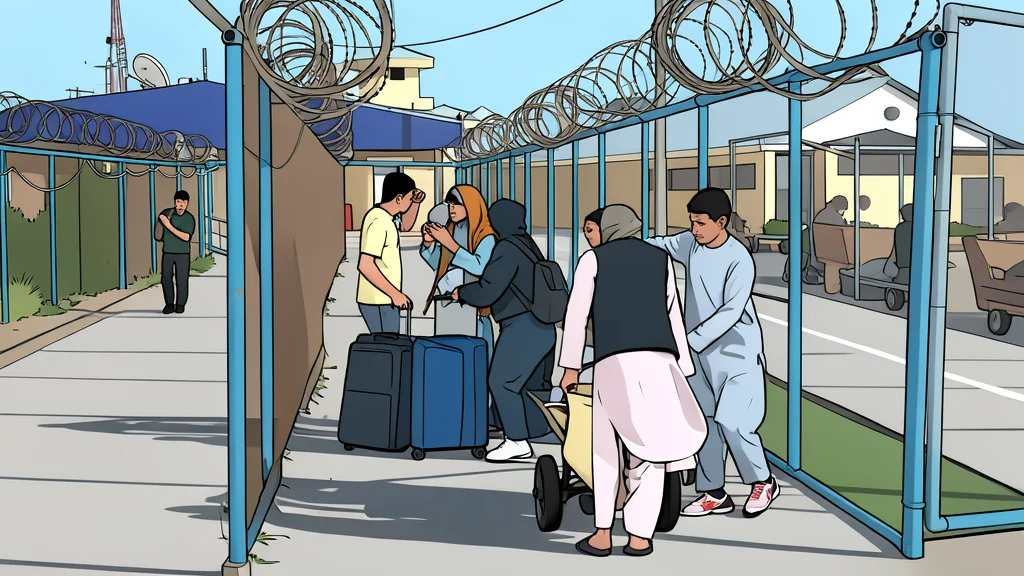
Renewed hostilities across Yemen have triggered a sharp escalation in displacement, forcing more than 104,000 people to flee their homes in the last two weeks. According to UNICEF, over 57,000 of those displaced are children, marking a significant deterioration in an already fragile humanitarian landscape. The agency reported that at least nine children have been killed and twelve injured since September 3, while three others are missing following an attack on a route connecting the western coast to Aden.
The violence, concentrated in western Taiz, southern Hudaydah, and Marib, has severed critical links between communities and essential services. Twenty-six health facilities supported by UNICEF have faced service disruptions, and 243 schools have either closed or suspended learning. This disruption affects more than 137,000 students, compounding the long-term developmental impacts of the ongoing conflict on the younger generation.
Emergency Response Expands Across Regions
In response to the escalation, UNICEF is expanding its emergency operations to assist up to 231,000 affected individuals. Assistance is currently being delivered in Taiz, Marib, and Aden, where mobile health and nutrition teams have been redeployed to displacement sites. The organization is distributing hygiene kits, water tanks, and providing urgent repairs to damaged water and sanitation systems, aiming to reach more than 200,000 people with safe water and basic hygiene supplies.
Child protection teams are simultaneously active in these regions, offering psychosocial care and case management services. Special attention is being directed toward unaccompanied and separated children, while community-based programs are working to mitigate risks posed by explosive ordnance. These efforts are part of a broader strategy to stabilize daily life for families who have fled with only what they could carry.
Cross-Border Migration Intensifies
The impact of the conflict is extending beyond Yemen’s borders, particularly through the Bab el-Mandeb Strait. More than 2,000 individuals, including a large number of children, have arrived in Djibouti after undertaking dangerous crossings. These journeys are marked by extreme heat, dehydration, and significant protection risks. UNICEF is coordinating with local authorities to support these newly arrived families with immediate needs such as safe water, hygiene services, and referrals for vulnerable children.
Deepening Humanitarian Deficits
The current escalation exacerbates a crisis that was already severe. Before the recent fighting, an estimated 12.2 million children in Yemen required humanitarian assistance. Over 2.2 million children under the age of five suffer from acute malnutrition, with more than 515,000 facing severe cases. Additionally, 3.2 million school-aged children are out of education, and around 17.8 million people lack adequate access to healthcare, water, and sanitation services.
Edouard Beigbeder, UNICEF Regional Director for the Middle East and North Africa, noted that many children in Yemen have known little but conflict and displacement. He emphasized that this latest violence is eroding the limited stability that had remained for families enduring years of hunger and disrupted schooling. The organization reiterates the call for all parties to the conflict to protect civilians, comply with international humanitarian law, and facilitate safe and unimpeded humanitarian access.
Forward Outlook and Monitoring
As the situation remains fluid, observers are watching the capacity of humanitarian corridors to remain open amid continued hostilities. The effectiveness of the expanded emergency response in Taiz, Marib, and Aden will be a key indicator of whether immediate needs can be met. Furthermore, the flow of refugees into Djibouti and the potential for further displacement in western Yemen will require sustained international attention and resource allocation.