South Korea Convenes High-Level Security Meeting on Counter-Terrorism
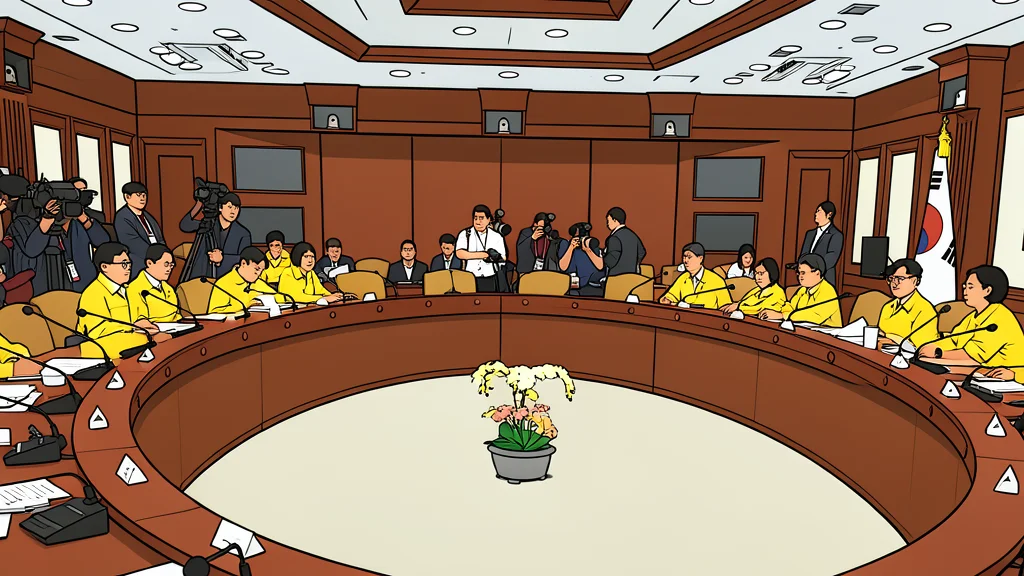
Prime Minister Han Seong-sook chaired the National Terrorism Countermeasure Committee in Seoul, signaling a renewed focus on domestic security protocols.
The South Korean government has convened a high-level security session to review national counter-terrorism strategies. Prime Minister Han Seong-sook presided over the gathering of the National Terrorism Countermeasure Committee, held at the government complex in Seoul on September 16, 2026. The meeting underscores the administration's priority to maintain robust defensive frameworks against potential threats.
According to reports from the GN geopolitics/terror desk, the session took place amidst a broader context of regional diplomatic engagements. The timing of the committee's assembly suggests a coordinated effort to ensure that security measures remain aligned with current geopolitical realities. Officials likely discussed intelligence sharing mechanisms and internal coordination protocols to enhance the nation's resilience.
Strategic Context of the Session
The convening of the committee occurs alongside significant diplomatic activities, including the South Korea-Central Asia Summit. This juxtaposition highlights the multifaceted nature of the government's agenda, which balances international partnership with domestic security imperatives. By addressing terrorism concerns during this period, the leadership aims to demonstrate a comprehensive approach to national safety that encompasses both external and internal dimensions.
While specific details of the discussions were not fully elaborated in initial reports, the presence of the Prime Minister indicates the high stakes attached to the agenda. Such meetings typically involve a review of threat assessments, resource allocation, and the operational readiness of security agencies. The emphasis on counter-terrorism reflects a standard procedure for maintaining public confidence and ensuring the continuity of state functions in a complex security environment.
Institutional Coordination and Oversight
The National Terrorism Countermeasure Committee serves as a central body for coordinating efforts across various government agencies. Its primary role is to foster inter-agency cooperation, ensuring that intelligence, law enforcement, and emergency response units operate in a unified manner. This structural framework is designed to prevent gaps in security coverage and to streamline decision-making processes during potential crises.
According to the GN geopolitics/terror desk, the institutional approach prioritizes preventive measures and rapid response capabilities. The committee's work often involves updating legal frameworks and technological infrastructure to address evolving threat vectors. By maintaining a dedicated forum for these discussions, the government seeks to institutionalize a culture of vigilance and preparedness within the public sector.
Forward-Looking Security Priorities
Looking ahead, the focus is expected to remain on integrating counter-terrorism strategies with broader national security policies. Stakeholders will likely monitor the implementation of any new directives or operational adjustments arising from the committee's deliberations. The coming weeks may see increased public communication regarding safety measures, reflecting the government's commitment to transparency and public assurance.
Observers should watch for any subsequent announcements regarding budget allocations for security agencies or changes in inter-agency protocols. The sustained attention to this topic suggests that counter-terrorism will remain a central pillar of the administration's domestic agenda, influencing both internal policy development and external diplomatic engagements.