Ukraine Urges Asian States to Close Sanctions Loopholes
Kyiv’s special envoy warns that Asian supply chains are inadvertently feeding Russian defense capabilities while pressing for stricter enforcement of economic measures.
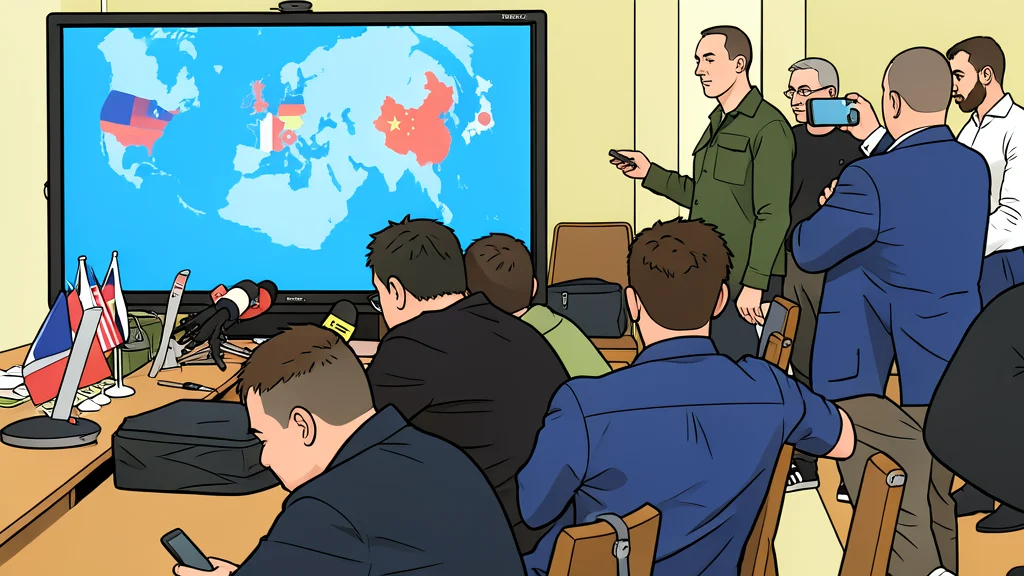
Ukraine’s commissioner for sanctions policy has arrived in Singapore to urge Asian governments to tighten oversight of commercial flows that may be inadvertently supporting the Russian war effort. Vladyslav Vlasiuk stated that halving Moscow’s oil revenues could force a significant retreat in the conflict within six months, a claim he presented to media at the Ukrainian embassy. He emphasized that economic pressure remains the most effective lever to compel Moscow toward serious peace negotiations.
The visit highlights growing concerns that the region has become a critical weak link in the global sanctions architecture established by the United States, the European Union, and the G7 since 2022. According to files reviewed by CNBC, components recovered from a recent missile incident in the Kyiv region originated from multiple countries, including China, Japan, and Taiwan. This evidence suggests that global supply chains remain deeply embedded in Russian weapons production despite years of export controls.
Shadow fleets obscure oil origins
Vlasiuk noted that Indian and Chinese refiners have absorbed much of the discounted Russian crude, allowing Moscow to maintain cash flow even as Western price caps tightened. Southeast Asian ports and free-trade zones have emerged as key waypoints for ship-to-ship transfers, a practice that obscures the origin of sanctioned cargos. He plans to meet officials in Malaysia, Indonesia, Japan, and Thailand to discuss these "shadow fleet" operations, which bypass Western companies to avoid imposed price ceilings.
The envoy warned that the risk extends beyond direct sales to Russia, cautioning that loose controls on mechanical and electronic goods could allow items to reach the military-industrial complexes of states like Iran and North Korea. He described the current situation as a complex web of re-exports where standard compliance measures are insufficient to track the final destination of high-value components.
Escalation in the gray zone
Beyond economic issues, Vlasiuk warned against underestimating Moscow’s willingness to operate below the threshold of open conflict with NATO members. European authorities have linked a rise in drone incursions, sabotage incidents, and cyberattacks across the continent to Russian actions in recent months. These "gray-zone" tactics are seen as an attempt to unsettle regional governments while Russian forces struggle to gain ground in Ukraine.
The Ukrainian envoy urged Asian nations to view the situation with heightened seriousness, stating that the geopolitical landscape has fundamentally shifted. He argued that a coordinated, robust response is necessary to counter these hostile acts and that the previous era of casual engagement with Moscow is no longer viable.
Forward look for regional policy
The outcome of these diplomatic efforts will depend on the willingness of Asian partners to implement stricter verification of export licenses and shipping manifests. Observers will watch for any new bilateral agreements or enforcement mechanisms that target the specific loopholes identified in the shadow fleet and microelectronics sectors. The effectiveness of these measures will likely determine whether the economic pressure required to alter the conflict’s trajectory can be sustained.