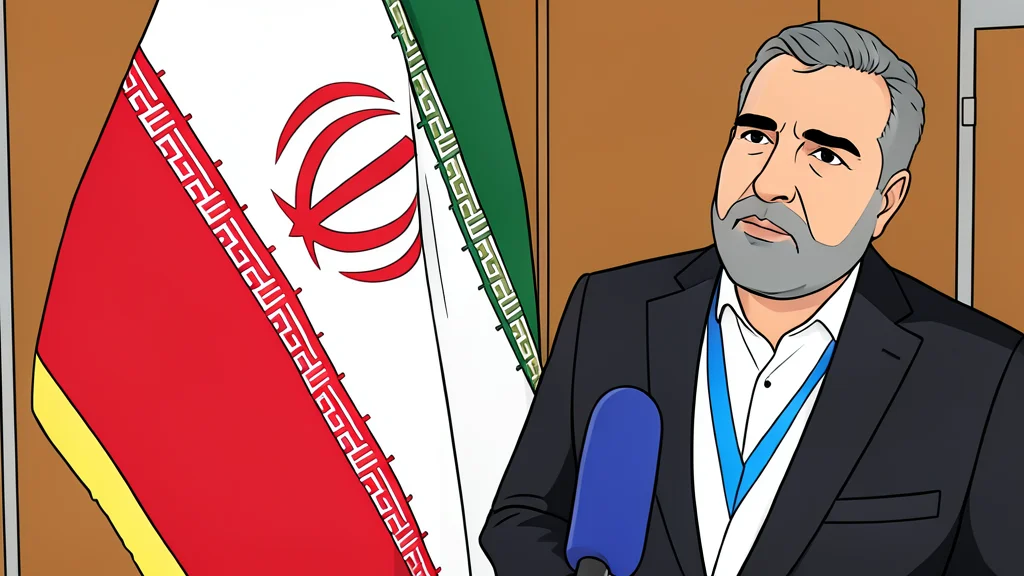
Iran Asserts Nuclear Resilience Amid IAEA Scrutiny

At the IAEA General Conference, Iranian officials emphasized that their nuclear program is resilient to external pressure, highlighting domestic scientific achievements and criticizing perceived double standards in international oversight.
Tehran has signaled that its nuclear infrastructure remains robust and capable of withstanding external pressures, according to statements made by Behrouz Kamalvandi, the spokesman for the Atomic Energy Organization of Iran. Speaking at the 70th General Conference of the IAEA in Vienna, Kamalvandi outlined the country's stance, asserting that decades of sanctions and political pressure have not derailed its scientific trajectory. He framed the current posture as a result of past diplomatic failures, specifically citing the United States' withdrawal from the 2015 nuclear deal as a catalyst for strengthening indigenous capabilities.
The address, reported by GN auto geopolitics/middle-east: Iran nuclear, focused on the continuity of Iran's nuclear activities despite recent conflicts and ongoing sanctions. Kamalvandi argued that while the nation has faced over 25 years of international restrictions, it has consistently adhered to its commitments under previous agreements. This narrative positions the expansion of local nuclear technology not as a deviation from international norms, but as a necessary response to the perceived unreliability of foreign partners in safeguarding Tehran's interests.
Criticism of International Oversight
Kamalvandi directed sharp criticism toward the International Atomic Energy Agency and its leadership, accusing the body of acting with political motives rather than strict technical neutrality. He questioned why the agency had not issued strong condemnations regarding reported military attacks on Iranian nuclear facilities by the United States and Israel. According to the spokesman, this lack of robust international response has reinforced Tehran's view that reliance on external guarantees is insufficient, prompting a shift toward self-reliance in nuclear defense and development.
The official also challenged the interpretation of security measures taken to protect sensitive sites. He stated that the underground location of certain facilities is a standard security protocol and should not be viewed as an attempt to conceal activities from inspectors. Kamalvandi maintained that these sites remain accessible to IAEA teams, emphasizing that physical protection of infrastructure is distinct from the transparency required by international agreements.
Domestic Scientific and Medical Gains
Beyond the geopolitical debate, the spokesman highlighted the practical applications of Iran's nuclear technology in civilian sectors. He detailed achievements in electricity generation and industrial applications, with a particular focus on the advancement of nuclear medicine. Kamalvandi noted that the country has developed a diverse portfolio of radiopharmaceuticals, supplying more than 76 distinct products to over 230 medical centers across the nation. These examples were presented to demonstrate that the nuclear program serves vital domestic needs beyond energy production.
Strategic Resilience and Future Outlook
Concluding his remarks, Kamalvandi reiterated that attacks on knowledge-based companies and nuclear sites would not halt the country's scientific progress. He invoked the historical narrative of national independence, suggesting that the Iranian public is prepared to endure significant hardships to maintain its sovereignty and technological autonomy. The spokesman reaffirmed the official state position on non-proliferation, citing the leadership's stance that nuclear energy should be available for peaceful purposes while nuclear weapons remain rejected.
As the IAEA conference continues, observers will likely monitor how these assertions align with upcoming inspection reports and diplomatic engagements. The emphasis on domestic capability and resilience suggests that Tehran intends to decouple its nuclear trajectory from short-term diplomatic pressures, potentially influencing future negotiations and the agency's approach to monitoring Iranian facilities.