Taiwan’s Shifting Sovereignty Claims Offer Beijing a Narrative Opening
Inconsistent responses to maritime disputes allow Beijing to frame Taiwan’s status as a settled historical issue rather than an ongoing legal debate.
Key points
- Taiwan’s inconsistent responses to maritime disputes allow Beijing to strengthen its historical and legal narratives regarding sovereignty.
- Beijing erected a monument in Cairo citing the 1943 Cairo Declaration to assert that Taiwan’s status is settled by post-war international law.
- Taipei’s restrained approach to overlapping claims in the South China Sea is viewed as short-term prudent but lacking a consistent doctrinal principle.
Taipei’s varying diplomatic responses to maritime disputes are providing Beijing with a coherent narrative advantage. According to analysis from aspistrategist.org.au, the lack of a consistent doctrine in how Taiwan asserts its sovereignty creates an opening for China to reinforce its historical and legal claims on the international stage.
The inconsistency is evident in how Taipei has reacted to different incidents in the same maritime space. While the Mainland Affairs Council sharply condemned recent Chinese-Indonesian naval exercises as an attempt to create false jurisdiction, its initial response to Japan and the Philippines negotiating overlapping claims was markedly more restrained. This contrast suggests that calibration is not the primary issue, but the absence of a governing principle for sovereignty assertions is.
Calibration without a clear doctrine
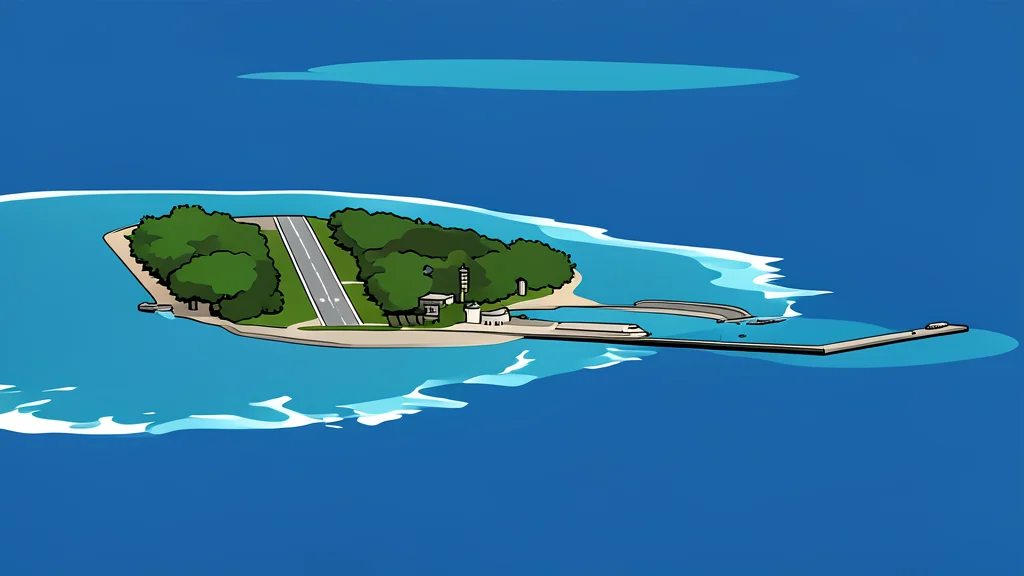
The pattern of delayed and reactive sovereignty claims has recurred in recent months. During the anniversary of the South China Sea arbitration ruling, the government’s posture was initially restrained until opposition lawmakers pressed the issue in the legislature. It was only then that Foreign Minister Lin Chia-lung explicitly affirmed that Taiping Island is an island, a distinction critical for generating a 200-nautical-mile exclusive economic zone under international law.
Officials acknowledged that a low profile was maintained to avoid complicating relations with potential partners, given the substantial overlap between Taiwan’s and China’s claims in the South China Sea. While this restraint may serve short-term diplomatic interests, the analysis argues that without a clearly articulated principle, it risks appearing as selective commitment rather than strategic prudence.
Beijing leverages historical legal narratives
China is actively shaping the international understanding of Taiwan’s status through multiple channels. Beyond visible gray-zone military pressure, Beijing is working to reinforce historical narratives through physical and diplomatic means. In May, a monument was erected at the Mena House Hotel in Cairo commemorating the 1943 Cairo Declaration, explicitly stating that Taiwan’s return to China is a key component of the post-war international order.
Diplomatic efforts have mirrored this physical narrative. In August 2025, China’s foreign minister argued that the Cairo Declaration and Potsdam Proclamation required Taiwan’s return to China. Taipei’s Foreign Minister countered that the San Francisco Peace Treaty supersedes these wartime political statements, highlighting the ongoing legal and rhetorical battle over the island’s status.
The risk of perceived inconsistency
The core dilemma facing Taiwan is that restraint, while strategically understandable, can undermine its credibility if not backed by a consistent framework. The analysis suggests that the ambiguity surrounding issues like the Diaoyutai/Senkaku Islands, which have been kept as low-friction matters with Japan, further complicates the picture without providing a broader doctrinal explanation.
As Beijing continues to build permanent forms of its narrative, such as the Cairo monument, the forward question centers on whether Taipei will articulate a coherent principle for its sovereignty claims. Without such a framework, the risk remains that international observers may interpret Taiwan’s silence or delay as a concession to Beijing’s historical arguments rather than a calculated diplomatic choice.