UN Security Council Reviews Afghanistan Stability and Rights
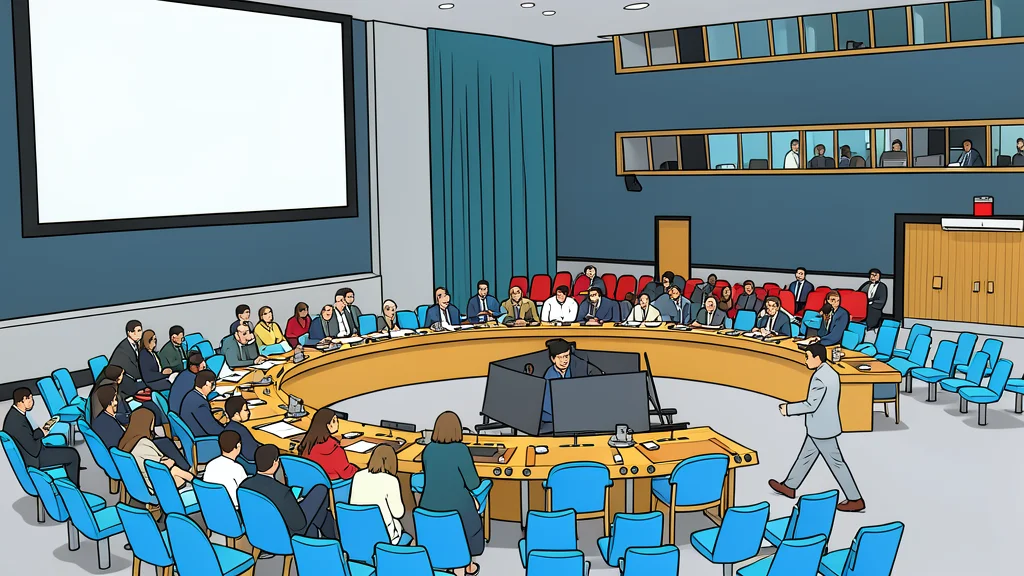
Diplomats at the United Nations assessed the Taliban government's five-year tenure, balancing claims of security with deep concerns over women's rights and regional terrorism.
The United Nations Security Council convened on Wednesday to examine the current state of Afghanistan, focusing on the intersection of security, governance, and humanitarian conditions. According to reports from the GN geopolitics/un desk, the session marked a significant review of the Taliban administration's first five years in power. While the Afghan delegation highlighted improvements in security and economic stability, council members broadly expressed concern over persistent restrictions on women and girls, which many described as a primary obstacle to the country's reintegration into the international community.
The debate underscored a sharp divide between the government's self-assessment and the critiques offered by Western and neighboring states. Afghan representatives argued that the international community should judge the regime by its actions rather than its rhetoric, emphasizing that the absence of large-scale war does not equate to sustainable peace. They urged diplomats to move beyond a binary choice between isolation and normalization, advocating instead for engagement that demands accountable and inclusive governance structures.
Diplomats Weigh Rights Against Security
Representatives from the United States, the United Kingdom, and China all addressed the council, with a consistent emphasis on the protection of fundamental human rights. The U.S. representative criticized the Taliban for using American citizens as bargaining chips and condemned the exclusion of women from higher education, noting that Afghanistan remains the only nation where this barrier exists. The U.K. delegate reinforced this stance, stating that no country can prosper while half its population is excluded from public life, and called for the immediate lifting of restrictions on female UN staff.
In contrast, the Afghan delegate framed the repression of women not merely as a rights issue but as a national crisis affecting economic development and long-term stability. He described the current political landscape as lacking an inclusive system and accountable institutions, while simultaneously warning against the misinterpretation of calm as peace. The discussion revealed a complex diplomatic landscape where human rights concerns are inextricably linked to broader questions of economic viability and political legitimacy.
Regional Security Concerns Escalate
Beyond internal governance, the council addressed the spillover of instability into neighboring regions. Pakistan’s envoy raised specific concerns about the nexus between the Taliban and terrorist groups such as the TTP and BLA, arguing that these threats pose a direct risk to Pakistan’s security. Russia’s representative echoed these sentiments, highlighting the continued presence of Daesh-Khorasan and the East Turkistan Islamic Movement within Afghan borders. These assertions suggest that while the Taliban may control the state, the threat of transnational terrorism remains a critical factor in regional dynamics.
Path Forward for Engagement
As the session concluded, diplomats pointed to the appointment of Rabab Fatima as the UN secretary-general’s special representative as a potential catalyst for change. The UK reaffirmed its commitment to UNAMA, emphasizing the need for the organization to create conditions for a political solution. The forward-looking discourse suggests that future engagement will hinge on the Taliban's willingness to demonstrate tangible progress in governance and human rights, rather than merely maintaining the status quo.