Vietnam Seeks US Partnership for Green Industry
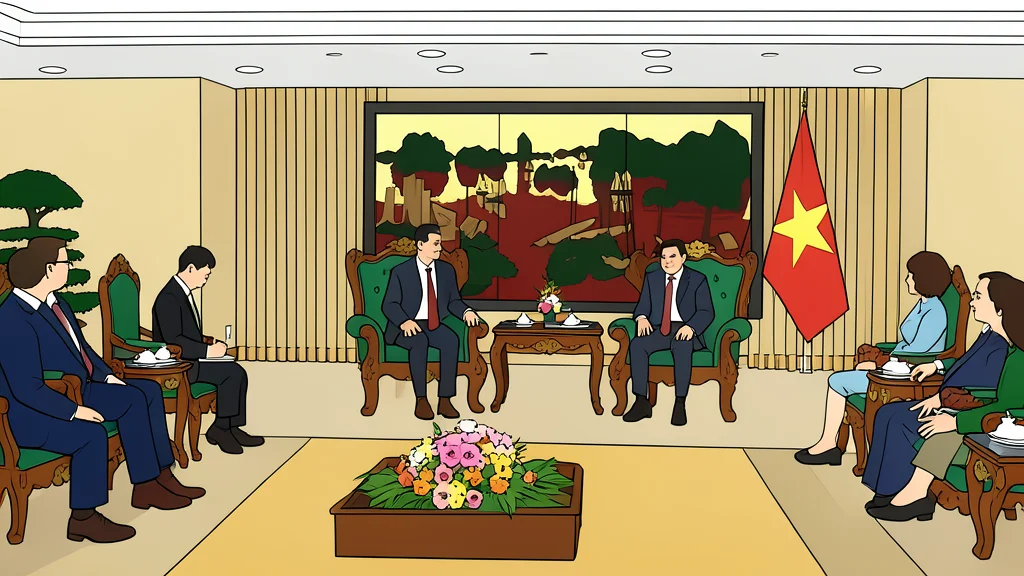
Hanoi officials outlined a new model for US investment focused on technology transfer and circular economy goals in the battery sector.
Key points
- Vietnam seeks to deepen ties with US firms like R3 Lithium by focusing on technology transfer and R&D rather than just capital inflow.
- The country aims to build a comprehensive ecosystem for battery recycling and critical mineral processing to support its net-zero 2050 target.
- Hanoi is promoting a new development model that prioritizes deep processing, digital transformation, and integration into global tech supply chains.
Hanoi has signaled a strategic pivot in its approach to American business, positioning the United States as a central partner in its green transition. During a recent meeting in the capital, Vietnamese leadership emphasized a desire to deepen the Comprehensive Strategic Partnership by moving beyond simple capital attraction toward substantive technological collaboration.
According to VOV.VN, Deputy Minister Nguyen Van Thang affirmed Vietnam’s view of the US as a partner of strategic importance. He spoke with Linh Austin, the CEO of R3 Lithium, to discuss how the two nations can advance cooperation in critical areas such as battery technology and mineral processing.
Shifts in Investment Policy Framework
Vietnam is currently implementing a new development model where science, technology, and digital transformation serve as primary drivers. The government is prioritizing deep processing and environmental protection over low-cost assembly, advocating for broader integration into international tech supply chains. This shift offers favorable conditions for foreign enterprises to operate effectively while contributing to local industrial capacity.
Austin expressed enthusiasm for these increasingly open investment policies, noting the rapid electrification of transportation in Vietnam. He highlighted the growing number of electric vehicles on the road as a sign of market maturity, praising the capability of Vietnamese enterprises to cooperate on business investments within fields where R3 Lithium holds core strengths.
Focus on Circular Economy Goals
A central theme of the discussions was Vietnam’s commitment to achieving net-zero emissions by 2050. Austin stated that his company is interested in cooperating with local partners on the green transition, particularly in battery recycling and critical mineral processing. The objective extends beyond forming a linear supply chain to building a comprehensive ecosystem for reusing batteries and minerals within the country.
Deputy PM Thang welcomed this focus, pointing out that a market of over 100 million people creates huge potential for projects involving batteries and new materials. He stressed that rising demand for vehicle transformation provides a strong foundation for such long-term industrial partnerships.
Prioritizing Technology Transfer and R&D
Vietnam aims to move beyond attracting additional investment capital to establish cooperative relationships built on co-creation. According to the Deputy PM, investment is now closely tied to research and development, technology transfer, and high-quality human resource training. The goal is to enhance the capacity of domestic enterprises and create products with global value.
The administration expressed hope that R3 Lithium will continue to make positive contributions to the development of Vietnam-US relations in the coming period. This forward-looking stance suggests that future diplomatic and economic engagements will likely center on these shared goals of innovation and sustainability.