Pakistan-China Border Pact Sparks Indian Diplomatic Rejection
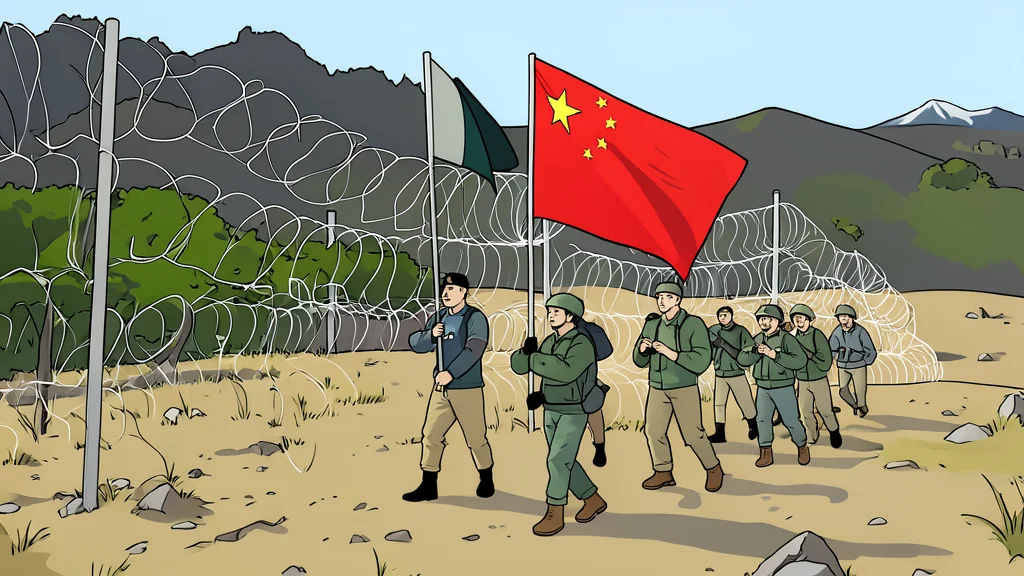
New Delhi rejects the new joint commission over the Shaksgam Valley, citing historical claims and legal invalidity.
Key points
- Pakistan and China signed a joint boundary commission covering the Shaksgam Valley, a region India claims as part of Ladakh.
- India rejected the pact as legally invalid, asserting that Pakistan has no standing to negotiate borders in disputed Kashmir.
- Experts note the move revives a 1963 provision and reflects China's strategic interest in institutionalizing frontier management.
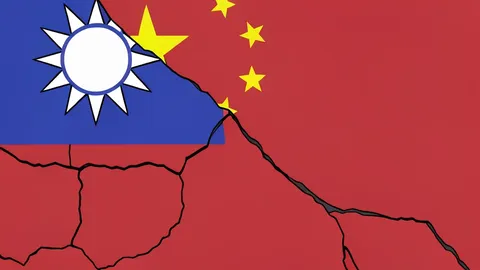
Pakistan and China have formalized a joint mechanism for managing their Himalayan frontier, a move that has triggered a sharp diplomatic response from India. According to reports from bdnews24.com, the two nations signed the Pakistan-China Boundary Joint Commission last week, describing it as a milestone for enhanced cooperation in border management, trade, and connectivity.
India has rejected the initiative as having no legal basis, asserting that it does not recognize any boundary between Pakistan and China in territory it claims as its own. The announcement arrives at a sensitive juncture, as New Delhi and Beijing have been working to stabilize relations following years of military tensions along the Line of Actual Control.
Disputed Territory and Historical Claims
The commission covers the Pakistan-China frontier, including the Shaksgam Valley, a tract of approximately 5,180 square kilometers. India claims this area as part of Ladakh, arguing it was illegally occupied by Pakistan before being ceded to China in 1963. The Indian foreign ministry stated that Pakistan has no standing to enter into arrangements concerning what New Delhi considers Indian territory.
In contrast, Islamabad maintains that Jammu and Kashmir remains a disputed territory, arguing that India therefore lacks the standing to challenge the 1963 boundary agreement. Pakistan considers the agreement valid and views the new commission as a practical step toward institutionalizing exchanges along the frontier.
Expert Analysis of the Mechanism
Jabin Jacob, a professor at Shiv Nadar University, noted that the latest development represents the revival of an old mechanism rather than an entirely new arrangement. He explained that a joint boundary commission was already provided for in the 1963 Sino-Pakistan agreement, with the key issue being the timing of its operationalization. Jacob suggested the timing may reflect China’s broader effort to demarcate its boundaries and a desire to stabilize the region amidst instability on Pakistan’s other borders.
Jacob also highlighted that Article 6 of the 1963 agreement provided for renegotiation once the Kashmir dispute was settled. He argued that the current move appears to disregard this provision, compounding India's concerns. Additionally, he pointed out that China’s dominance in the international information landscape allows it to promote its narrative and maps globally, while India has more limited capacity to do so.
Practical and Political Dimensions
Husain Haqqani, a former Pakistani ambassador, stated that the new commission has both practical and political dimensions. He suggested the mechanism could strengthen border cooperation and prevent illegal crossings, building on existing infrastructure such as the China-Pakistan Economic Corridor. The development underscores the ongoing geopolitical competition in the Himalayan region, where diplomatic moves often carry significant strategic weight.