Baltics Reimpose Sanctions on Two Russian Oligarchs
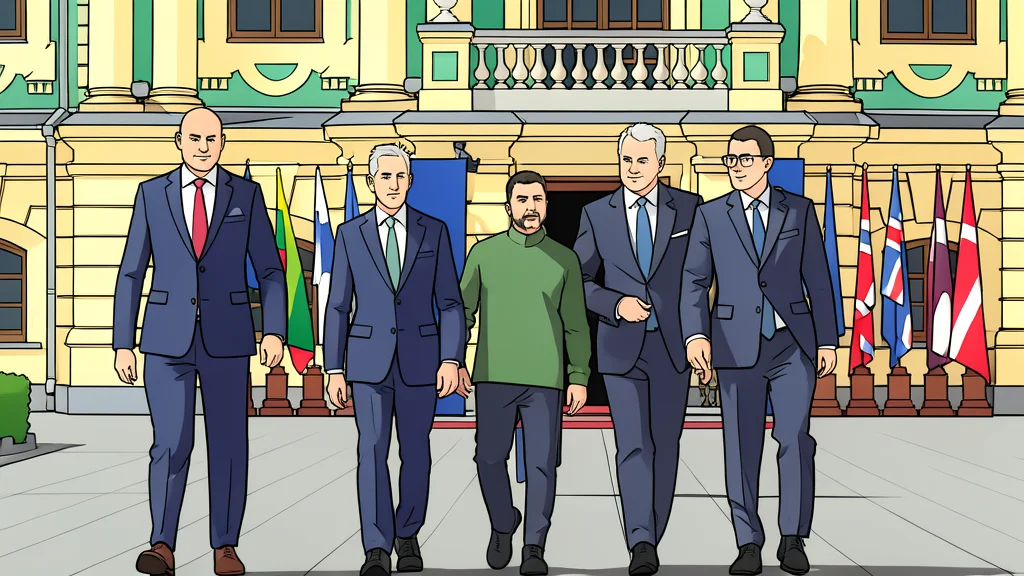
Lithuania, Latvia, and Estonia have reinstated national sanctions on Alisher Usmanov and Mikhail Fridman after the EU removed them from its restrictive list.
Key points
- Lithuania, Latvia, and Estonia have reimposed national sanctions on Alisher Usmanov and Mikhail Fridman after the EU removed them from its list.
- France and Slovakia led the effort to delist the oligarchs, citing the release of French prisoners in Azerbaijan as a key justification.
- Ukraine’s Foreign Minister urged other EU members to follow the Baltic example, emphasizing that diplomatic principles should not be sold.
Ukraine’s Foreign Minister Andrii Sybiha has urged other European Union members to emulate the Baltic states following a significant shift in sanctions policy. The call for action came after Lithuania, Latvia, and Estonia announced they would impose national-level restrictions on two prominent Russian oligarchs, reversing a recent decision by the broader bloc.
The move follows the delisting of Alisher Usmanov and Mikhail Fridman from the EU sanctions register on September 22, a change driven by France and Slovakia. Kyiv Independent reported that the Ukrainian government views the Baltic response as a critical defense of shared values against what it perceives as a weakening of collective pressure on Moscow.
Diplomatic tensions over delisting measures
According to Latvian Prime Minister Andris Kulbergs, the recent EU agreement represented a difficult choice between two unfavorable outcomes. The decision to allow the delisting was reached less than six hours before the existing list of 3,000 EU sanctions against Russia was scheduled to expire, prompting a last-minute effort by Latvia to secure the broader package.
France had justified its push to remove the two men from the list by citing the need to secure the release of two French nationals held in Azerbaijan. One of these individuals was pardoned on the morning of September 23, shortly after the diplomatic compromise was finalized. This linkage between sanctions policy and prisoner exchanges has raised questions about the consistency of the EU's approach to enforcement.
Baltic nations assert sovereign policy
While Latvia, Estonia, Lithuania, and Belgium abstained from the EU vote to allow the compromise to proceed, the Baltic states subsequently acted independently to maintain restrictions on Usmanov and Fridman. Sybiha praised this coordinated national action, stating that it demonstrates that core principles are not subject to transactional bargaining in diplomatic negotiations.
The situation now leaves the remaining 24 EU member states to decide whether they will follow the Baltic example. The divergence in policy highlights a growing split within the Union regarding the long-term strategy for maintaining economic pressure on Russian financial actors and the broader geopolitical implications of such measures.
Uncertainty over future EU cohesion
Observers are watching to see if other member countries will adopt similar national sanctions, which could fragment the unified front that the EU has traditionally maintained. The incident underscores the challenges of balancing individual diplomatic interests with collective security objectives, particularly as the initial sanctions regime faces its first major renewal cycle.
The forward question remains how long the current consensus will hold, given the varying priorities of different member states. The willingness of the Baltic states to act unilaterally suggests that the floor for sanctions may be higher than the ceiling set by the EU, creating a complex dynamic for future negotiations with both Moscow and third-party nations involved in prisoner exchanges.