Canada Seeks European Military Partnership Amid Trade Tensions
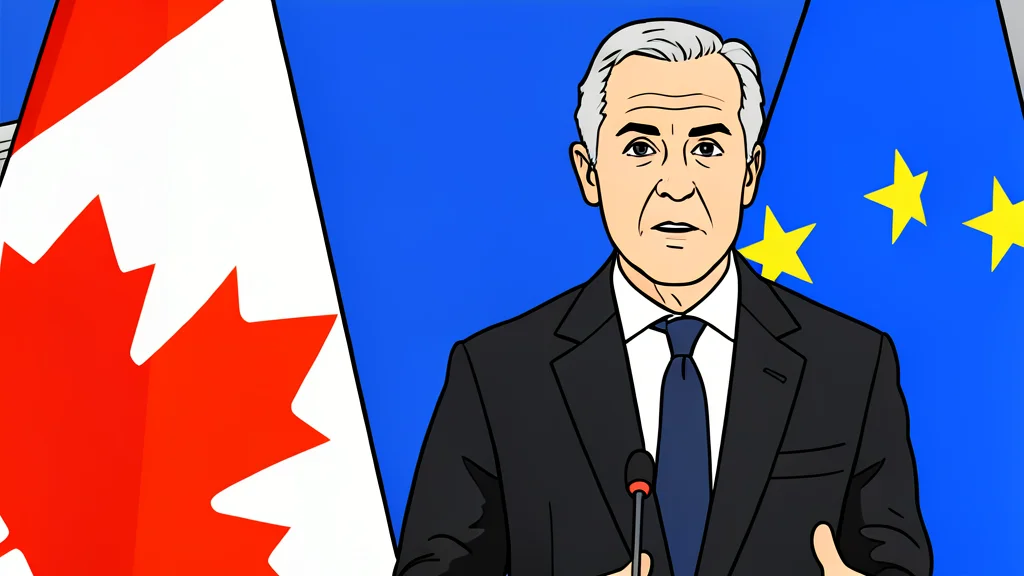
Ottawa has applied to join the Joint Expeditionary Force, a move signaling a strategic pivot toward Europe following escalating trade disputes with Washington.
Canada has formally applied to join the Joint Expeditionary Force, a European-led military coalition, in a significant shift of its security posture. According to Al Jazeera English, Prime Minister Mark Carney made the request during a recent official visit to the United Kingdom. This diplomatic step follows a period of intense friction between Ottawa and Washington, marked by failed trade negotiations and reciprocal tariff measures.
The application coincides with broader efforts by the Canadian government to diversify its economic and security dependencies. During his trip, Carney met with European Commission chief Ursula von der Leyen in Brussels, who invited Canada to become the first associate member of the bloc. In a statement, Carney described the JEF as an important initiative, underscoring Ottawa’s desire to strengthen transatlantic ties beyond its traditional reliance on the United States.
JEF Structure and Strategic Focus
Established in 2014, the Joint Expeditionary Force is led by the United Kingdom and includes nine other European nations. The coalition focuses on rapid deployment capabilities in the North Sea, the North Atlantic-Arctic region, and the Baltic Sea. Its membership conditions emphasize shared democratic values, respect for the rules-based international order, and alignment with NATO, though it operates independently of the broader alliance.
Unlike NATO, which operates under a collective defense treaty, the JEF functions as a coalition of the willing. This structure allows for faster, more adaptable responses to threats below the threshold of war, potentially bypassing the high escalation risks associated with Article 5 commitments. The force currently numbers approximately 10,000 rapid response soldiers, though it has not yet been deployed on high-stakes missions.
Challenges for UK Leadership
Despite its strategic potential, the JEF faces questions regarding the capacity of its leader. A critical report by the UK parliamentary defence committee last year found that the United Kingdom is nowhere near ready to defend itself and its allies effectively. The report noted that London is failing to meet its NATO obligations and is falling short of its claimed leadership position.
Currently, UK defense spending stands at about 2.6 percent of GDP, well below the NATO target of 3.5 percent by 2035. However, policy think tanks such as the Royal United Services Institute have urged London to increase investment and deploy the force more actively. Analysts suggest that new membership structures, including potential Canadian participation, could bring necessary shifts in capability and commitment.
Implications for Transatlantic Relations
Canada’s move to join a European military framework highlights the growing complexity of transatlantic security dynamics. By seeking closer integration with European defense structures, Ottawa aims to reduce its vulnerability to shifts in US foreign policy. This strategy reflects a broader trend among middle powers to build new alliances that provide greater strategic autonomy.
As relations between Canada and the United States remain strained, the outcome of Canada’s JEF application will be closely watched by policymakers in Europe and North America. The success of this partnership will depend on both the political will of existing members and the ability to address capacity gaps within the coalition.