Ceuta Leader Demands Migrant Returns, Cites Capacity Limits
Ceuta's president urges Morocco to accept returned migrants, warning of a demographic crisis and demanding EU support.
Key points
- Ceuta's president demands the return of all irregular migrants, warning that the city cannot sustain the current population indefinitely.
- Spanish and Ceutan officials disagree on the future of unaccompanied minors, with Madrid favoring retention and Ceuta prioritizing family reunification.
- Vivas seeks European Union support for the crisis, arguing that Ceuta's status as an external border requires a shared community response.
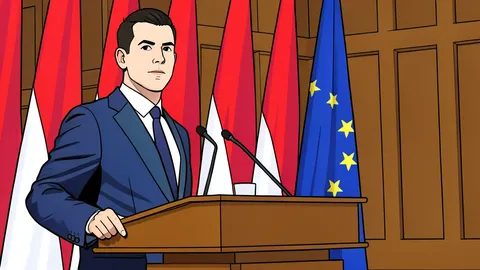
Juan Jesús Vivas, the president of Ceuta, has reiterated his demand for the return of all individuals who entered the enclave irregularly during the end of July. Speaking alongside Spanish and European political leaders, he argued that the city cannot sustain the current population indefinitely without risking a demographic collapse. According to El Constitucional, Vivas emphasized that normalcy can only be restored through the repatriation of those who arrived without authorization.
The local leader warned that the hosted population could eventually reach 15% of Ceuta's inhabitants, a scenario he described as the death of the city. This projection highlights the severe strain on local resources and infrastructure. Vivas criticized the central government for what he perceives as a delayed response, noting that more than seven weeks have passed since the mass entry without a clear resolution plan or precise data on remaining individuals.
Political Disagreement Over Minors' Status
A significant point of contention remains the future of unaccompanied minors. Minister Sira Rego stated that the majority of these children wish to stay in Spain and that their presence is now intended to be permanent. Vivas countered this by claiming a shift in the central government's position, insisting that initial agreements prioritized family reunification. He proposed a process where family locations are identified first, with institutional care considered only if reunification is impossible.
Legal experts note that Spanish immigration law requires individual assessments of each minor's best interest, including listening to their views if they possess sufficient judgment. Vivas has urged the acceleration of these procedures, while also requesting that Morocco provide necessary family reports to facilitate decision-making. The complexity of these legal requirements means that a blanket return policy is not immediately feasible without detailed casework.
European Involvement in Border Crisis
Vivas is seeking to elevate this issue to the European level, arguing that Ceuta serves as an external border of the European Union. During his recent appearance, he received support from Alberto Núñez Feijóo and Manfred Weber, the latter demanding that Morocco fulfill its commitments regarding the return of minors when appropriate. The local president believes that community institutions must share the burden of managing this crisis, rather than leaving it solely to the Spanish state.
The diplomatic push coincided with the visit of Interior Minister Fernando Grande-Marlaska to the city. Government sources expressed frustration that Vivas declined to meet with the minister, citing scheduling conflicts, while maintaining meetings with opposition and European figures. Amidst these political tensions, Vivas also condemned a recent violent incident in the port involving local political figures, stating that violence must be rejected regardless of its origin.