Danish F-35s Conduct First Greenland Landing in NATO Exercise
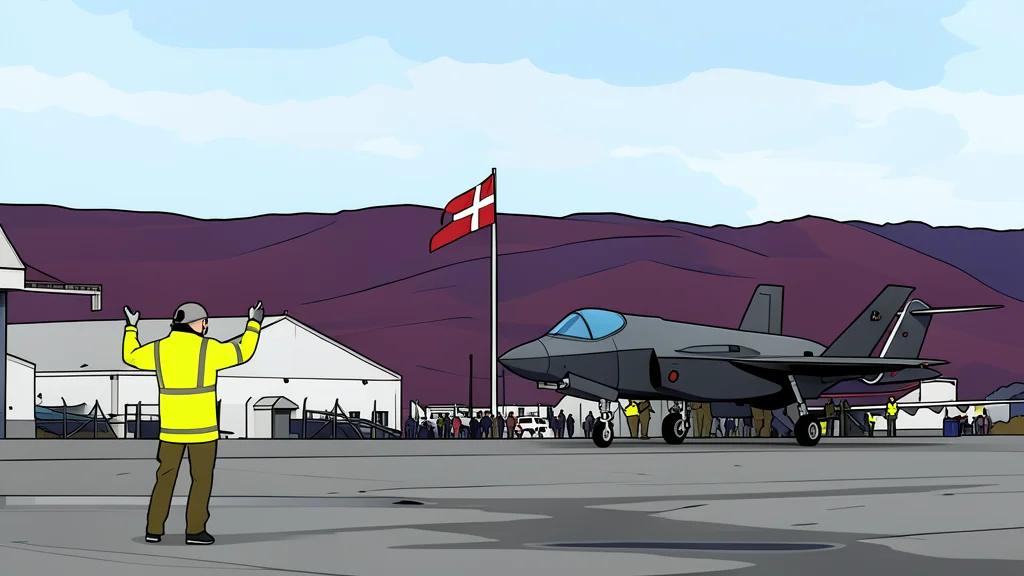
Danish F-35s completed their first landing in Greenland during a coordinated NATO exercise, marking a step in integrating airpower across the Arctic region.
Two Danish F-35 fighter jets touched down at Kangerlussuaq Airport on Wednesday, marking the first time the fifth-generation aircraft have operated from Greenland. The mission was part of a broader NATO exercise involving US and Canadian forces, designed to test the alliance’s ability to coordinate complex air operations across the Arctic.
According to GN geopolitics/nato, the Danish jets flew from Keflavik Air Base in Iceland before joining forces with US F-16s and Canadian F-18s. The operation highlighted the logistical and operational challenges of maintaining a sustained air presence in one of the world’s most remote and weather-hostile regions.
Coordinated multinational air operations
The exercise required precise synchronization between aircraft based on opposite sides of Greenland. Danish F-35s, American F-16s, and Canadian F-18s conducted combined combat air patrols, a maneuver that demands seamless communication and shared situational awareness. The pilot flying the Danish jet, identified by the call sign PLA, noted that the primary objective was to train the ability to synchronize efforts across vast distances and diverse national platforms.
Supporting assets played a critical role in the mission’s execution. A French MRTT tanker aircraft refueled the Danish fighters during their transit from Iceland, while a NATO AWACS aircraft provided surveillance and airspace coordination. Additionally, a Danish Challenger surveillance aircraft offered search-and-rescover cover, ensuring that the main combat elements could focus on their primary tasks without compromising safety.
Challenges of Arctic aviation
Operating in the Arctic presents unique difficulties for aircrews and mission planners. According to the Danish Armed Forces, a significant portion of the mission’s success depended on pre-flight planning due to the region’s unpredictable weather and the scarcity of suitable landing sites. The pilot emphasized that the harsh and rapidly changing conditions require careful risk management to ensure safe operations.
The long distances between potential landing points add another layer of complexity. Unlike operations in more temperate or populated regions, Arctic missions offer fewer options for diversion or emergency landings. This necessity for precision is why extensive planning is conducted before aircraft even take off, ensuring that all variables are accounted for in the dynamic environment.
Expanding NATO Arctic presence
This landing is the latest development in a series of Danish military activities in the region. While Danish F-16s have previously operated from Kangerlussuaq, the arrival of F-35s represents an upgrade in capability and reach. Danish jets have also conducted patrols along Greenland’s east coast from Iceland, but this mission integrated those efforts with a physical presence on the ground.
NATO’s Arctic Sentry initiative aims to reinforce the alliance’s surveillance and operational capacity in the high north. As geopolitical tensions rise in the region, the ability to project power and maintain a coherent air defense posture has become a strategic priority for member states. The next step will likely involve further integration of these multinational exercises to test the limits of Arctic aviation and ensure readiness for any potential contingencies.