Germans Question Merz's Leadership After State Election Losses
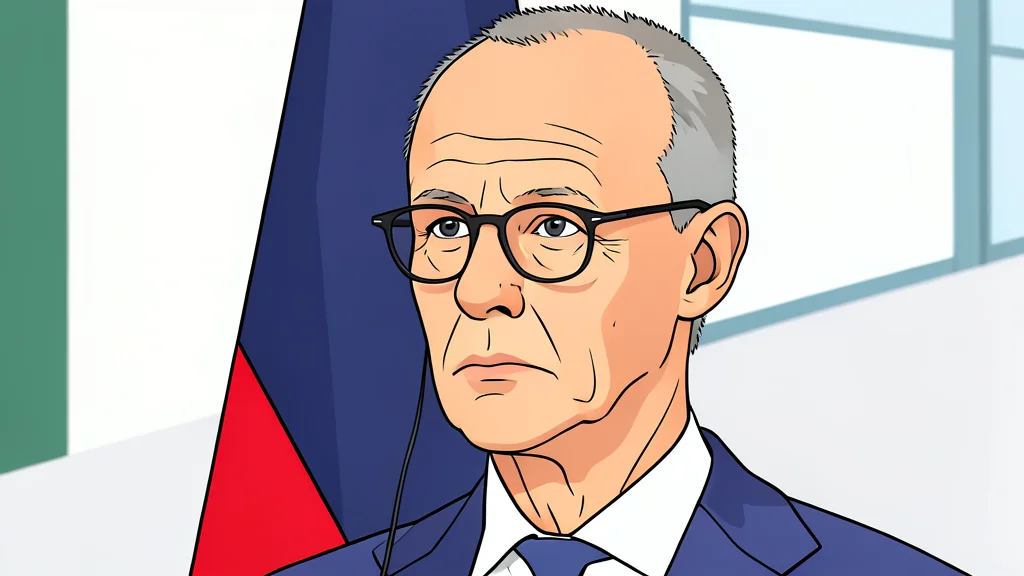
Following significant electoral setbacks, doubts are mounting over Chancellor Friedrich Merz's suitability for the role, with no clear alternative emerging within the governing coalition.
The political atmosphere in Berlin has grown increasingly tense as Chancellor Friedrich Merz faces a surge in public skepticism regarding his leadership. This shift in sentiment follows the Christian Democratic Union's (CDU) significant defeat in the Saxony-Anhalt state election, where the party failed to secure a competitive position against the rising Alternative for Germany (AfD). According to recent polls, support for the federal government has dropped to record lows, prompting a broader debate within the country about the direction of the current administration.
While Merz has attempted to deflect attention from domestic unrest by focusing on European security and climate policy, internal party dynamics suggest a growing crisis of confidence. The upcoming election in Mecklenburg-Western Pomerania presents a critical test, with the CDU polling at dangerously low levels. As the party risks failing to meet the electoral threshold in this northern state, questions are being raised about whether the chancellor's communication style and policy approach are contributing to the party's eroding base.
Erosion of Public Trust
Critics within the political establishment are pointing to a perceived lack of empathy in the chancellor’s approach to sensitive social issues. Education Minister Karin Prien, a member of the CDU, recently stated on German public broadcasting that she believes the chancellor and the party lack the necessary emotional connection with voters. This sentiment reflects a wider concern that the government’s handling of major reforms, particularly those affecting the pension system, has been perceived as impatient and disconnected from the realities of ordinary citizens.
The chancellor’s public remarks have further fueled this perception. In July, Merz criticized attitudes toward work-life balance, suggesting that a push for a four-day workweek could jeopardize national prosperity. Such comments were met with sharp backlash from trade unions, who accused the chancellor of labeling hardworking Germans as lazy. These exchanges have highlighted a communication gap that coalition partners believe is undermining the government’s ability to implement necessary economic changes.
Coalition Partners Sound Alarm
Tensions are not limited to the CDU, as the junior coalition partner, the Social Democratic Party (SPD), has also expressed concern about the stability of the governing majority. SPD Parliamentary Secretary Dirk Wiese noted that nerves appear frayed within the CDU ranks. He urged his colleagues to refocus on their shared legislative agenda and improve their collaborative efforts, suggesting that the current atmosphere of internal friction is detrimental to the coalition’s overall effectiveness.
According to Deutsche Welle, the lack of a clear alternative leadership figure adds to the complexity of the situation. While Bavarian state premier Markus Söder has been mentioned as a potential successor, his own political style is often described as provocative. This leaves the CDU in a difficult position, where the desire to replace the chancellor is tempered by the uncertainty of who could effectively lead the party and the government in a time of political volatility.
Strategic Uncertainty Awaits
As the Mecklenburg-Western Pomerania election approaches, the outcome will serve as a crucial indicator of the CDU’s remaining political strength. A failure to secure a parliamentary mandate in this state would mark a historic low for the party, potentially forcing a more serious internal reckoning. For now, the chancellor continues to emphasize the importance of European unity, arguing that external geopolitical challenges require a unified front that transcends domestic partisan disputes.
The coming weeks will determine whether the CDU can stabilize its support base or if the pressure for leadership change will intensify. Observers are watching closely for any signs of internal maneuvering or strategic shifts in communication. The central question remains whether the party can recover its lost credibility before the next major electoral test, or if the current leadership will be forced to adapt its approach to survive the political fallout.