France Backs UNIFIL Extension Bid in Lebanon
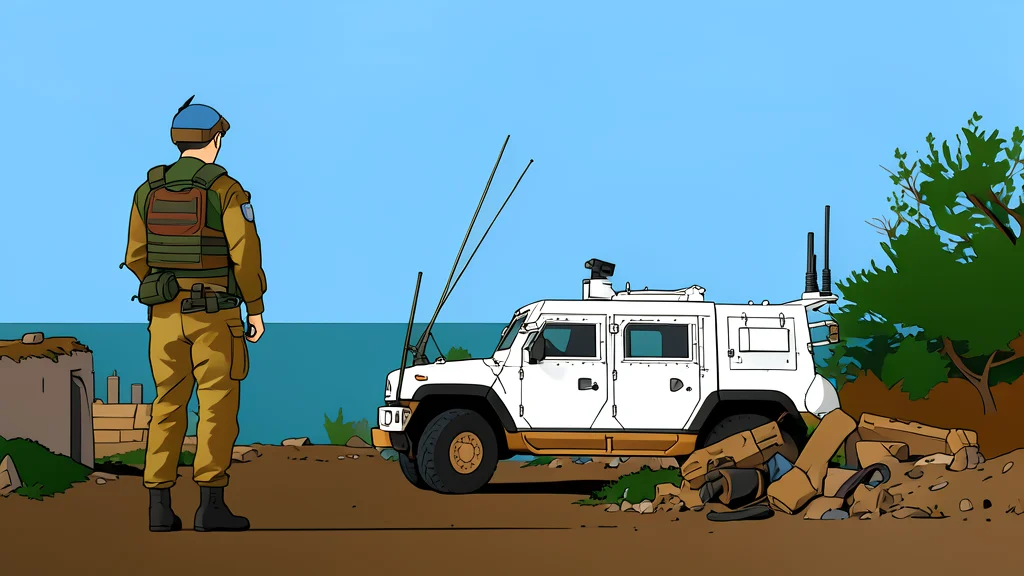
Paris supports Beirut's request for a short-term extension of the UN peacekeeping mandate, though European diplomats acknowledge the likelihood of approval is low due to anticipated U.S. opposition.
France is actively supporting Lebanon’s diplomatic push to extend the mandate of the United Nations Interim Force in Lebanon (UNIFIL) beyond its scheduled expiration on December 31, 2026. According to European diplomatic officials, Paris views this backing as a significant political declaration of solidarity with Beirut rather than a concrete operational plan. The initiative comes as the Lebanese government circulates a letter at the United Nations arguing that a definitive withdrawal of the force would be premature, despite the strong resistance from Washington and Jerusalem.
The diplomatic maneuvering intensifies ahead of a trilateral meeting at the Elysee Palace, where French President Emmanuel Macron is expected to host Lebanese President Joseph Aoun and Jordanian King Abdullah on September 17. The summit, part of preparations for an international conference supporting the Lebanese military, will place the future of the interim force at the center of discussions. This high-level engagement underscores France’s continued commitment to the region, following its recent deployment of armored vehicles and military experts to assist in training Lebanese soldiers.
Diplomatic Pressure on Security Council
The push for an extension follows a contentious period in which France initially resisted Israeli and American pressure to terminate UNIFIL’s mission entirely. In August 2025, Paris agreed to a compromise that extended the mandate through the end of 2026, explicitly closing the door on further renewals at that time. However, the situation has evolved as Lebanon now seeks a limited additional period, a move supported by several nonpermanent Security Council members. According to GN geopolitics/un, this diplomatic effort aims to stabilize the security architecture in southern Lebanon while the Lebanese Armed Forces continue to build their capacity.
Israel has consistently argued that UNIFIL failed to prevent the proliferation of Hezbollah in the south, citing the force’s limited operational scope. Despite these criticisms, France maintains that the presence of international peacekeepers remains a critical buffer. The November 2024 ceasefire agreement established a five-party mechanism involving Israel, Lebanon, the United States, France, and UNIFIL to monitor compliance. Paris believes that maintaining this framework, even in a reduced capacity, is essential for preventing a resurgence of hostilities and ensuring the long-term stability of the border region.
Obstacles to Mandate Renewal
European officials indicate that the prospects for a long-term extension are negligible, with the Security Council expected to reject any such proposal outright. Even a short-term extension faces severe headwinds, as the United States is anticipated to wield its veto power against the initiative. The diplomatic landscape is further complicated by the fact that UNIFIL has already begun reducing its footprint in southern Lebanon, scaling back from 10,000 troops in late 2024 to approximately 7,000 today. This reduction includes a decrease in French personnel from over 700 to 600 soldiers, reflecting the broader trend of downsizing mandated by Resolution 2790.
Future of Peacekeeping Presence
The outcome of the upcoming Elysee meeting will likely set the tone for the final months of UNIFIL’s current mandate. While France continues to advocate for a transitional period to allow the Lebanese Armed Forces to assume full responsibility, the political will to sustain this effort remains fragmented. The situation highlights the complex interplay of regional security interests and the limitations of multilateral diplomacy in a polarized Security Council. As the deadline approaches, the focus shifts to how effectively the existing ceasefire mechanism can function without the full backing of the international force it was designed to support.
Observers will closely monitor whether the trilateral dialogue in Paris yields any new frameworks for security cooperation or if it merely reaffirms existing positions. The ability of Lebanon to convince the Security Council that a premature withdrawal poses a greater risk than the status quo will be the deciding factor. Until a consensus is reached, the status quo of a diminished but present UNIFIL force will likely persist, serving as a fragile but necessary symbol of international engagement in a volatile region.