Kremlin Envoy and AfD Plan Gas Talks

Planned discussions between a Russian state envoy and Germany's far-right opposition signal a potential shift in energy diplomacy, even as Berlin maintains its current stance against resuming Russian gas imports.
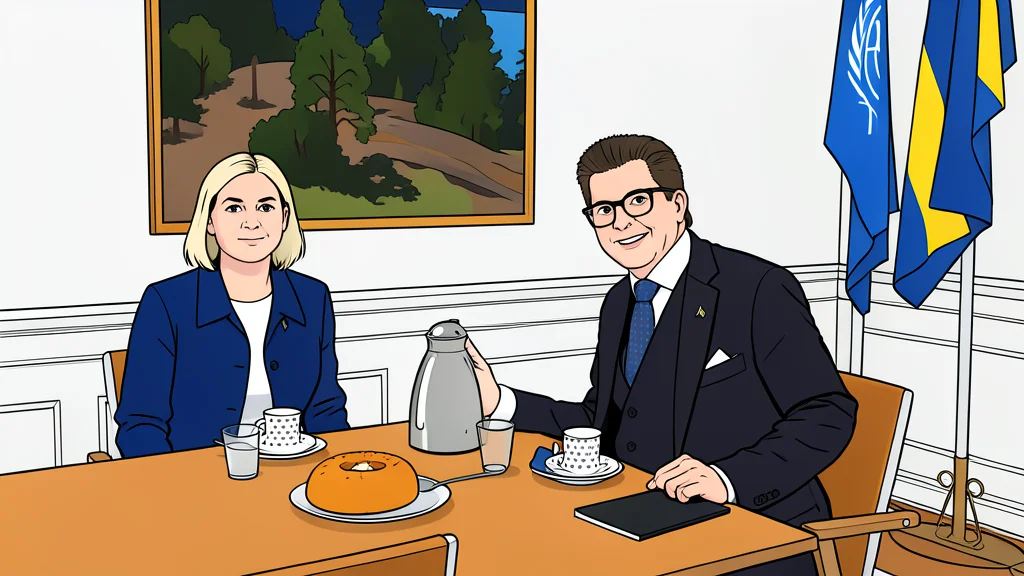
Kirill Dmitriev, the Kremlin’s economic envoy, is preparing to meet with the leadership of the Alternative for Germany (AfD) as early as March. According to reports from Reuters, the discussions are expected to focus on the potential resumption of Russian natural gas supplies to the European Union. This development marks a notable intersection between high-level Russian economic strategy and the rising political influence of Germany’s far-right opposition.
The AfD, which has recently emerged as the largest party in the German parliament, has consistently advocated for a reduction in support for Ukraine and a return to economic cooperation with Moscow. While the party currently holds an opposition role, its growing prominence means that any dialogue with Kremlin representatives carries significant symbolic weight, potentially influencing the broader political landscape regarding energy security and foreign policy.
Historical Context of Energy Ties
Before the full-scale invasion of Ukraine, Germany relied heavily on Russian energy, sourcing more than half of its gas imports from Moscow. This dependency was largely facilitated by the Nord Stream pipelines, which transported gas through the Baltic Sea. Following the conflicts that began in 2022, these pipelines were damaged in incidents that German investigators described as acts of sabotage. Since then, the European Union has moved to drastically reduce and eventually eliminate its reliance on Russian energy supplies, aiming to complete this transition by next year.
The AfD has publicly called for the lifting of economic sanctions and the restart of the Nord Stream infrastructure. However, German Chancellor Friedrich Merz has explicitly ruled out any future restart of these pipelines. This creates a sharp contrast between the opposition party’s platform and the current government’s policy, highlighting a deepening divide within the German political establishment over how to handle relations with Russia.
Diplomatic Implications and Constraints
Although the meeting between Dmitriev and AfD co-leaders Alice Weidel and Tino Chrupalla may not directly alter Germany’s immediate policy, it underscores the close ties between the far-right group and Moscow. According to Kyiv Independent’s coverage of similar diplomatic maneuvers, such interactions often serve to legitimize certain political narratives in the eyes of specific voter bases. The involvement of a senior Russian official in discussions with a major political party, even one in opposition, signals a willingness to engage in political dialogue beyond traditional state-to-state channels.
There were reports that U.S. envoys Steve Witkoff and Jared Kushner might attend the summit, which could take place in Israel, the United Arab Emirates, or India. However, a U.S. official stated that American diplomats were unaware of any such gathering. The meeting is reportedly contingent on the conclusion of a peace framework between Russia and Ukraine, suggesting that this dialogue is part of a broader, conditional diplomatic process rather than an immediate policy shift.
Future Directions in Energy Politics
The planned meeting highlights the complex dynamics at play in European energy politics. As the AfD consolidates its position, its stance on Russian gas may gain more traction, particularly if economic pressures continue to affect German voters. Observers should watch whether this dialogue leads to any formal proposals or if it remains a symbolic gesture. The outcome will likely depend on the broader geopolitical context, including the status of the war in Ukraine and the effectiveness of the EU’s energy diversification efforts.