Outgoing UN Chief Urges Global Cooperation Amid Deepening Divisions
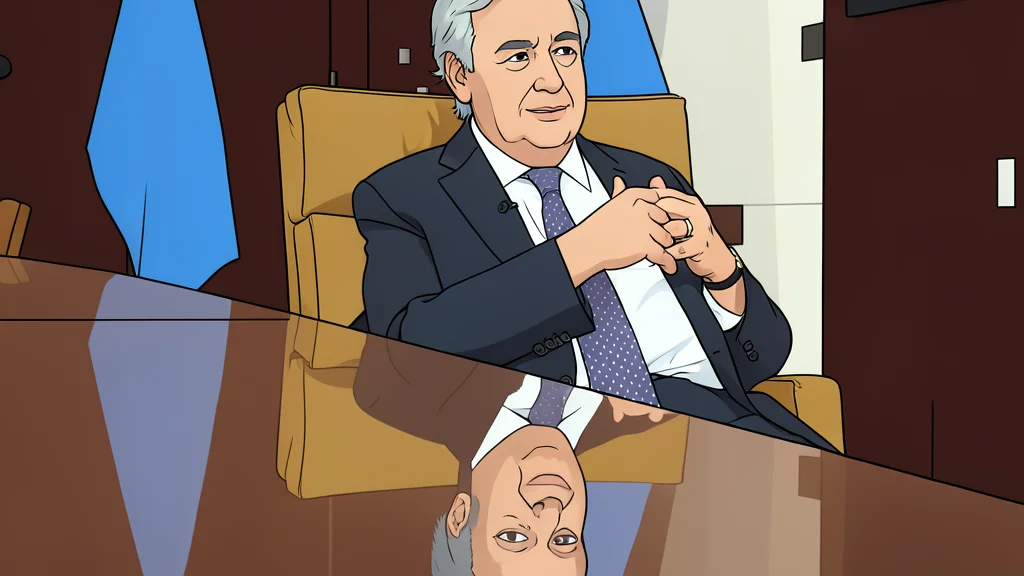
António Guterres warns that existential threats require unified action as his tenure nears its end, emphasizing the urgent need for institutional reform and adherence to international law.
As his decade-long tenure as United Nations Secretary-General nears its conclusion, António Guterres has issued a stark yet hopeful assessment of the global landscape. According to a recent interview, the outgoing chief argues that while the world remains deeply fractured and the Security Council paralyzed by geopolitical divides, a viable path forward exists. This path, however, is contingent upon governments abandoning unilateralism and embracing robust international cooperation to address existential challenges.
Guterres identified three primary threats demanding immediate collective action: the rapid advancement of artificial intelligence, accelerating climate change, and widening economic inequality. He cautioned that these issues are not merely policy failures but drivers of instability and conflict. The Secretary-General emphasized that without coordinated global responses, the consequences for developing nations and the global economy will be severe, marking a critical juncture for the international order.
Institutional Paralysis and Impunity
The UN chief criticized the current state of global governance, noting that the inability of the Security Council to resolve major conflicts has created an environment of impunity. He pointed to recent escalations in Ukraine and the Middle East as examples where powerful nations appear to flout international law without consequence. According to Guterres, this behavior encourages other states to disregard legal frameworks, leading to a erosion of the rule of law on a global scale.
This dynamic, he warned, is fueling further destruction and economic strain, with rising food and energy prices disproportionately affecting vulnerable populations. The Secretary-General argued that the persistence of these conflicts underscores the inadequacy of current institutional structures, which were designed in the mid-20th century and no longer reflect the geopolitical realities of the 21st century.
Reforming Post-War Global Structures
In response to these structural deficits, Guterres called for comprehensive reforms of the United Nations, particularly the Security Council. He also advocated for overhauling major financial institutions, including the International Monetary Fund and the World Bank, to better represent emerging economies. The goal, according to the UN chief, is to create a more inclusive and effective system that can address the complexities of modern global challenges.
Despite lacking an army or significant financial leverage, Guterres highlighted the UN’s enduring power to convene nations and articulate shared values. He stressed that the organization must remain a steadfast reference for principles and law, resisting the temptation to engage in transactional politics. This stance is intended to affirm that legal norms must prevail over the use of force.
Defending Values Amid Conflict
The outgoing Secretary-General reiterated the UN’s commitment to condemning human rights violations and upholding territorial integrity, regardless of political pressures. He condemned recent attacks in the Middle East and the ongoing conflict in Ukraine, framing these events as part of a broader pattern of instability that requires a principled response. Guterres maintained that the UN’s role is to stand firm on its charter, even when faced with geopolitical opposition.
As world leaders prepare for the annual General Assembly, the focus shifts to whether these calls for cooperation and reform will translate into actionable policy. The coming weeks will be critical in determining if the international community can move beyond rhetoric to implement the structural changes necessary to address the era’s most pressing threats.