Latvian President Warns of NATO Air Defense Gaps
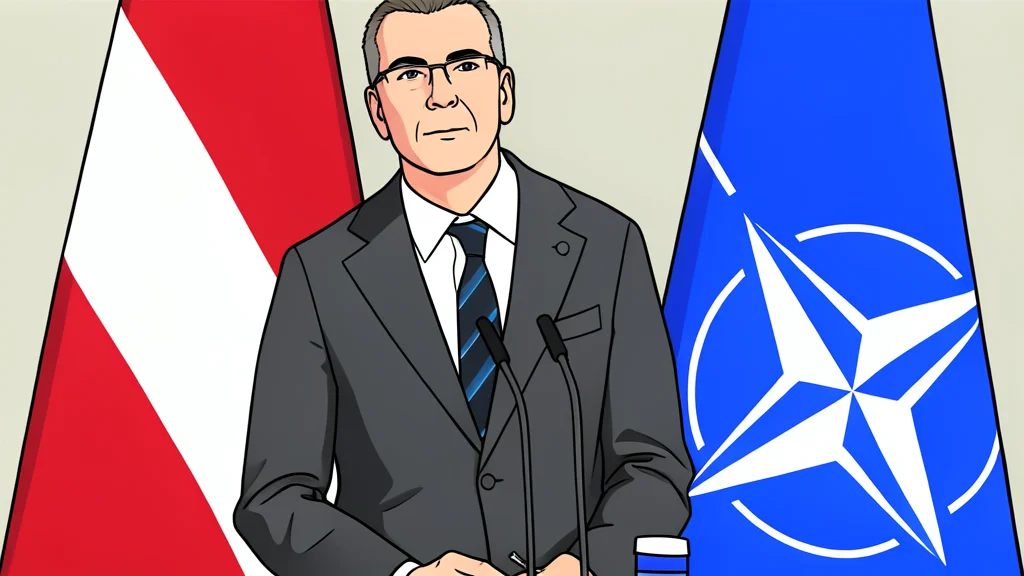
Latvian President Edgars Rinkēvičs has raised alarms regarding the alliance's ability to counter modern Russian missile threats, highlighting significant procurement delays and inventory shortages across member states.
Latvian President Edgars Rinkēvičs has warned that the majority of NATO member states lack the capacity to effectively intercept a broadened Russian missile assault. According to reports from the Kyiv Post, the Latvian head of state stated that Europe is struggling to keep pace with the rapid evolution of drone warfare observed in Ukraine. He cautioned that current Western defense procurement timelines risk becoming obsolete by mid-2027, leaving many nations exposed to potential escalation.
Rinkēvičs emphasized that technological adaptations in unmanned systems and aerial combat are progressing at what he described as lightning speed on Ukrainian battlefields. The president noted that while Ukraine has developed significant defensive capabilities, the broader NATO alliance faces serious problems in air defense, drone defense, and anti-ballistic defense. He suggested that if Russia were to launch a limited missile strike against allied territory, many countries would face a severe challenge in coping with the threat.
Interceptor Shortages Plague Alliance
This warning arrives amid severe bottlenecks in acquiring high-end surface-to-air interceptors, particularly Patriot batteries. Analyses of Congressional Budget Office assessments cited in the context suggest that the United States has expended nearly two-thirds of its critical interceptor inventories during military operations, with replenishment potentially requiring five years. While Washington has reviewed proposals to outsource or license Patriot manufacturing to European and Ukrainian contractors, formal multilateral co-production frameworks have yet to be finalized.
Rinkēvičs acknowledged the administrative and intellectual property hurdles involved in defense licensing, noting that it is ultimately up to the US government and manufacturers to resolve these issues. Despite the desire to increase European production capacities, he conceded that Patriots remain one of the best, if not the best, systems available to tackle these advanced threats. The lack of finalized co-production agreements leaves a gap in the alliance's immediate defensive posture.
Eastern Flank Tensions Rise
The Latvian president’s assessment aligns with mounting concern across NATO’s eastern flank regarding deliberate Russian provocations. Polish Prime Minister Donald Tusk warned parliament that intelligence indicates Russian operational blueprints include hybrid drone and missile strikes against nations supporting Kyiv. Tusk cautioned that Moscow could orchestrate strikes entering allied airspace while claiming they were accidental, aiming to erode alliance cohesion and portray the Article 5 mutual defense guarantee as more theoretical than practical.
These concerns follow consecutive incidents along Poland’s eastern frontier, including a Russian drone crashing near Polish territory during an assault on western Ukraine. Concurrently, US President Donald Trump stated that Russia has attacked Ukraine’s allies for approximately five years, treating hybrid warfare and cross-border airspace breaches as an established reality. According to GN geopolitics/nato, these developments underscore the urgent need for NATO to address its defensive vulnerabilities before further escalation occurs.
Future Procurement Challenges
The path forward for NATO air defense remains uncertain as member states weigh the speed of production against the complexity of licensing agreements. The gap between the rapid evolution of Russian offensive capabilities and the slow pace of allied defensive procurement presents a significant strategic dilemma. As the alliance looks toward 2027, the ability to secure sufficient interceptor stocks and finalize co-production deals will be critical to maintaining credible deterrence. Observers will likely watch for further diplomatic moves between Washington and European capitals to resolve these logistical and political hurdles in the coming months.