Mbappé Faces French Far-Right Criticism over Ceuta Solidarity
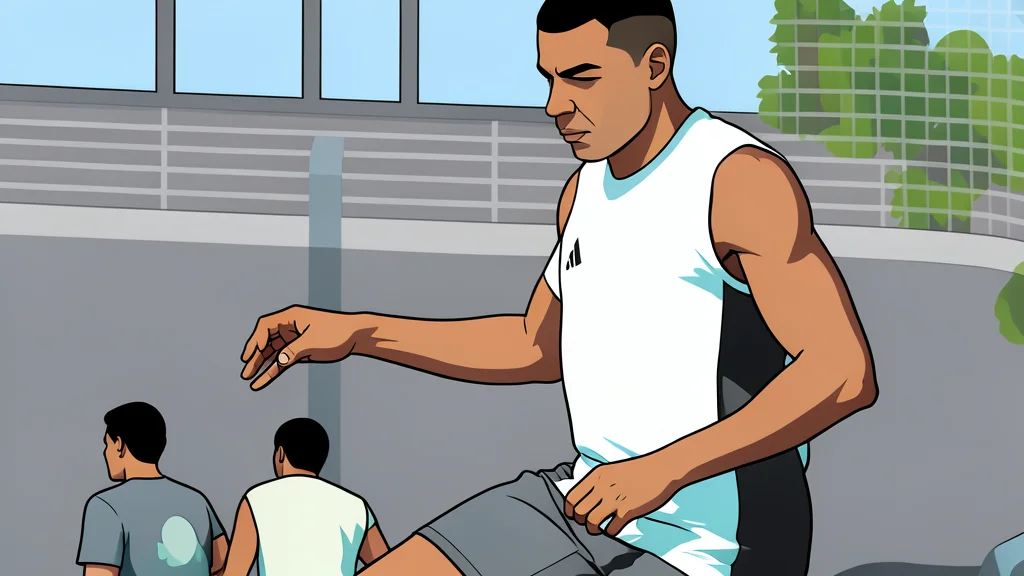
Kylian Mbappé is at the center of a political dispute in France after defending his right to acknowledge both Ceuta’s residents and migrants.
Kylian Mbappé has come under fire from French far-right politicians following his comments on the ongoing crisis in Ceuta. The dispute centers on a shirt worn by several players before a recent match, which carried a message supporting the residents of the Spanish-administered city. While the gesture was intended to show solidarity with those affected by recent mass migrant crossings, it has triggered a polarized reaction within French political circles.
According to reporting by GN geopolitics/migration (en-US), the player explained his position to the Spanish newspaper AS, stating that he fully supports the victims in Ceuta but also wishes to acknowledge the difficult conditions faced by migrants. He emphasized that he did not wish to rank suffering, a stance that has drawn both praise from some on the left and sharp rebuke from the far right. This incident highlights the increasing pressure on public figures to navigate complex geopolitical and humanitarian issues.
Political figures react sharply
The National Rally has led the criticism, with spokesman Julien Odoul describing Mbappé’s conduct as thuggish. Party lawmaker Kévin Mauvieux went further, posting on social media that if shame had a face, it would be that of the France captain. These comments reflect a broader trend in which political actors seek to assign blame for migration-related tensions to individual entities, including athletes who are perceived to have taken sides in a sensitive debate.
In contrast, Manuel Bompard, coordinator of France Unbowed, defended the player’s stance. Bompard argued that solidarity with Ceuta’s residents should not come at the expense of acknowledging the plight of migrants. He stated that Mbappé’s balanced approach does him credit, suggesting that the player’s refusal to choose between two groups of people who are suffering is a mark of integrity rather than a political miscalculation.
Context of the jersey controversy
The controversy originated when Mbappé, along with teammates Vinicius Junior and Ibrahima Konaté, wore shirts partially obscured during a match against Elche. The shirts displayed a message supporting the residents of Ceuta, a territory that has seen significant strain due to recent waves of migrants crossing the border. The decision to wear the shirts was reportedly made by the clubs, but the players’ subsequent public statements have amplified the political significance of the gesture.
Mbappé has previously expressed opposition to the rise of the National Rally and has defended his right to speak as a citizen. His comments in this instance reinforce that position, as he asserts the right to express nuanced empathy in a situation that often demands binary political choices. This aligns with a wider pattern of athletes using their platforms to address social and humanitarian issues, often sparking intense debate.
Future implications for public discourse
As the debate continues, observers will watch whether other political figures join the fray or if the issue fades from the national agenda. The reaction to Mbappé’s comments serves as a barometer for the level of polarization in France regarding migration and solidarity. It also raises questions about the role of sports figures in political discourse, particularly when they are perceived to be challenging established narratives.
In the coming days, the focus may shift to how institutions, such as football clubs and national teams, respond to political pressure on their players. The outcome of this incident could set a precedent for how future athletes address sensitive geopolitical topics, potentially influencing the boundaries of acceptable public commentary in the world of professional sports.