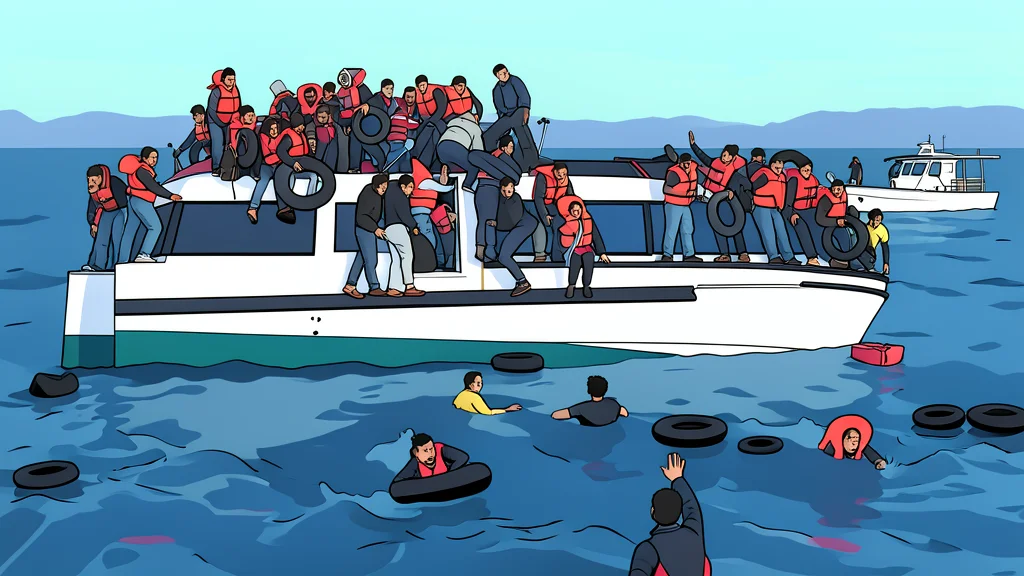
Mediterranean Migration: Declining Arrivals, Rising Fatalities

New data from the UN migration agency reveals a paradox in European border crossings: fewer people are reaching shores, yet the human cost of the journey is escalating sharply.
The International Organization for Migration has issued a stark warning that while the number of migrants reaching European coastlines has dropped significantly this year, the mortality rate for those attempting the crossing has risen. According to the agency, nearly 60,000 individuals arrived on European shores by mid-September, a decrease of approximately 40 percent compared to the same period last year. However, this reduction in arrivals coincides with a troubling increase in fatalities, with nearly 2,300 people reported dead or missing this year versus 2,000 in the previous year.
Amy Pope, the Director General of the IOM, emphasized that nearly every death at sea is preventable. She urged international authorities to enhance cooperation, combat trafficking networks, and establish more legal pathways for migration. The agency’s data suggests that the decline in arrivals is not a sign of reduced migration pressure, but rather an indicator of increasingly dangerous conditions and restricted access to safe routes, a trend noted in reporting by GN geopolitics/migration (en-US).
Shifting Patterns in Central Mediterranean
The route from North Africa to Italy has seen the most dramatic shift in activity. Arrivals via the Central Mediterranean dropped from over 48,000 last year to just over 21,000 this year. Despite this halving of traffic, the number of recorded deaths on this specific route has climbed from 844 to 996. This discrepancy highlights the heightened risk faced by those who still attempt the journey, often relying on less reliable vessels due to tighter enforcement and limited rescue operations.
Italian authorities have prioritized reducing irregular migration since 2022, implementing agreements with North African partners and restricting the activities of humanitarian rescue groups. These measures have contributed to the lower arrival figures but have also potentially pushed migrants toward more perilous alternatives. The IOM notes that the true toll may be higher, as many shipwrecks go unconfirmed or unrecorded, leaving a significant gap in the official statistics.
Dangerous Detours to Greece and Spain
In the Eastern Mediterranean, Greece has experienced a similar pattern of fewer arrivals but higher mortality. While total arrivals decreased by roughly 5,000, deaths increased by 47 percent. Analysts attribute this rise to a shift in departure points, with more migrants attempting the long and hazardous crossing from eastern Libya to Crete rather than the shorter route from Turkey. This detour exposes travelers to open ocean conditions for extended periods, increasing the likelihood of capsizing and drowning.
The Atlantic route to Spain presents a different but equally lethal challenge. The journey from West Africa to the Canary Islands remains one of the deadliest migration corridors globally. Fatalities remained high despite an overall drop in arrivals, underscored by the tragic events in Ceuta in late July, where at least 97 people lost their lives during a mass border crossing. These incidents illustrate the extreme risks associated with attempting to reach Europe via the Atlantic, where rescue capabilities are stretched thin over vast distances.
Unrecorded Losses and Future Risks
The IOM cautions that current figures likely underestimate the true human cost. Many disappearances at sea cannot be verified, and bodies rarely wash ashore, leaving a significant portion of the tragedy undocumented. As policies continue to restrict safe passage and humanitarian access, the agency warns that the mortality rate could rise further. The central question for policymakers and observers remains how to balance border security with the fundamental duty to save lives at sea.