Iran and the Evolving Strategy of Strategic Deterrence
Recent conflicts suggest that conventional military superiority does not guarantee political victory, prompting a reevaluation of how states like Iran and North Korea leverage cost and uncertainty to ensure survival.
The recent six-month confrontation involving Iran has highlighted a challenging reality in modern geopolitics: overwhelming military advantage does not always translate into decisive political outcomes. Despite possessing superior aircraft, surveillance capabilities, and precision weaponry, the United States and Israel have found that inflicting significant physical damage on Iran has not resulted in regime collapse or surrender. Instead, the conflict has unfolded as a costly stalemate, where the targeted state retains enough retaliatory capacity and geographic leverage to prevent its political extinction.
According to the GN auto geopolitics/middle-east: Iran nuclear analysis, this dynamic reflects a broader shift in strategic logic. Scholars such as Professor Jiang Xueqin argue that states facing adversaries they cannot defeat conventionally are increasingly prioritizing survival over victory. The objective is no longer battlefield superiority but rather the creation of a threshold where the cost of attacking or overthrowing the regime becomes prohibitively high for the aggressor.
Comparing North Korean and Iranian Strategies
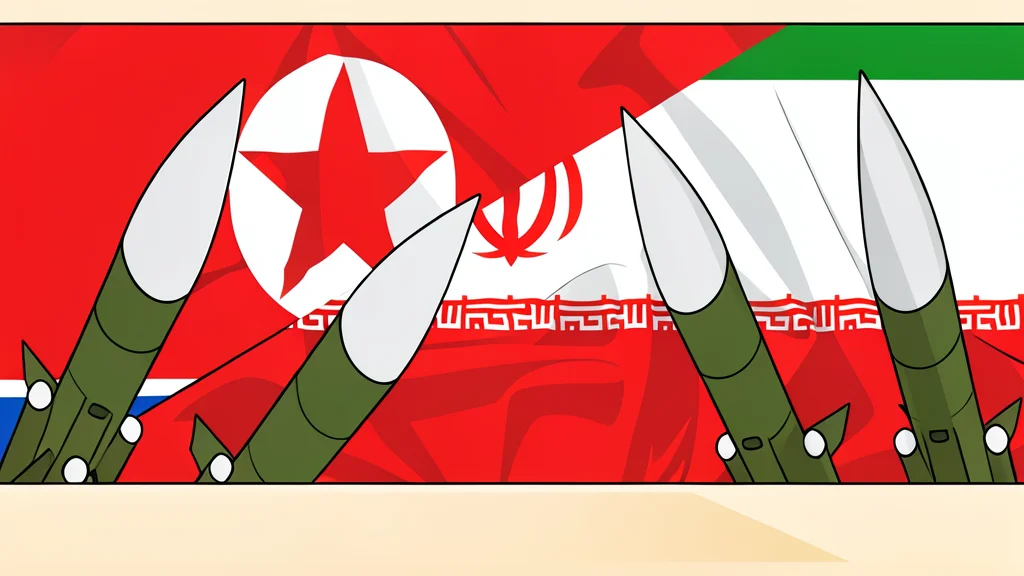
The strategic path taken by North Korea offers a stark contrast to other historical examples of regime instability. While Iraq’s nuclear ambitions were dismantled before its government fell, and Libya abandoned its nuclear program only to see its leadership collapse, North Korea endured intense sanctions to develop nuclear weapons and maintain its sovereignty. This trajectory suggests that credible retaliatory capability can serve as a form of insurance for vulnerable governments, altering the calculations of potential adversaries by introducing uncertainty about the consequences of regime change.
Iran appears to be adopting a similar, though distinct, approach. While Pyongyang crossed the nuclear threshold to make retaliation explicit, Tehran has remained below that line while accumulating technological knowledge and asymmetric capabilities. This places Iran in an intermediate position, relying on latent capabilities rather than deployed nuclear weapons to maintain deterrence. The strategy aims to ensure that any military attack carries the risk of triggering a rapid escalation that the aggressor cannot easily neutralize.
Leveraging Geography and Asymmetric Capabilities
Iran’s deterrence matrix relies on a combination of underground facilities, dispersed assets, and strategic geography. By embedding critical infrastructure deep within rocky terrain, the country complicates targeting efforts and reduces the effectiveness of decapitation strikes. Additionally, the presence of missiles and drones preserves retaliatory options, while its location adjacent to the Strait of Hormuz converts geographic position into global economic leverage. These elements do not provide parity with the United States or Israel, but they collectively create an architecture designed to prevent military defeat from becoming political extinction.
The Role of Enrichment and Latency
A central component of this strategy involves the accumulation of enriched uranium. Prior to the loss of continuous inspection, the IAEA estimated that Iran had accumulated over 440 kilograms of uranium enriched to 60 percent U-235. While this level of enrichment is not weapons-grade, it represents a significant step toward that capability. The distinction between 60 percent enrichment and full weapons-grade material is crucial, yet the proximity to the threshold creates a potent source of deterrence. This latent capability ensures that knowledge and material remain, complicating any assumption that an attack can permanently eliminate Iran’s potential to develop nuclear weapons in the future.
The forward question now centers on how this new logic of deterrence will influence future diplomatic and military decisions. As states recognize that conventional superiority is insufficient to guarantee political outcomes, the emphasis is shifting toward managing the costs of engagement. The next phase will likely involve testing the limits of these asymmetric strategies and assessing whether the threat of prolonged, costly conflict is enough to preserve the status quo.