NATO Affirms Readiness Amid Rising Eastern Flank Tensions
Alliance leadership asserts that military structures are prepared for potential hybrid threats, while European officials cite intelligence regarding planned provocations.
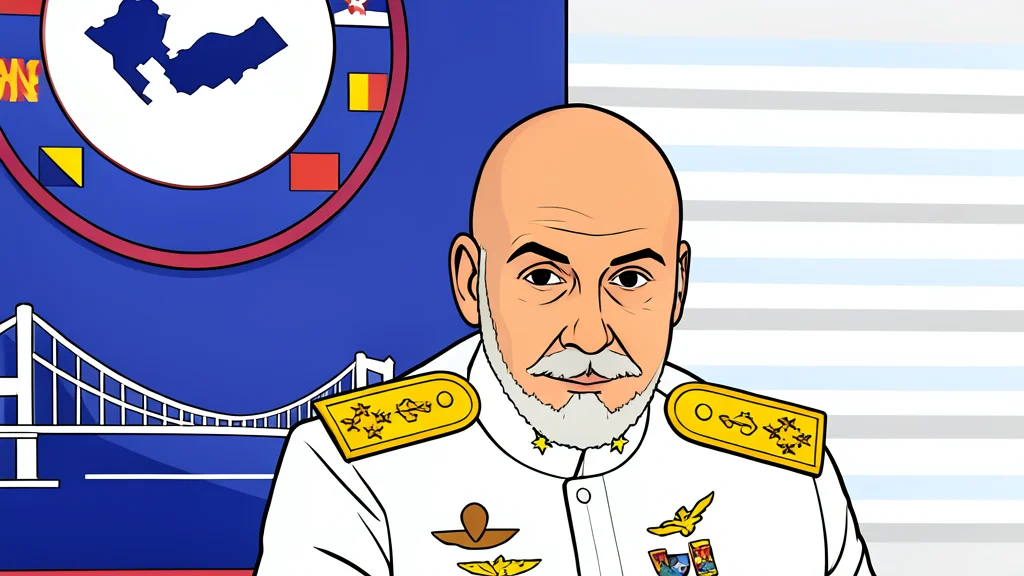
NATO’s top military commander has stated that the alliance is fully prepared to respond to any potential escalation along Europe’s eastern border. Admiral Giuseppe Cavo Dragone, who chairs the NATO Military Committee, made these remarks during a gathering of the alliance’s senior generals in Copenhagen. His comments come at a time of heightened anxiety regarding security dynamics in the region, with several European governments expressing concern over recent aggressive actions by Moscow.
According to reports from GN geopolitics/nato, Dragone emphasized that the necessary structures, personnel, and weaponry are in place to handle a crisis. He noted that the alliance is not only maintaining its current capabilities but is actively working to increase the number and sophistication of its forces. This assurance of readiness is being framed as a stabilizing measure, intended to reassure member states that the collective defense mechanisms remain robust despite the ongoing war in Ukraine.
Strategic Posture Against Hybrid Threats
The discussion in Copenhagen focused heavily on the nature of emerging threats, which have increasingly taken the form of hybrid warfare rather than conventional invasion. Dragone indicated that the alliance possesses extensive military plans, described as thousands of pages of documentation, to address various scenarios of interference on allied soil. These plans were developed following the full-scale invasion of Ukraine and are designed to cover a spectrum of responses, starting from minimal crises and scaling up to more significant confrontations.
In recent weeks, there has been a notable increase in incidents such as airspace violations and alleged sabotage attempts across Europe. US intelligence agencies have reportedly warned that Moscow may be planning limited attacks on NATO territories in the coming years. While Dragone stated that the specific latest warnings were not the primary agenda of the September meeting, the broader context of these threats remains central to the alliance's strategic calculations.
European Officials Cite Intelligence Concerns
Several European leaders have independently raised alarms about the intentions of Russian authorities. Polish Prime Minister Donald Tusk has cited intelligence data suggesting that Russia is planning hybrid attacks against countries that support Ukraine. Similarly, Lithuanian Foreign Minister Kęstutis Budrys has stated that his country possesses information indicating preparations for such actions against Ukraine’s allies. These statements from key eastern flank members underscore a shared perception of a growing threat landscape.
The convergence of these national warnings with NATO’s collective stance creates a backdrop of heightened vigilance. Dragone characterized the recent behavior of Russia as reckless, noting that it aims to undermine trust and weaken unity among allies. However, he argued that these attempts are having the opposite effect, describing them as factors that are sharpening the alliance's tools and strengthening its determination to maintain cohesion.
Focus On Future Security Dynamics
As the alliance continues to bolster its defensive capabilities, the focus remains on maintaining deterrence while avoiding miscalculation. The emphasis on readiness serves a dual purpose: to protect member states from immediate threats and to signal a unified front to adversaries. The coming months will likely see further developments in how NATO integrates its regional defense plans and responds to new incidents on the ground.
Observers will be watching for any further escalatory incidents, such as additional airspace breaches or cyber operations, as well as the diplomatic responses from both NATO and Russia. The balance between demonstrating military capability and pursuing diplomatic channels will remain a critical factor in determining the trajectory of security in Europe. For now, the alliance maintains that it is ready for whatever challenges lie ahead on its eastern flank.