NATO Chief Cites Unity Amid Rising Russian Threats
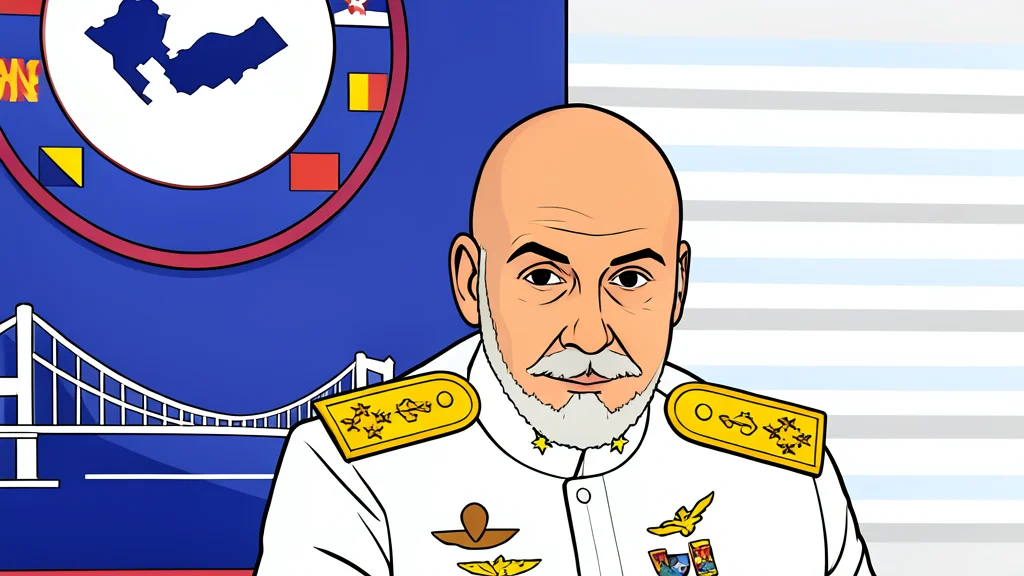
The chair of the NATO Military Committee asserts that recent Russian provocations have strengthened, rather than fractured, the alliance's collective resolve and readiness.
Admiral Giuseppe Cavo Dragone, chair of the NATO Military Committee, stated on Saturday that the recent surge in Russian airspace violations and hybrid activities has ultimately served to unite the alliance. Speaking in Copenhagen, he emphasized that while these incidents test the resolve of member states, they have sharpened the collective determination to respond to emerging threats.
The remarks were delivered following a meeting of defense chiefs from allied nations. According to the chair, the choice of Denmark as the host location symbolizes NATO’s comprehensive, 360-degree approach to security, covering all flanks from the Baltic Sea to the North Atlantic. He stressed that the alliance is fully prepared to defend its territory against the evolving nature of modern warfare.
Cognitive Warfare and Hybrid Tactics
Cavo Dragone highlighted that Russia is investing heavily in cognitive warfare, a strategy aimed at undermining trust among allies and sowing distrust among the public. He noted that such activities, which range from cyberattacks to disinformation campaigns, typically fall below the threshold for triggering Article 5 of the NATO treaty. Instead of invoking collective defense immediately, the alliance focuses on identifying responsibility and informing the public to counter the narrative manipulation.
The admiral urged citizens to verify information sources, pointing out that thousands of cyberattacks occur daily. He mentioned that previous comments he made to international media outlets were inaccurately represented and widely shared through Russian-controlled channels. This, he argued, illustrates the mechanics of cognitive warfare, where narratives are amplified to create division without rigorous scrutiny by Western outlets.
Readiness on the Eastern Flank
Addressing the strength of NATO’s posture on the eastern flank, Cavo Dragone confirmed that the alliance’s regional force plan is ready for immediate implementation. He described a comprehensive, 4,000-page plan that outlines predetermined reaction mechanisms to speed up decision-making in the event of rising tensions. He asserted that the alliance possesses the necessary volume of forces and advanced capabilities to maintain deterrence.
According to the chair, the goal is to maintain a state of armed peace, where the credible threat of a strong response ensures stability. He stated that any party carrying out an attack would lose far more than it could gain, a principle he identified as the core of effective deterrence. The meeting did not discuss the likelihood of a direct Russian attack but focused on reinforcing defenses and ensuring the alliance remains credible.
Logistical Challenges and Supply Demands
The discussion also touched upon the logistical realities of modern conflict, specifically the consumption of ammunition. Cavo Dragone noted that the war in Ukraine has underscored the critical importance of maintaining sufficient stockpiles. He indicated that defense companies are under pressure to increase production to meet the daily demands of sustained military operations, highlighting the ongoing need for industrial capacity to support alliance security.
As reported by GN geopolitics/nato, the sentiment in Copenhagen was one of cautious confidence. The military leadership appears focused on adapting to evolving threats while maintaining the diplomatic and military cohesion required to manage the complex security environment. The next phase will likely involve further coordination on supply chains and cyber defense strategies.