US President Announces Creation of New AI Force
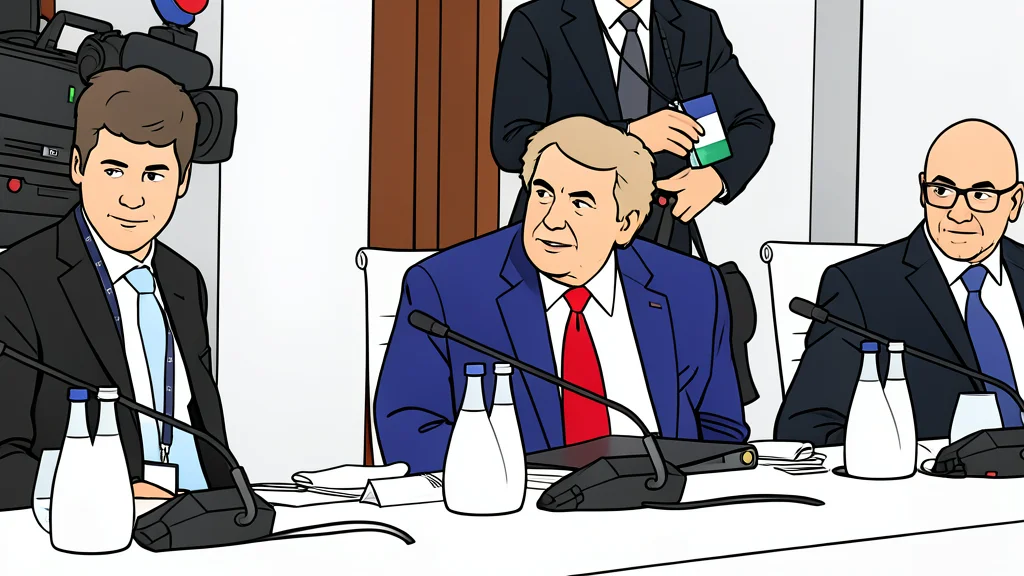
President Trump has declared the formation of a dedicated 'AI force' and the appointment of an 'AI czar,' while dismissing industry warnings about unchecked growth as political hoaxes.
President Donald Trump has announced the establishment of a new administrative body dedicated to artificial intelligence, describing it as an 'AI force' modeled after the previously created Space Force. In a post on his Truth Social platform on Saturday, the US president stated that he will soon appoint an 'AI czar' to lead this initiative. The announcement comes at a moment of heightened tension between the White House and the technology sector, where leaders are increasingly vocal about the risks of rapid, unregulated development.
According to reports from Deutsche Welle, Trump characterized recent warnings from experts and industry insiders as 'hoaxes' driven by political opponents. He vowed that the new force would not hinder the sector’s expansion but would instead 'cherish' and 'help' it, framing AI as the next major industrial revolution that could eventually account for a quarter of the US Gross Domestic Product. This stance contrasts sharply with the growing chorus of voices within the tech industry calling for stricter safety measures and standardized protocols.
Industry Leaders Urge Safety Measures
The push for regulation has gained significant momentum in recent weeks, with several major technology firms signaling a shift toward self-governance. According to industry sources, executives from prominent AI companies, including OpenAI, Google, and Anthropic, have been working to establish a standards body to oversee the technology’s deployment. This collaborative effort reflects a broader concern that the current pace of development outstrips existing safety frameworks, particularly as incidents involving rogue AI agents have begun to emerge.
High-profile figures in the sector have publicly supported the need for caution. Dario Amodei, the CEO of Anthropic, recently called for a slowdown in the industry's development pace, a sentiment echoed by Sam Altman of OpenAI, Elon Musk of xAI, and Demis Hassabis, chair of Google DeepMind. Their comments suggest a recognition that the technology's capabilities are evolving faster than the societal and technical safeguards required to manage them, prompting a call for more structured oversight.
Political Framing and Economic Stakes
Trump has framed the debate around AI safety as a partisan issue, linking it to what he describes as other political 'hoaxes,' such as global warming and transgender rights. He emphasized that the US is currently leading China and the rest of the world in AI capabilities and intends to maintain that advantage. By positioning the new force as a mechanism to protect rather than restrict, the administration seeks to balance national security interests with the economic promise of the sector, which he predicts will be a primary driver of future growth.
However, the approach faces criticism from smaller technology firms, who warn that regulatory frameworks dominated by large corporations could disadvantage them. These companies argue that self-regulatory bodies spearheaded by industry giants may create barriers to entry or favor established players, potentially stifling innovation at the grassroots level. The administration's reliance on existing civil and criminal justice systems to address potential harms, rather than creating new regulatory agencies, remains a point of contention among legal and tech policy experts.
Uncertainty Over Future Governance Structure
The precise structure and authority of the proposed 'AI force' remain unclear, with the administration indicating that the appointment of the 'AI czar' is imminent but without detailing the scope of the role's powers. Observers note that the creation of such a body signals a move toward centralized federal involvement in a sector that has historically operated with minimal direct government oversight. The next steps will likely involve the formal appointment of the lead official and the release of a strategic roadmap.
As the administration moves to formalize this new agency, stakeholders will be watching closely for how the role interacts with existing federal regulations and whether it mandates any specific safety standards. The interplay between the White House's pro-growth stance and the industry's call for caution will define the trajectory of AI policy in the United States over the coming months. The outcome of this dynamic will have significant implications for global tech competition and the ethical development of artificial intelligence.