NATO-Russia Conflict Could Remain Conventional, Analysis Suggests
Historical evidence from the Cold War and recent Asian conflicts indicates that limited warfare between nuclear powers is possible without immediate escalation.
Key points
- Analysis suggests assuming automatic nuclear escalation in a NATO-Russia war grants Russia strategic advantage.
- Historical examples like the Korean War and Kargil show nuclear powers can engage in limited conventional conflict.
- Defense planners need to distinguish between conventional and nuclear war to improve deterrence and response options.
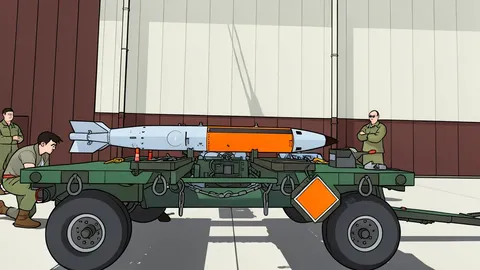
A prevailing assumption in European defense circles holds that any armed conflict between NATO and Russia would inevitably escalate to nuclear exchange. According to an analysis published by wesodonnell.com, this belief is not only historically inaccurate but strategically dangerous, as it grants Moscow a form of deterrence leverage by limiting Western maneuverability. The argument suggests that the expectation of automatic mutual destruction has distorted policy discussions and underestimates the likelihood of bounded, conventional warfare.
The analysis challenges the notion that nuclear arsenals always serve as an absolute barrier to combat. Instead, it posits that the primary risk in a NATO-Russia conflict is not immediate annihilation, but rather the difficulty of establishing and maintaining clear boundaries between different levels of engagement. By assuming that any shooting implies total war, policymakers may inadvertently cede control over the escalation ladder to the opposing side, making diplomatic solutions and calibrated military responses harder to implement.
Historical Precedents of Limited Conflict
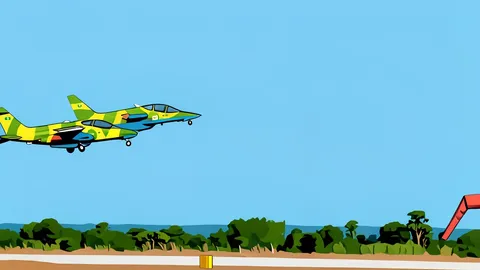
Historical records from the Cold War reveal several instances where nuclear powers engaged in direct conventional combat without triggering a global nuclear war. During the Korean War, Soviet pilots secretly flew MiG-15s against American aircraft, a fact confirmed by later archival releases. Despite the direct involvement of two nuclear superpowers, both sides actively worked to contain the fighting, restricting operations to specific zones to prevent the conflict from being acknowledged as a direct Soviet-American war.
Similar patterns emerged during the 1969 border clashes between the Soviet Union and China, as well as the 1999 Kargil conflict between India and Pakistan. In each case, despite the presence of nuclear weapons and significant geopolitical tension, the conflicts remained conventional. These examples demonstrate that declared nuclear arsenals do not necessarily dampen military competition or prevent localized warfare, contradicting the idea that nuclear capability automatically guarantees total deterrence.
Strategic Risks of Miscalculation
The analysis argues that the danger lies in the inability to guarantee where escalation stops once shooting begins. In previous conflicts, governments built 'fences' around the fighting in real time to manage risks. However, without a clear understanding that conventional war is a distinct category from nuclear war, there is a heightened risk of miscalculation. The assumption that all conflict is nuclear creates a false binary that obscures the complex realities of limited engagement.
By treating a NATO-Russia war as inherently nuclear, Western defense strategies may become overly rigid, leaving fewer options for responding to specific provocations or territorial disputes. This rigidity could be exploited by an adversary who prefers to operate in the gray zone of conventional conflict, knowing that the West fears crossing the nuclear threshold. The analysis suggests that a more nuanced approach, one that acknowledges the possibility of limited war, is necessary for effective defense planning.
Implications for Future Defense Policy
Moving forward, defense planners must consider how to structure military responses that are effective in a conventional context while minimizing the risk of accidental nuclear escalation. This requires a clear doctrinal distinction between different levels of conflict and robust mechanisms for communication and de-escalation. The analysis implies that preparing for a limited war is not a sign of weakness, but a necessary component of credible deterrence.
The key question for the coming years is how NATO can establish clear rules of engagement that allow for decisive conventional action without triggering a nuclear response. Watching the evolution of military exercises and diplomatic signals between Washington and Moscow will be crucial in understanding how both sides are managing this delicate balance. The assumption of automatic nuclear escalation must be challenged to create a more realistic and manageable security framework.