Slovak PM Fico Questions NATO Article 5 Commitment Amid Ukraine War
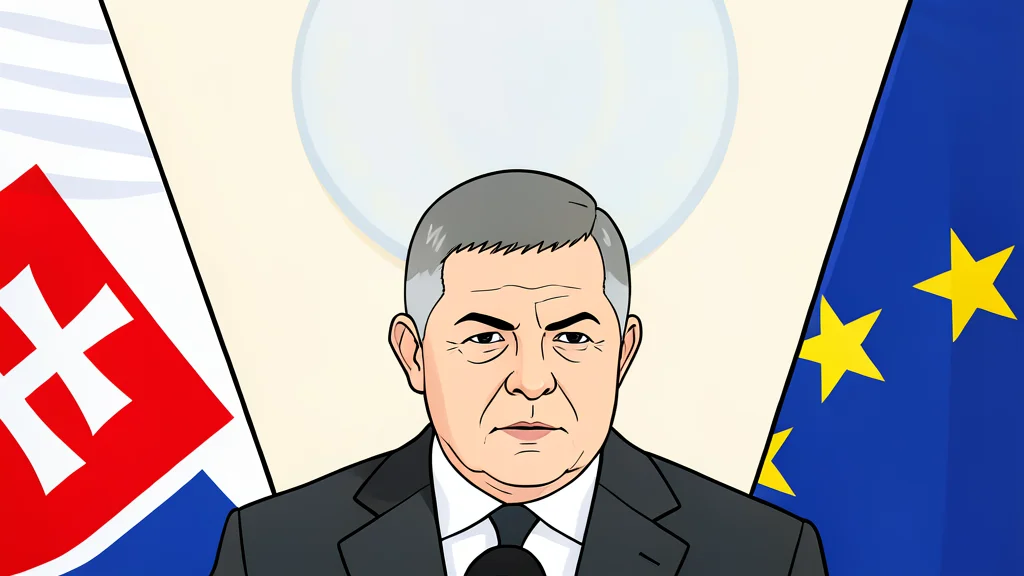
Slovak Prime Minister Robert Fico's warnings against military mobilization have triggered a diplomatic rift with Czechia and sparked debate over alliance solidarity.
Key points
- Slovak PM Fico stated he will prevent Slovakia from joining military conflicts under NATO Article 5, despite valuing membership.
- Czech President Petr Pavel criticized the remarks as a misunderstanding of alliance solidarity, sparking a public diplomatic dispute.
- Analysts suggest the rhetoric may be a political strategy to counter extreme-right rivals ahead of next year's elections.
Slovak Prime Minister Robert Fico has stirred significant controversy within the European political sphere by publicly questioning the practical implications of NATO’s collective defense clause. Speaking to medical students in Presov, Fico expressed deep concern over the escalating military conflict in Ukraine, warning that the situation risks spiraling into a wider war. He emphasized his personal fear of such an outcome and stated his intent to prevent Slovakia from becoming involved in any new armed conflict, regardless of the treaty obligations that bind the alliance.
The prime minister’s remarks specifically targeted Article 5 of the North Atlantic Treaty, which mandates that an armed attack against one member is considered an attack against all. While Fico affirmed that Slovakia values its NATO membership and its cooperation with allies, he drew a sharp line regarding military engagement. He declared that, as head of government, he would do everything in his power to ensure the country is never drawn into a military conflict due to the automatic solidarity mechanisms of the alliance. This stance has been interpreted by some as a potential softening of Slovakia’s commitment to the alliance’s core defensive structure.
Diplomatic tensions rise with Czechia
The comments have already precipitated a public dispute with neighboring Czechia. President Petr Pavel, a former chairman of NATO’s Military Committee, responded sharply to Fico’s statements. According to Pavel, a nation that claims to value NATO membership while expressing reluctance to participate in collective defense has fundamentally misunderstood the concept of solidarity within the alliance. This exchange highlights the growing friction between Slovak leadership and its immediate neighbors regarding the interpretation of alliance obligations in the current geopolitical climate.
Fico defended his position by characterizing the disagreement as a difference in perspective between a former military leader and a civilian head of state. He suggested that Pavel’s background naturally inclined him toward military solutions, whereas his own priority remained the preservation of peace. This rhetorical move has drawn criticism from opposition figures who argue that the role of a prime minister is to project strength and preparedness, rather than expressing fear. Former Slovak Foreign Minister Miro Wlachovsky noted that leaders are expected to outline concrete preparedness measures rather than expressing anxiety about potential threats.
Political motivations behind the rhetoric
Analysts suggest that Fico’s rhetoric may be driven by domestic political calculations rather than a genuine shift in foreign policy. With a challenging reelection campaign looming next year, the prime minister appears to be positioning himself against the extreme-right Republika party, which is openly hostile to NATO and the European Union. By adopting a more cautious tone regarding military involvement, Fico may be attempting to appeal to voters who are weary of the conflict in Ukraine and skeptical of further European entanglement in the region.
Observers have drawn parallels between Fico’s current stance and the rhetoric of other European leaders who have positioned themselves as champions of peace while questioning specific alliance commitments. This trend reflects a broader political dynamic in Central Europe, where national sovereignty and the desire to avoid war are increasingly used as political tools. The situation underscores the tension between the institutional requirements of a collective defense pact and the domestic political pressures that leaders face in their home countries.
Understanding the scope of Article 5
Experts in international relations have sought to clarify the mechanics of Article 5 to counter misconceptions about automatic military mobilization. According to Oana Lungescu, a former NATO spokesperson, the clause is primarily a tool for deterrence, designed to convince potential aggressors that they would face the entire alliance rather than a single member. She emphasized that NATO remains a defensive organization, and the invocation of Article 5 is not a trigger for immediate, unconditional combat action by every member state.
The decision-making process under Article 5 requires consensus within the North Atlantic Council, where every member state, including Slovakia, holds an equal vote. This means that any response to an attack must be agreed upon by all partners, allowing for nuanced diplomatic and military assessments. Despite this procedural safeguard, critics argue that public doubts about the willingness to act collectively can undermine the deterrent effect of the alliance. The debate continues over how such public statements may influence Slovakia’s standing among its allies and the broader perception of NATO’s cohesion.