Sweden's New Government Formation Faces Coalition Challenges

Magdalena Andersson has been tasked with forming a new government following the centre-left victory, facing significant hurdles in securing a stable parliamentary majority.
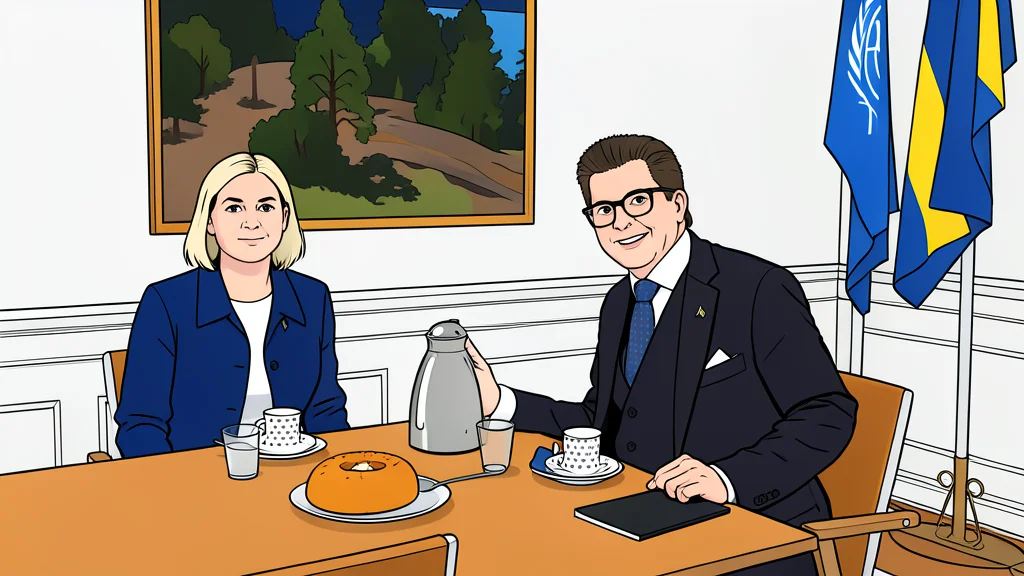
Sweden’s political landscape has shifted decisively following Sunday’s election results, with the centre-left bloc securing a narrow victory over the incumbent right-wing coalition. Andreas Norlen, the Speaker of the Riksdag, has formally invited Magdalena Andersson, leader of the Social Democrats, to attempt to form a new government. This move marks a pivotal transition for the country, ending the tenure of Prime Minister Ulf Kristersson and his four-party alliance, who announced their resignation after acknowledging their defeat in the electoral contest.
According to reporting from GN geopolitics/politics, Andersson has expressed readiness to undertake this responsibility, acknowledging the complexity of the task ahead. Her primary objective is to construct a stable governing coalition capable of uniting the political spectrum and moving the country forward. The immediate challenge lies in bridging the ideological gaps between the four opposition parties that collectively hold a majority, some of which have historically expressed reservations about governing together or supporting a coalition they are not part of.
Coalition Building Amidst Fragmentation
Andersson’s path to power is fraught with diplomatic intricacy. While she has confirmed her intention to build a broad coalition, specific details regarding which parties will join the cabinet remain undisclosed. Notably, she has explicitly excluded any cooperation with the far-right Sweden Democrats, a stance that aligns with the broader political consensus in Sweden to keep that party out of government. This exclusion means she must rely on the support of the Centre Party, the Greens, and the Left Party, all of whom have distinct policy agendas and varying levels of willingness to compromise.
The process of forming a government in Sweden can be lengthy and uncertain. Historical precedent suggests that securing a formal mandate from the parliament may take considerable time. For instance, following the 2018 election, it took former Social Democrat leader Stefan Lofven a record 134 days to secure the necessary parliamentary backing. Analysts note that the current political climate, characterized by a fragmented opposition, could lead to a similarly protracted negotiation period, leaving the country in a state of political limbo while Andersson works to solidify her support.
Constitutional Mechanisms and Deadlines
The Swedish parliamentary system provides a structured framework for these negotiations, but it also sets strict deadlines. The Speaker of the Riksdag has the authority to approach up to four candidates for the formation of a government. If all candidates are rejected by the parliament, the existing government remains in an interim capacity. In such a scenario, a new general election must be held within three months, a step that would introduce further political uncertainty and cost to the nation.
As Andersson begins her consultations, the focus will be on policy compromises that can satisfy the diverse demands of the opposition bloc. The ability to present a coherent and unified platform will be crucial in winning the confidence of the Riksdag. The coming weeks will likely be marked by intense behind-the-scenes negotiations, as party leaders seek to balance their own mandates with the practical necessity of governing. The outcome of these talks will determine whether Sweden moves swiftly into a new political era or faces a prolonged period of instability.
Looking Ahead to Parliamentary Votes
The next critical step is for Andersson to present her proposed cabinet to the Riksdag for a vote of confidence. Success will require not only the support of her own party but also the active endorsement or at least the abstention of the other opposition parties. Any failure to secure this support could lead to a rejection, forcing the Speaker to turn to other potential candidates or ultimately trigger a new election. The political stakes are high, with the stability of Sweden’s economy and its social policies at risk during this transitional period.
Observers will closely monitor the signals sent by the Centre Party and the Greens, as their support is essential for a viable majority. The dynamics between these parties, and their willingness to prioritize national unity over individual policy positions, will be the deciding factors in the success of Andersson’s mission. As the negotiations unfold, the Swedish public remains attentive to the progress, eager for a clear direction and a stable government to lead the country forward.