Sweden’s Left Bloc Begins Delicate Coalition Talks
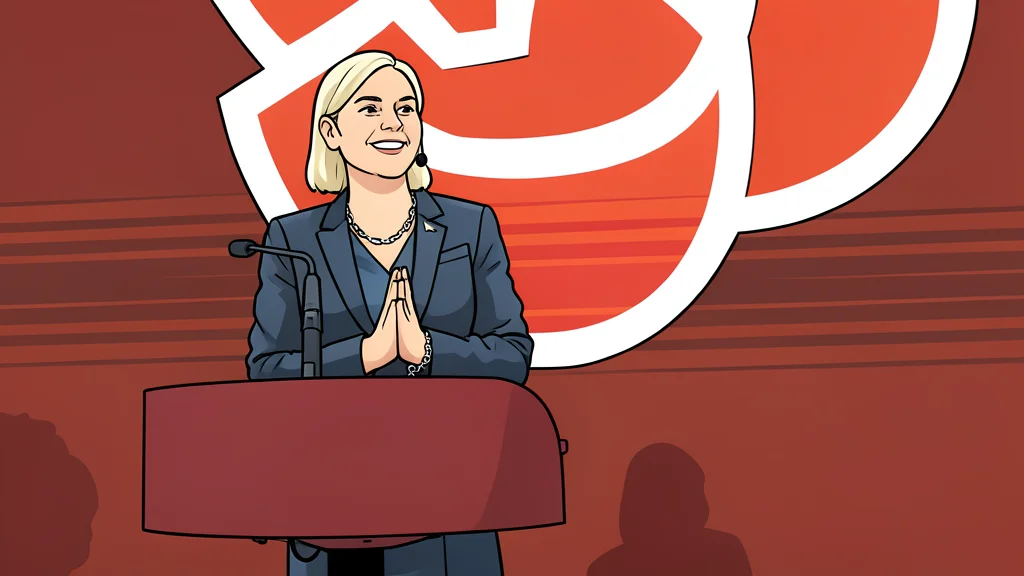
Magdalena Andersson has been tasked with forming a government following the left-wing bloc’s narrow election victory, facing significant hurdles in uniting fragmented parties before a strict deadline.
Sweden’s political landscape has entered a critical phase of negotiation as the country’s opposition leader, Magdalena Andersson, officially begins the process of forming a new coalition government. Following the confirmation of last week’s general election results, Parliament Speaker Andreas Norlen asked Andersson on Friday to explore the possibility of establishing an administration. This move comes after centre-right Prime Minister Ulf Kristersson resigned on Thursday, acknowledging the shift in power that resulted from the left-wing bloc securing a slim majority of seats in the 349-member parliament.
According to GN geopolitics/politics (en-US), Andersson described her mandate with a tone of humility, emphasizing the need for constructive cooperation across the political spectrum. In a public statement, she urged all political forces to set aside partisan tactics and prioritize the interests of Sweden and its citizens. The challenge she faces is significant, as the left-wing bloc holds only 176 seats, a majority of just three over the centre-right bloc’s 173 seats. This razor-thin margin means that any new government will require broad consensus and careful balancing of interests among multiple parties.
Fragmented Support Creates Negotiation Hurdles
The path to a stable government is complicated by the divergent demands of the smaller parties within the left-wing bloc. Andersson is expected to seek the support of the Greens, the Centre Party, and the Left Party, each of which brings distinct policy priorities to the table. The socialist Left Party has indicated that cabinet posts for its members are a prerequisite for their support, reflecting a desire for direct representation in the executive branch. In contrast, the liberal Centre Party has expressed reservations, insisting that it will not support a government that does not align with its broader economic and social policy goals.
These conflicting demands highlight the inherent difficulty of coalition building in Sweden’s multi-party system. While the Social Democrats lead the bloc, they do not have the numerical strength to rule alone. Consequently, Andersson must navigate a complex web of compromises to secure the confidence of the majority. The differing stances of the partner parties suggest that negotiations will be lengthy and intricate, with each faction leveraging its pivotal role to extract concessions on issues ranging from taxation to immigration and environmental policy.
Strict Deadline Governs Formation Process
Time is a decisive factor in this political transition. Andersson has been given until September 28 to form a government, a deadline that creates immediate pressure to reach agreements. If she fails to secure a majority, the responsibility will revert to Ulf Kristersson, who will then attempt to form a coalition with the centre-right bloc. The uncertainty of the outcome adds a layer of tension to the current negotiations, as both sides are aware that a failure to form a government could lead to political instability or even a repeat election.
Historical precedent suggests that such processes can be protracted. After the 2022 election, it took more than a month to finalize a government, as parties engaged in extensive deliberations to bridge ideological gaps. Observers note that minority and coalition governments are common in Sweden due to the presence of two major blocs, each comprising four parties. This structural reality means that no single party can govern independently, necessitating ongoing cooperation and compromise. The current situation mirrors this pattern, with the need for unity among the left-wing parties being the central test for Andersson’s leadership.
Forward Look To Parliamentary Confidence
The coming weeks will be closely watched for signs of progress or deadlock in the coalition talks. Analysts suggest that the willingness of the Centre Party and the Left Party to compromise will be the key determinants of success. If Andersson can present a cohesive platform that addresses the core concerns of these parties, she may secure the necessary support to form a government. However, if disagreements persist, the risk of a hung parliament or a return to the centre-right bloc increases. The stability of Sweden’s political system will hinge on the ability of these diverse parties to find common ground and establish a functional administration before the deadline expires.