Swedish Voters Decide Between Coalition Stability and Center-Left Return

Swedes cast ballots Sunday in a pivotal election that could mark the first time the hard-right Sweden Democrats enter a governing coalition, shifting the political landscape of the EU's newest NATO member.
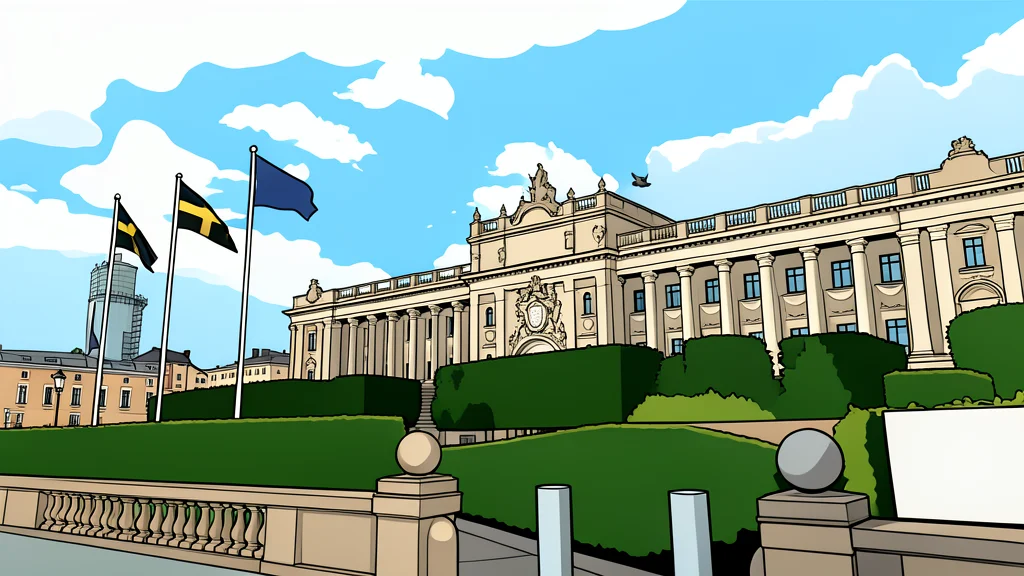
Swedish voters are heading to the polls on Sunday to determine the composition of their next parliament, a decision that carries significant implications for the country's political alignment. The election presents a binary choice for the electorate: either Prime Minister Ulf Kristersson secures a second term with a strengthened center-right bloc, or the center-left Social Democrats, led by former Prime Minister Magdalena Andersson, reclaim power after their defeat in 2022. According to GN geopolitics/politics (en-US), this contest is not merely about party popularity but about which of two major political blocs can assemble a stable majority to govern.
The stakes extend beyond domestic policy, touching upon Sweden's role as the newest member of the North Atlantic Treaty Organization. While traditional policy issues such as healthcare organization and economic management have been somewhat overshadowed by coalition arithmetic, the outcome will dictate the direction of Sweden's foreign and security policies in a turbulent European environment. The fragmentation of the campaign, as noted by electoral experts, suggests that voters are prioritizing governmental stability over specific legislative agendas, making the potential for a new governing configuration the central narrative of the day.
The Shift in Coalition Dynamics
A defining feature of this election is the potential entry of the Sweden Democrats into the government. Under the current arrangement, the party provides external support to the three-party center-right coalition led by Kristersson. However, Kristersson has indicated that if the right-wing bloc secures a majority, the Sweden Democrats will be offered ministerial posts. This marks a significant departure from previous practices and reflects a broader trend in European politics where populist right-wing parties are transitioning from opposition to governing partners.
The Sweden Democrats, which has moved toward the political mainstream under the leadership of Jimmie Åkesson, captured 20.5% of the vote in the previous election, becoming the largest party on the right. Their inclusion in a future government would signal a normalization of their political standing, despite their historical roots in right-wing extremist movements. This development is being watched closely by analysts who see it as part of a wider pattern of populist gains across the continent, including recent results in Germany.
Contested Narratives of Governance
The debate between the two main blocs centers on differing visions of the state's role and the direction of national policy. Magdalena Andersson and her Social Democrats are campaigning on a platform that emphasizes social welfare and a return to the center-left consensus that has dominated Swedish politics since World War II. In contrast, the center-right coalition argues for continued fiscal discipline and a different approach to immigration and security, topics that have become increasingly prominent in public discourse.
According to Zeth Isaksson, a sociologist at Stockholm University, the campaign has been characterized by a focus on who will form the government rather than specific policy details. He noted that while crime and inflation have decreased, these topics have not driven the conversation as much as the question of political viability. This shift suggests that voters are deeply concerned with the stability and coherence of the next administration, given the complex landscape of multiple parties that must negotiate to form a majority.
Watching the Coalition Calculus
With more than eight million eligible voters casting ballots for the 349-seat Riksdag, the preliminary results are expected around 9 p.m. local time. The key to watching will be the performance of the smaller parties within each bloc, as their ability to cross the four percent threshold for parliamentary representation will determine the final balance of power. A fragmented parliament could lead to prolonged negotiations, while a clear majority for either side would allow for a swift transition of power.
The outcome of this election will serve as a referendum on the changing nature of Swedish democracy, where traditional party lines are being tested by the rise of new political forces. As the dust settles on the polling stations, the focus will turn to the coalition talks that will determine whether the hard right secures its place in the cabinet or if the center-left restores the previous political order. This development will have ripple effects across European politics, providing a new data point in the ongoing transformation of the continent's political map.