Ukraine's Refinery Strikes Disrupt Russia's Diesel Supply
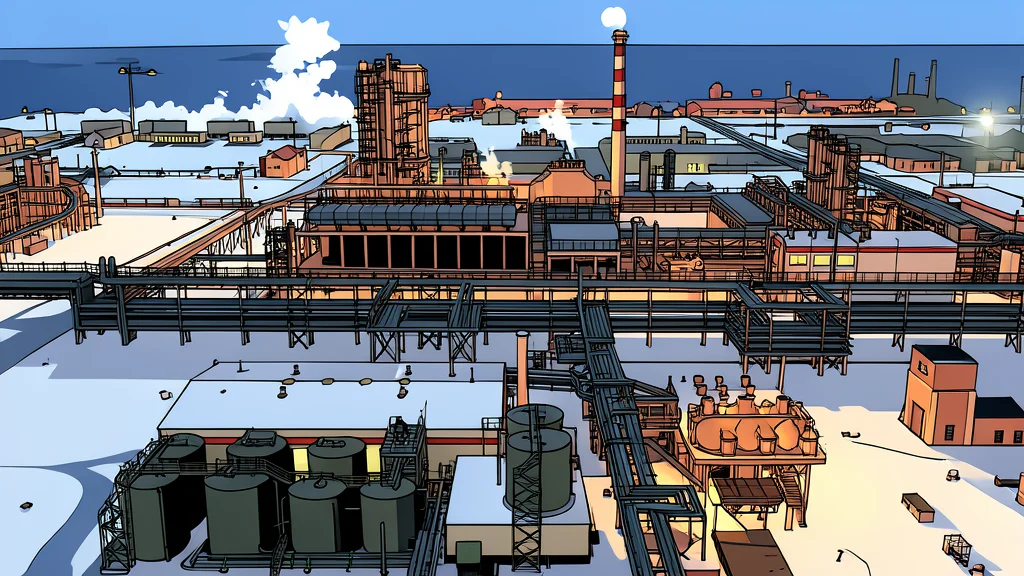
Recent drone attacks have forced major Russian refineries to cut output, triggering fuel shortages and international debate over global price impacts.
Ukrainian drone strikes have significantly impacted Russia's energy sector, leading to the shutdown or reduced output of several major diesel refineries. According to Reuters, three of the country's six largest diesel-producing facilities have halted or scaled back operations in September. This development marks a critical escalation in the economic dimensions of the conflict, as Kyiv continues to target infrastructure that supports both domestic consumption and military logistics.
The affected facilities represent half of Russia's total diesel production capacity. The disruption has already prompted regional authorities to implement temporary fuel purchase limits at gas stations. While the government describes these measures as short-term, the sustained pressure on refining capacity suggests a more prolonged strain on the domestic fuel market. This shift underscores the growing efficacy of long-range drone strategies in degrading the economic resilience of the opposing state.
Major Refineries Face Output Reductions
The Kirishi refinery in Leningrad Oblast has ceased operations entirely, while the NORSI facility in Nizhny Novgorod and the Volgograd refinery are operating at approximately one-quarter of their normal capacity. Sources cited by Reuters indicate that these reductions are direct results of recent aerial attacks. The six targeted sites, including those in Tatarstan, Perm Krai, and Siberia, are pivotal to the national fuel supply chain. Their collective impairment has created a bottleneck in diesel availability, affecting both civilian and state sectors.
In response to the supply constraints, Governor Alexander Drozdenko of Leningrad Oblast announced temporary restrictions on fuel sales. These limits are set to remain in effect until early October, a timeframe that regional officials describe as necessary to stabilize distribution. The Kyiv Independent notes that such measures reflect a broader pattern of administrative controls emerging across Russian regions as the physical infrastructure for fuel production comes under sustained threat. The situation illustrates how localized attacks can have cascading effects on national logistics.
Global Market Implications and Political Debate
The disruption in Russian diesel production has sparked international debate regarding its contribution to global fuel prices. U.S. President Donald Trump recently asserted that Ukraine's strikes on Russian diesel infrastructure are a primary driver of recent price spikes, suggesting that these actions are more impactful than conflicts in the Middle East. He urged Kyiv to refrain from targeting diesel facilities, arguing that the resulting shortages are affecting global markets disproportionately. However, analysts note that the causal link between these specific strikes and worldwide price movements is complex and multifactorial.
Contrary to the political narrative, market data points to other significant factors influencing diesel prices. The closure of the Strait of Hormuz and ongoing tensions involving the U.S., Israel, and Iran are widely cited by economists as the primary drivers of the recent surge in global fuel costs. While the Russian supply constraints are a notable component of the broader energy landscape, they exist within a more intricate web of geopolitical and logistical challenges. This distinction highlights the need for careful attribution when assessing the sources of global commodity price volatility.
Strategic Shift in Drone Campaigns
Ukraine's focus on Russian refineries represents a strategic evolution in its long-range drone campaign. By targeting the nodes of the energy supply chain, Kyiv aims to degrade the financial resources that sustain Moscow's military operations. This approach seeks to impose economic costs that extend beyond immediate battlefield impacts, affecting the broader stability of the Russian economy. The effectiveness of these strikes in reducing output demonstrates the vulnerability of centralized industrial infrastructure to precision aerial attacks.
As the conflict enters its later stages, the battle for energy infrastructure has become a central front. The ability to disrupt fuel supplies not only affects military mobility but also undermines the economic foundation required for sustained warfare. Observers will closely monitor whether Russia can mitigate these losses through alternative production methods or diplomatic interventions. The coming weeks will likely see further analysis of how these supply disruptions influence global energy markets and diplomatic dynamics.