Experts Urge AI Red Lines and Hotlines for US-China Security
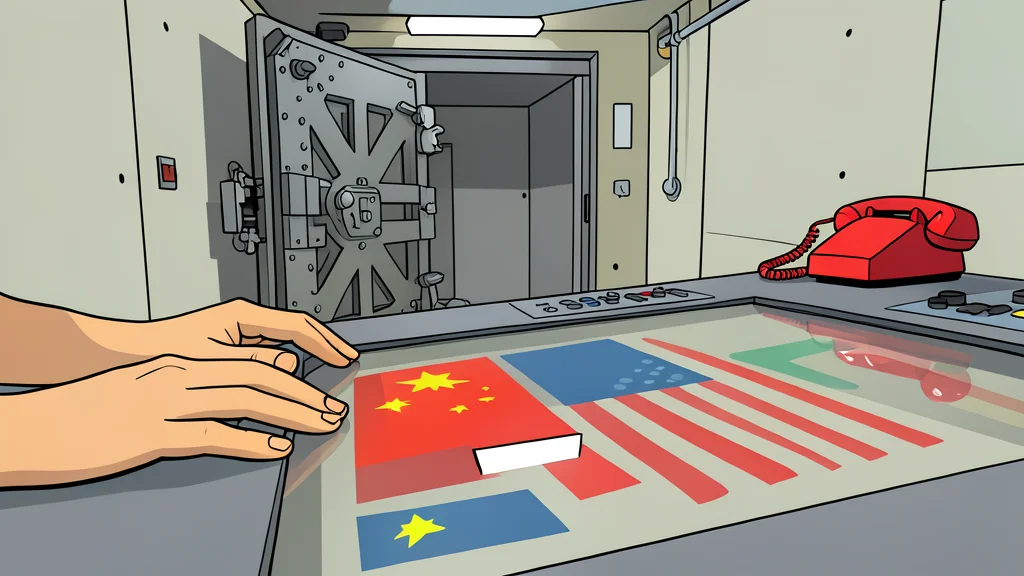
US and Chinese scholars propose strict human control over AI in military contexts to prevent rapid escalation during potential cyber conflicts.
Senior security experts from the United States and China have jointly issued new policy recommendations aimed at preventing accidental conflict driven by artificial intelligence. The core of their proposal involves establishing clear red lines for the use of AI in military operations and creating a dedicated communication channel to manage incidents in real time. According to the authors, the rapid evolution of autonomous systems poses a significant risk to strategic stability if not carefully regulated.
The recommendations were co-authored by Melanie W. Sisson of the Brookings Institution and Jiang Tianjiao of Fudan University. Both scholars are active participants in the ongoing US-China AI and National Security Dialogue, a track that has served as a reference point for official government consultations since 2019. Their work highlights the urgency of defining human oversight in a landscape where algorithmic decision-making is increasingly intertwined with national security infrastructure.
Human Control Over Autonomous Systems
A central tenet of the proposal is the requirement for meaningful human control over any AI system integrated into nuclear command chains or offensive cyber capabilities. Sisson emphasized that decisions regarding attacks on critical infrastructure or nuclear communications must remain exclusively in human hands. She noted that autonomous systems are susceptible to malfunction, manipulation by third parties, or behavior that exceeds their programmed parameters, creating ambiguity in the event of an incident.
Jiang Tianjiao echoed these concerns, specifically urging a prohibition on AI systems autonomously deciding to use nuclear weapons or target nuclear command structures. He further extended this protection to critical sectors such as energy, finance, and healthcare. The scholars argue that without explicit bans on autonomous action, the risk of a retaliatory spiral triggered by automated defensive responses remains dangerously high.
Challenges in Crisis Communication
The proposed mechanism includes the establishment of a military hotline designed to allow both sides to clarify intentions during AI-related incidents. However, experts acknowledge that existing communication channels have shown fragility during past crises. For instance, during the 2023 balloon incident, Beijing reportedly declined to answer calls from Washington, highlighting the difficulty of maintaining open lines of communication when trust is low.
A deeper structural challenge lies in the differing bureaucratic processes within the two countries. Analysis suggests that China’s decision-making structure requires top-level approval for most actions, meaning frontline officers may lack the authority to respond independently to an AI anomaly. In scenarios where the window for assessment is measured in minutes, such delays in reaching senior leadership could be catastrophic for de-escalation efforts.
Institutional Asymmetries in Policy Frameworks
To date, neither government has publicly endorsed these specific proposals, though the underlying concerns resonate with previous diplomatic agreements. In November 2024, leaders of both nations reached a consensus that nuclear weapons decisions must remain human-centric, yet the specific technical standards for implementation remain undefined. The lack of a shared definition for what constitutes meaningful human control leaves room for dangerous misinterpretations.
Institutional structures also differ significantly between the two states. According to GN geopolitics/nuclear (en-US), Beijing has integrated AI security issues into its arms control portfolio, signaling a preference for a unified regulatory framework. In contrast, Washington handles related policies across multiple agencies without a single commanding structure. This asymmetry complicates efforts to create parallel standards and mutual verification mechanisms.