Guterres Calls for Fundamental Shift in UN Peacekeeping Strategy
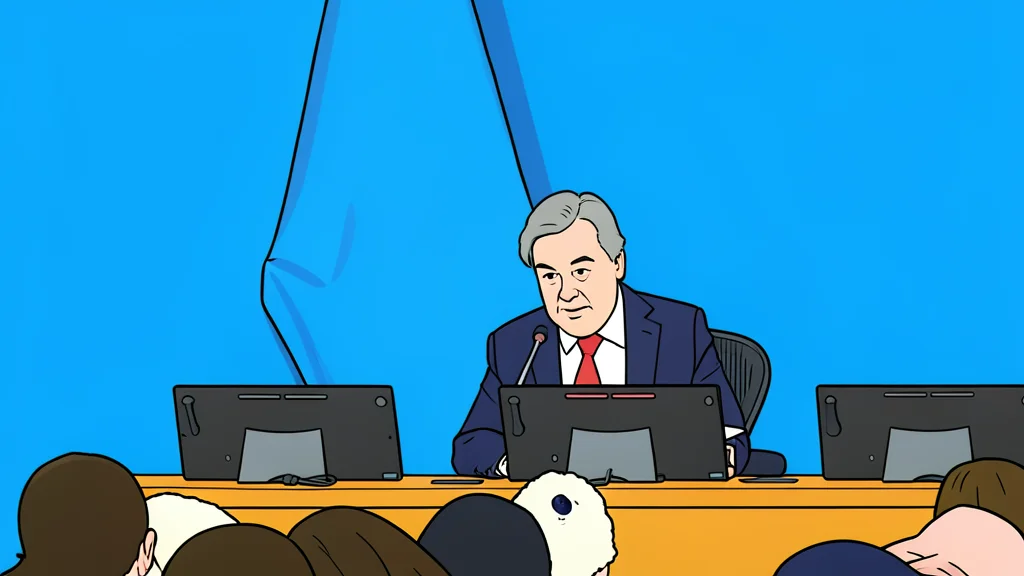
The UN Secretary-General has urged the Security Council to fundamentally rethink how peacekeeping missions are deployed, arguing that current mandates often fail to address the changing nature of modern conflicts.
UN Secretary-General Antonio Guterres has called on the Security Council to overhaul the deployment and support structures of United Nations peacekeeping operations. Speaking at a debate in New York, he argued that the evolving nature of armed conflicts has exposed significant limitations in how current mandates are designed and implemented. According to reports from GN geopolitics/un, Guterres emphasized that the organization does not lack the necessary tools but frequently lacks the political space required to utilize them effectively.
The Secretary-General stated that peacekeeping must be repositioned as a political instrument that supports, rather than substitutes for, political solutions. He noted that for decades, UN forces were primarily deployed to help parties implement comprehensive peace agreements, but such agreements are now rarer and more fragile. He warned that most current missions operate in environments where peace remains elusive, leading to increased attacks on peacekeepers and a growing sense of impunity regarding violations of international law.
Prioritizing Political Settlements First
Central to Guterres' proposed reset is the principle of placing peacemaking before peacekeeping. He asserted that operations should only be deployed when a peace agreement or at least a robust ceasefire is already in place. The Secretary-General acknowledged that while peacekeepers can help preserve peace, they cannot create lasting peace in the absence of a political settlement. He distinguished this approach from peace enforcement, stating that when circumstances require forceful intervention, the Council must choose peace enforcing rather than relying on traditional peacekeeping mandates.
Strengthening Partnerships With Host Nations
A second key priority identified by Guterres is establishing a new partnership model with host states. He emphasized that peace cannot be imported but must be built from within by national actors who hold the key to local stability. This approach requires that host governments be consulted during the establishment and renewal of mandates, ensuring that the voices of other conflict parties and civil society are also heard. By integrating host nations more deeply into the process, the UN aims to create more sustainable and locally grounded peace efforts.
Demanding Council Unity And Flexibility
Guterres outlined further priorities, including designing mandates that reflect the actual operating circumstances and empowering missions with greater operational flexibility and adequate resources. He stressed the importance of stronger cooperation among the UN, regional organizations, and host countries, noting that no single organization can address today's complex conflicts alone. Ultimately, he argued that the effectiveness of UN peacekeeping depends on political unity among Security Council members, urging them to build that unity through effort, engagement, and compromise rather than relying on budgets or technology.