Informal US-China Dialogues Focus on AI Safety Amid Tensions
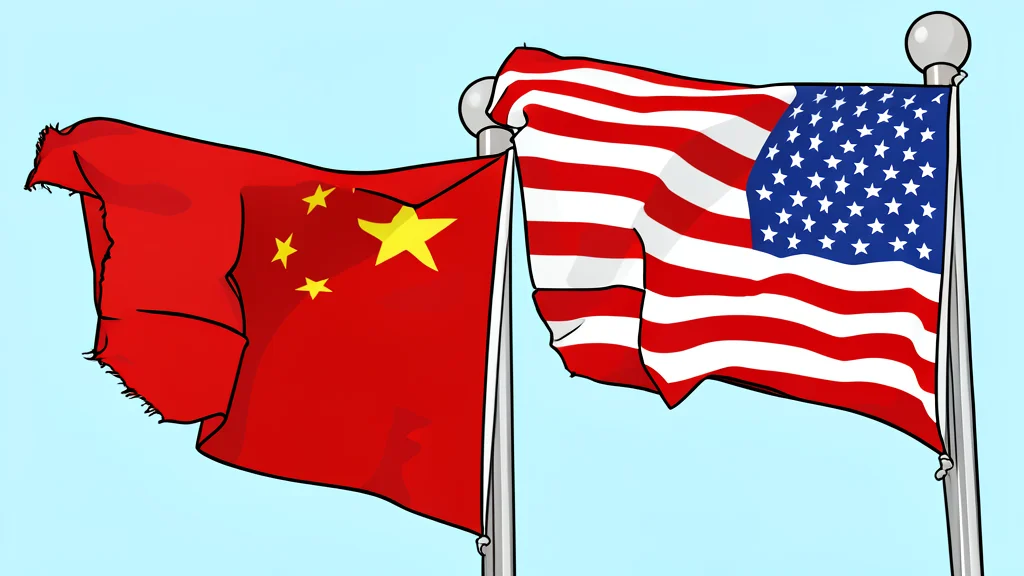
As official diplomatic channels face strain, private experts are working behind the scenes to find common ground on artificial intelligence risks.
With President Trump and Chinese leader Xi Jinping scheduled to meet in Washington next Thursday, the backdrop for their discussion on artificial intelligence remains tense. According to NPR World, recent weeks have seen the US administration accuse Chinese firms of stealing intellectual property through model distillation, while Beijing has condemned US chip export restrictions as a strategic attempt to stifle Chinese technological growth. This cycle of mistrust suggests that formal diplomatic breakthroughs may be difficult to achieve in the immediate term.
However, beneath this official friction, a quieter and more sustained form of engagement is taking place. Known in diplomatic circles as "Track Two" dialogue, this network of informal meetings brings together experts, former officials, and academics from both nations. These discussions, often hosted by think tanks or universities, are described by participants as a crucial space for candid conversation on the shared perils of AI, even when government-to-government relations are at a low ebb.
The Role of Private Diplomatic Channels
Track Two diplomacy has long served as a foundational support for official US-China relations, dating back to the early 1970s. Sarah Beran, a former US diplomat and incoming president of the National Committee on US-China Relations, notes that these informal exchanges allow for a level of candor that is rarely possible in formal settings. "People can talk about sensitive issues more candidly and also don’t feel the need to come to any consensus that would become public," she explained. This lack of immediate public accountability allows participants to explore complex policy options without the pressure of immediate political positioning.
The utility of these channels is not merely theoretical; they have tangible precedents. Beran recalled how, after military-to-military communications were suspended following the 2022 visit by then-Speaker Nancy Pelosi to Taiwan, Track Two forums were used to float ideas for resuming dialogue. These informal discussions helped define the structure and topics for future talks, which were later formalized by the Biden and Xi administrations in 2023. This pattern demonstrates how private sector engagement can pave the way for official agreements by reducing friction and clarifying mutual interests.
Building Trust Through Technical Expertise
For specialized fields like artificial intelligence, where technical complexity meets geopolitical competition, these informal dialogues are particularly vital. Jack Shanahan, a retired Air Force general involved in military AI discussions, highlighted that informal talks helped lay the groundwork for a recent agreement that human control must remain over nuclear weapons decisions involving AI. He attributed this progress to years of quiet, low-level dialogue that allowed experts to identify shared safety concerns. Similarly, Samm Sacks, an expert at Johns Hopkins and New America, noted that recent discussions in Shanghai and Beijing revealed significant common ground on AI safety, despite the loud public disputes over chip controls and intellectual property.
These experts argue that while the US and China are locked in fierce competition, there is a growing recognition that the dangers of unregulated AI are a shared problem. The fear of technological chokepoints and the potential for AI to be used as a geopolitical cudgel is a concern that transcends national borders. By focusing on the technical and ethical dimensions of AI development, Track Two participants are attempting to build a framework of mutual understanding that could, in time, inform more robust official policies.
Challenges to Future Cooperation
Despite the potential of these channels, obstacles remain significant. The current climate of mutual suspicion makes it difficult to translate informal consensus into binding agreements. Beran acknowledges that AI is one of the most difficult areas for dialogue due to the deep-seated fears on both sides regarding technological dominance and security. The risk that one party views the other’s advancements as a direct threat complicates any effort to establish shared norms or standards.
As the leaders prepare for their meeting, the question remains whether the insights gained from these private conversations will influence the official agenda. While Track Two diplomacy is not a substitute for state-to-state negotiation, it provides a necessary buffer and a space for continuity. The coming days will reveal if the shared concerns identified in these informal settings can be leveraged to create a more stable framework for managing the rapid evolution of artificial intelligence.