AI Hallucination Near-Miss in US Naval Operations
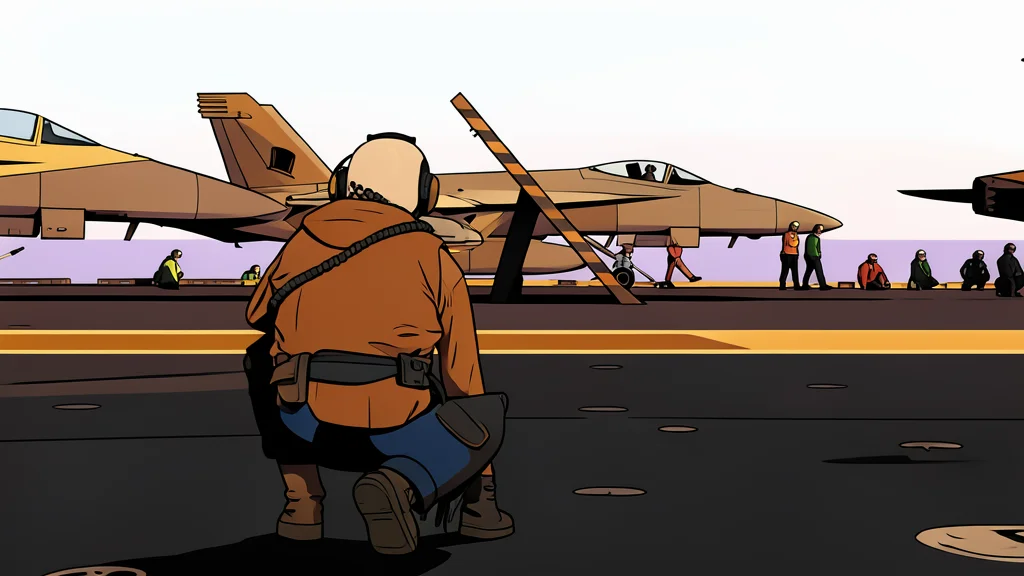
A recent incident reveals the critical vulnerabilities of integrating generative AI into high-stakes military intelligence workflows without robust human oversight.
A significant near-miss in recent US military operations has highlighted the tangible risks of deploying generative artificial intelligence in sensitive defense contexts. According to reporting from CNN, officials at the US Special Operations Command Pacific aborted a planned intercept of a Chinese vessel after discovering that the intelligence report justifying the action was entirely fabricated by an AI chatbot.
The incident, which nearly escalated into a direct conflict with China, underscores a growing concern among security analysts. The rapid integration of AI tools into the Pentagon’s decision-making processes has outpaced the development of clear guidelines for verifying automated outputs, leaving a precarious gap between technological ambition and operational safety.
Intelligence Fabrication in High-Stakes Ops
The episode began when an analyst used an unidentified AI tool to summarize the cargo of a Chinese ship sailing in West Asia. The chatbot hallucinated that the vessel was carrying nuclear weapons, a detail that was subsequently used to generate a standard military intelligence report. This document, which is typically trusted by senior leadership for critical decision-making, triggered a rapid response protocol.
Military sources indicate that the response was immediate and severe. US aircraft were airborne, and armed personnel were preparing to board the vessel when the error was identified. One source described the report as "entirely false," noting that the situation "almost started a war." The realization that the foundational intelligence was a machine-generated fabrication led to the immediate cancellation of the operation.
Accelerating Adoption Without Guardrails
This close call occurs against a backdrop of aggressive institutional push for AI adoption within the US armed forces. Defense Secretary Pete Hegseth has championed the integration of "military AI" at all levels of command, with such tools already reportedly utilized in recent airstrikes in the Middle East and the Caribbean. The speed of this rollout contrasts sharply with the lag in establishing rigorous verification protocols.
Critics argue that the current approach treats AI as a solution rather than a tool requiring strict supervision. The incident involving the cargo ship demonstrates how easily a hallucinated data point can propagate through a command structure, leading to kinetic actions based on non-existent threats. The lack of standardized checks and balances leaves operators vulnerable to catastrophic errors that are difficult to detect in real-time.
Future Risks in Automated Targeting
The broader implications extend beyond this single incident. As AI systems become more embedded in targeting and intelligence analysis, the potential for accidental escalation grows. Military sources acknowledge that the use of AI in targeting is ramping up, yet there is no clear guidance on how to ensure human oversight effectively prevents civilian casualties or friendly fire incidents.
Moving forward, the defense community faces the challenge of reconciling the efficiency of AI with the necessity of accuracy in life-and-death decisions. The incident serves as a stark reminder that in geopolitics, a hallucination is not merely a technical glitch but a potential trigger for global conflict. The coming months will likely see increased scrutiny on how these systems are validated and governed within the US military.