Trump Signs Greenland Security Pact with Denmark and Local Leaders
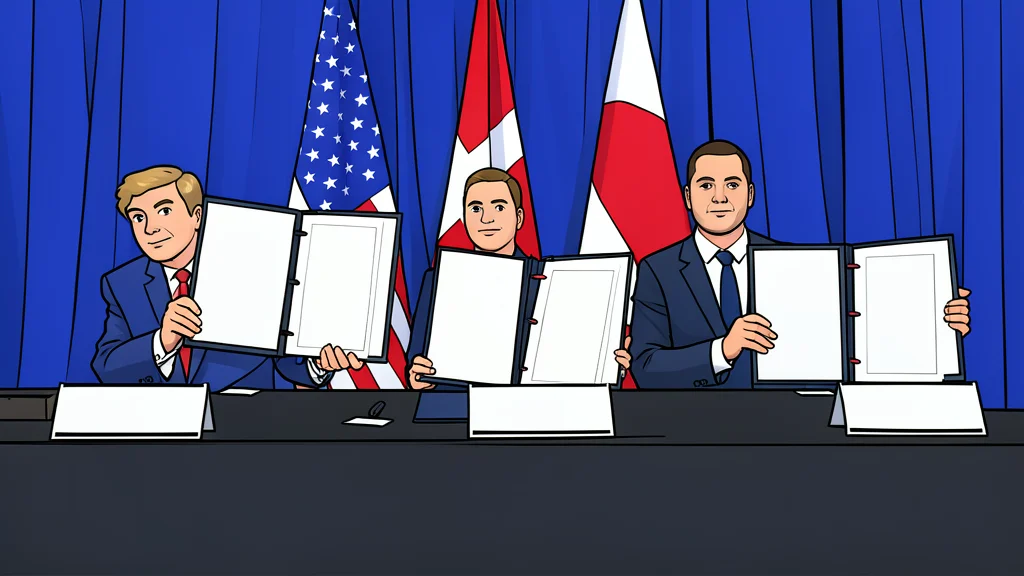
The agreement expands U.S. military rights in the Arctic but stops short of annexation, aiming to de-escalate tensions.
Key points
- Trump signed a security deal with Denmark and Greenland, granting the U.S. expanded military rights without annexing the territory.
- The agreement allows the U.S. to build new defense bases at Narsarsuaq and Mestersvig, expanding on the existing Pituffik base.
- Danish and Greenlandic leaders insist the pact preserves sovereignty, while U.S. officials frame it as a permanent security guarantee.
President Donald Trump signed a new security agreement regarding Greenland on Tuesday, concluding a high-stakes diplomatic standoff that had threatened to fracture transatlantic alliances. The trilateral ceremony took place at the United Nations General Assembly in New York, attended by Danish Prime Minister Mette Frederiksen and Greenlandic Prime Minister Jens-Frederik Nielsen. According to reports from Time Magazine, the deal was designed to address U.S. national security concerns while preserving the sovereignty of the Danish territory.
The agreement marks a significant shift from Trump’s earlier threats to annex the island or withdraw from NATO over the dispute. Instead of transferring control, the pact grants the United States expanded military privileges, including the ability to establish new defense areas at Narsarsuaq and Mestersvig. While Trump described the arrangement as providing "permanent control" over security matters, Danish and Greenlandic officials emphasized that the island’s status as an autonomous part of Denmark remains unchanged.
Expanded Military Access Defined
Under the new terms, the United States will be permitted to expand its existing military footprint, which currently includes the Pituffik Space Base in the northwest. A State Department official noted that the agreement ensures only the U.S. and its allies can make sensitive investments in the region, explicitly blocking potential adversarial presence. Trump stated that no rival nation will be allowed to establish a military presence or make strategic investments without Washington’s express written approval.
Critics have raised questions about how much this differs from the 1951 defense agreement, which already granted the U.S. extensive rights. However, proponents argue that the new explicit guarantees regarding "permanent" security control represent a clearer diplomatic framework. Torrey Taussig of the Atlantic Council described the outcome as a significant feat for Danish diplomacy, noting that it has effectively lowered tensions with the current U.S. administration.
Sovereignty Concerns and Diplomatic Reactions
The deal follows a period of intense pressure, during which Trump threatened tariffs on European allies and suggested pulling the U.S. out of NATO if his demands were not met. These moves had sparked widespread concern among Greenlanders about their sovereignty and future autonomy. By framing the agreement as a security partnership rather than a transfer of territory, the signing ceremony aims to resolve the standoff while maintaining the political status quo.
European allies have largely viewed the agreement as a positive step toward stabilizing relations with Washington. The emphasis on NATO enhancement and shared defense responsibilities is seen as a way to integrate Greenland more firmly into the Western security architecture. This approach seeks to counter Russian and Chinese interests in the Arctic, particularly regarding emerging shipping routes and critical mineral resources.
Strategic Implications for the Arctic
The strategic positioning of Greenland between the U.S., Russia, and Europe remains central to the agreement’s rationale. The new pact reinforces the view that the island is a vital component of North American defense. As the Arctic becomes increasingly important for global logistics and resource extraction, the clarified rules for military and economic access are expected to influence future geopolitical dynamics in the region.
Looking ahead, observers will watch how the U.S. implements the new defense areas and whether the diplomatic relationship with Denmark and Greenland stabilizes. The success of this arrangement will likely depend on mutual trust and the continued alignment of security interests. For now, the signing marks a temporary resolution to a crisis that had the potential to reshape the broader transatlantic security order.