Lula Warns UN Credibility at Historic Low Amid Conflict Surge
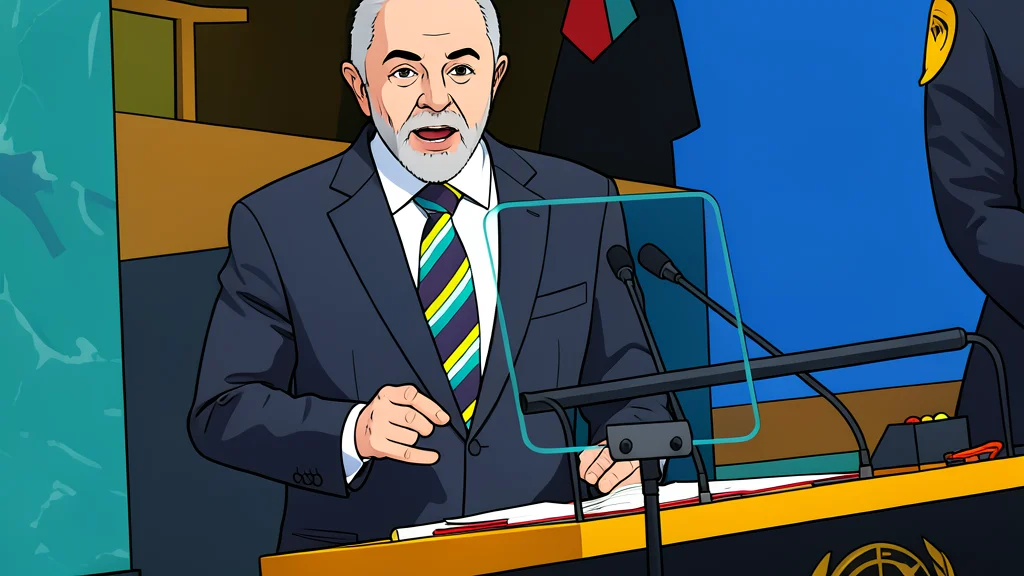
Brazil's leader criticizes the UN's inability to mediate global wars while defending national sovereignty ahead of October elections.
Key points
- Lula stated that UN credibility is at its lowest point due to the failure to resolve wars in Ukraine and the Middle East.
- The Brazilian president rejected foreign interference in domestic affairs, citing sovereign rights ahead of the October elections.
- Lula warned that 2025 marks the highest number of armed conflicts since World War II, driven by a new global arms race.
Brazilian President Luiz Inácio Lula da Silva delivered a sharp critique of the United Nations during his address to the General Assembly, asserting that the organization's credibility has reached an unprecedented low. Speaking just before U.S. President Donald Trump took the podium, Lula argued that the UN is failing in its primary mission to prevent war, citing the record number of armed conflicts occurring globally in 2025.
According to the Broomfield Enterprise, the Brazilian leader described the current international landscape as a breakdown of political norms, where the "law of the stronger" has superseded diplomatic mediation. He warned that trillions of dollars are being diverted into a new arms race, reflecting a deepening crisis in multilateral cooperation that threatens to leave humanity exposed to persistent conflict.
Defending Sovereignty Amid Tensions
Lula’s remarks carried a distinct diplomatic edge, as he simultaneously urged for stronger international action on global wars while firmly rejecting any external interference in Brazil's internal affairs. With national elections approaching in October, the president emphasized that Brazilian democracy is a sovereign matter, stating unequivocally that no foreign power will dictate the country's political path.
These comments highlight the escalating friction between Brasília and Washington, which has intensified since the U.S. imposed tariffs on Brazilian goods. The trade dispute, linked to the legal proceedings against former President Jair Bolsonaro, has further strained relations, creating a complex backdrop for Lula’s bid for a fourth, non-consecutive term against his main rival, Senator Flávio Bolsonaro.
Calls for Institutional Reform
The Brazilian president called for comprehensive reform of the UN Security Council, arguing that the body is no longer equipped to manage contemporary security challenges. Lula suggested that the institution must recover its capacity for dialogue and mediation to prevent the complete collapse of political engagement, which he characterized as a move beyond mere idealism into harsh realism.
Despite the geopolitical tensions, Lula also addressed economic resilience, claiming that Brazil will set a new export record this year despite significant tariff pressures. This juxtaposition of economic optimism with diplomatic pessimism underscores the dual-track strategy of the current administration as it navigates both domestic political hurdles and a volatile international environment.
Watchpoints for Diplomatic Shifts
Analysts will now watch for immediate reactions from the U.S. delegation and other major powers regarding Lula’s demands for Security Council reform. The next few weeks are critical for observing whether these rhetorical shifts translate into concrete diplomatic initiatives or if the divide between Western and Global South powers continues to widen during the upcoming session.