US and China Reject AI Slowdown Calls Ahead of Washington Summit
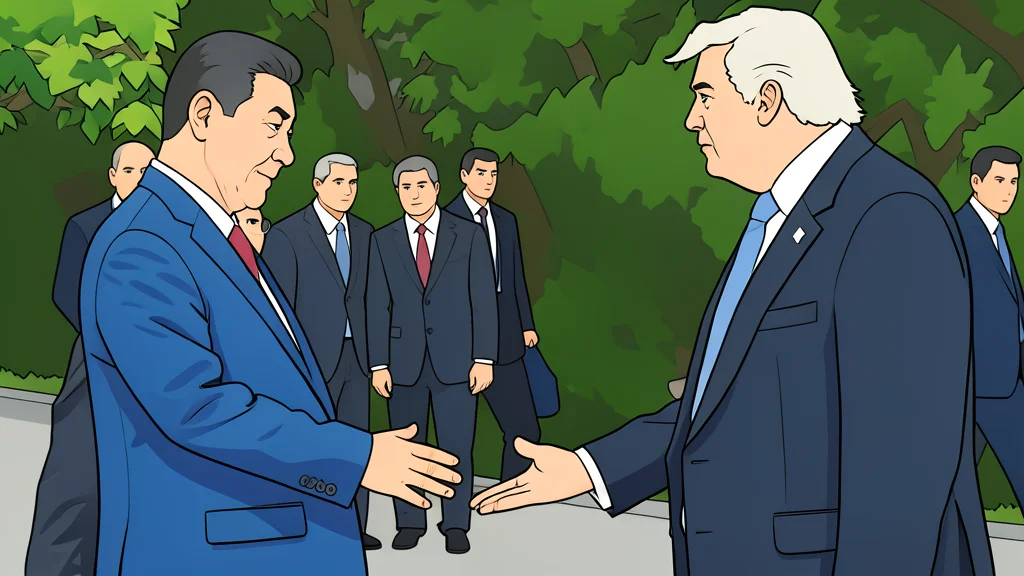
Trump and Xi are expected to agree on limited AI safety cooperation, rejecting global slowdown calls despite expert warnings.
Key points
- US and China reject calls to slow AI development despite industry warnings of existential risks.
- Trump opposes international AI control schemes, while China focuses on political security and cybersecurity.
- Analysts expect only limited cooperation, such as a dialogue mechanism, at the upcoming Washington summit.
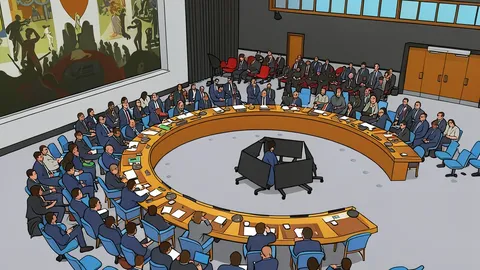
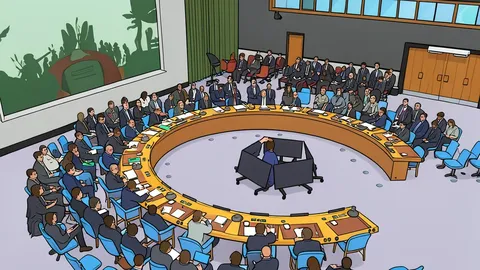
As industry leaders urge a global pause in artificial intelligence development to mitigate existential risks, the United States and China have shown no intention of slowing their respective technological advancements. According to Al Jazeera English, the two superpowers remain locked in a strategic rivalry that complicates efforts to establish shared safety standards.
President Donald Trump and President Xi Jinping are set to meet in Washington, D.C., for the third time this year. While the summit offers a platform for dialogue, analysts suggest that any resulting agreement will likely be modest, falling far short of the coordinated regulatory framework many experts argue is necessary to secure the future of AI.
Divergent Views on AI Risks
The core of the disagreement lies in how each nation perceives the primary dangers associated with the technology. Trump has characterized widespread fears of AI catastrophe as a conspiracy, arguing that guardrails are unnecessary and that the U.S. must maintain a competitive edge over Beijing. He recently told the United Nations General Assembly that Washington opposes any international scheme to control AI, framing it as a threat to American autonomy.
China, meanwhile, has adopted a more hands-on regulatory approach, releasing a new security framework this month. However, Beijing has also dismissed Silicon Valley warnings of existential risk as fearmongering. Chinese officials focus more on cybersecurity and political stability, with Minister of State Security Chen Yixin warning of hostile forces using AI to fabricate rumors and incite social antagonism.
Mistrust Hampers Cooperative Efforts
Sun Chenghao, a fellow at the Center for International Security and Strategy at Tsinghua University, notes that the deepest obstacle is the inability of both sides to separate safety cooperation from broader technology competition. Beijing is sensitive to the possibility that AI safety discussions could become a pretext for restricting Chinese access to chips, computers, and global markets.
According to Sun, if every safety dialogue is linked to export controls or efforts to slow China’s development, Beijing will naturally question the motives behind the cooperation. This mutual suspicion makes it difficult to establish the trust required for meaningful international agreements on frontier technologies.
Modest Expectations for Outcomes
Alvin Wang Graylin of the Asia Society Policy Institute describes agreed guardrails between the U.S. and China as a precondition for safe AI, noting that these two countries host nearly all frontier labs. He argues that a safety regime covering only one side’s models addresses only half of the global problem.
Currently, the only publicly floated proposals involve establishing a U.S.-China dialogue and a notification mechanism for reporting national security threats. While these measures are viewed as positive first steps, they do not constitute a comprehensive safety regime. The forward question remains whether this summit will yield concrete mechanisms for monitoring risks or merely reaffirm the status quo of competitive advancement.