Washington Must Rebuild Institutional Capacity for Russian Negotiations
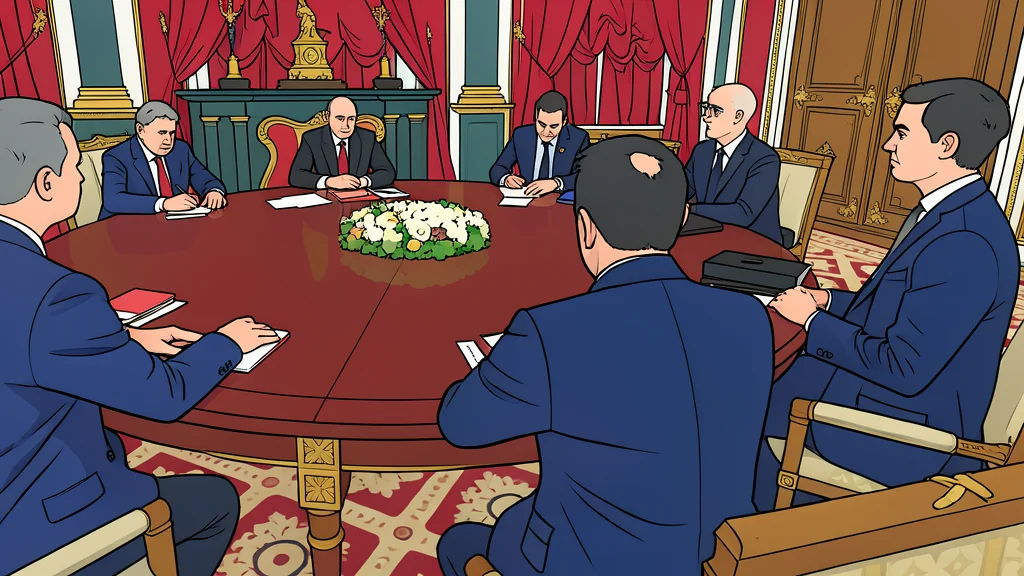
High-level shuttle diplomacy has reopened doors, but experts warn that the United States lacks the sustained institutional infrastructure needed to manage complex, long-term engagements with Moscow.
Washington has recently dispatched senior envoys to both Moscow and Kyiv in an effort to break the logjam in Ukraine conflict negotiations. According to Foreign Policy, this move marks a resumption of high-level dialogue after a period of significant drift in U.S.-brokered talks. While the initiative aims to re-engage with both President Vladimir Putin and President Volodymyr Zelensky, analysts caution that these visits alone are insufficient to resolve the core strategic disputes.
The current approach relies heavily on episodic shuttle diplomacy, which can reopen channels of communication but fails to replace the need for sustained official structures. There is little evidence that either side has made substantial concessions on the fundamental issues dividing them. Consequently, the diplomatic effort faces the risk of remaining a series of isolated meetings rather than a coherent strategy for managing the conflict and its aftermath.
Beyond the Conflict Table
Managing the war in Ukraine is viewed as only the initial phase of a broader U.S.-Russia relationship. Even if a cease-fire is achieved, Washington and Moscow will need to address a wide array of other issues, including nuclear risk reduction, strategic stability, outer space governance, and Arctic cooperation. These areas do not require a return to warm relations or mutual trust, but they do demand a consistent ability to conduct difficult business with a challenging counterpart.
The challenge lies in the fact that the United States has lost much of the institutional capacity required for such sustained engagement. Over the past decade, policies focused on isolation and pressure have eroded the human and organizational infrastructure that once allowed for continuous dialogue with Moscow. This hollowing out of expertise creates a significant gap in the ability to manage complex, long-term interactions.
The Asymmetry of Diplomatic Preparation
Veteran diplomats note that Russian negotiators are exceptionally disciplined and well-prepared, often possessing a deep understanding of U.S. political dynamics and institutional processes. In contrast, American officials often face a fragmented attention span, competing with issues related to China, Europe, and domestic politics. This asymmetry means that Moscow is frequently better positioned to anticipate and react to U.S. moves, placing American negotiators at a disadvantage in prolonged discussions.
Former Ambassador Rose Gottemoeller, who negotiated the New START treaty, described her Russian counterparts as highly trained and technically capable. She highlighted their fluency in the negotiating process and their advantage in language skills, suggesting that the U.S. must invest in rebuilding its own depth of expertise to compete effectively at the table.
Rebuilding Institutional Depth
To address these gaps, the United States needs to move beyond ad-hoc diplomatic visits and establish robust, institutional channels for engagement. This requires not just high-level political will but also a sustained investment in the personnel and processes that manage day-to-day relations. Without this foundational work, the U.S. risks being unable to manage the inevitable interactions with Russia on critical global issues.
The path forward involves recognizing that diplomacy with Russia is not a temporary project but a permanent requirement of great-power politics. The upcoming weeks will test whether Washington can translate high-level intent into the steady, institutionalized engagement that both sides require for stability.