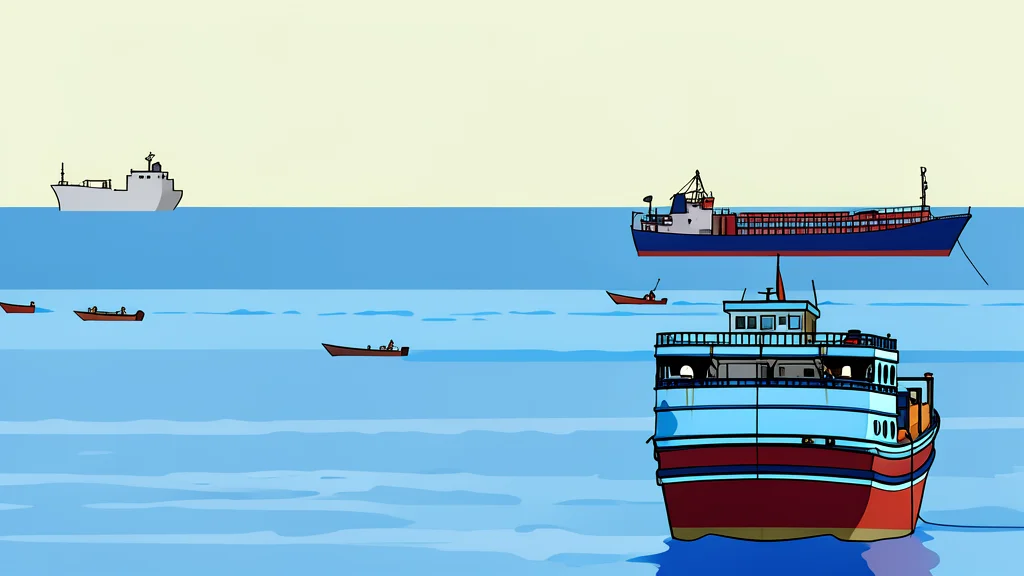
Hormuz Talks Stall as Regional Consensus Eludes Diplomats

Efforts to restore maritime traffic in the Strait of Hormuz have stalled after Saudi Arabia requested a delay to the Oman-hosted summit, citing concerns over the long-term implications of the proposed agreement.
Diplomatic efforts to establish temporary transit routes through the Strait of Hormuz have hit a significant pause following the postponement of a scheduled summit in Oman. Officials from Iran, Iraq, and several Gulf Cooperation Council nations were set to meet in Salalah to address the disruption of maritime traffic amid ongoing tensions between Tehran and Washington. However, the gathering was canceled on Sunday night without a new date being announced, leaving the future of the waterway in uncertainty.
According to Iran’s Ministry of Foreign Affairs, Saudi Arabia’s objection was the primary driver for the delay. While no official confirmation was provided regarding the specific nature of Riyadh’s concerns, reports from US media outlets suggest that Saudi officials submitted amendments to the Iran-Oman proposal. They reportedly feared that the current wording would cement a new status quo in the region that would be unacceptable to their national interests, effectively locking in a framework they do not support.
Strategic Concerns Behind the Delay
The postponement comes at a critical time for regional energy security. Just days prior, Saudi Arabia shut down its critical East-West oil pipeline after drone attacks originating from Iraq, which US President Donald Trump attributed to Iranian influence. Additionally, the kingdom has faced repeated missile and drone strikes from the Houthis, who recently intensified their control over Yemen’s Red Sea coast. These developments have heightened Riyadh’s sensitivity to any agreements that might alter the strategic balance in the Gulf without ensuring robust security guarantees for its infrastructure.
Analysts suggest that the dispute is less about the immediate mechanics of shipping and more about the broader geopolitical legitimacy of the arrangement. By seeking a regionally backed bill, Tehran aims to insulate its bilateral agreement with Oman from accusations of being a unilateral diktat. However, the lack of unified support from key Gulf states complicates this strategy, as the GCC nations are struggling with sharp decreases in energy receipts and desire stability without endorsing a framework they view as risky.
Tehran’s Path Toward Regional Legitimacy
Despite the setback, Iranian officials have signaled their intent to continue pursuing the bilateral agreement with Oman. Esmaeil Baghaei, the spokesman for the Iranian Foreign Ministry, stated that Tehran will decide in consultation with Muscat on how to announce or register the deal. Iran has made it clear that it will only engage with the United States on ending the conflict and lifting the naval blockade if there are tangible moves to return to the June memorandum of understanding.
Uncertainty Over Future Maritime Routes
The situation leaves the global energy market in a state of flux. While GCC states seek to keep ships moving and their economies insulated from a war they neither started nor can end, the diplomatic impasse threatens to prolong disruptions in one of the world’s most critical energy corridors. The core question remains whether regional consensus can be forged before the security situation deteriorates further, or if the lack of unified Gulf support will force Tehran to rely solely on its bilateral framework with Oman.