Iran Accuses IAEA Reports of Enabling Recent Military Strikes

Tehran claims the nuclear watchdog’s assessments provided the narrative foundation for US and Israeli attacks, particularly the strike on Lamerd.
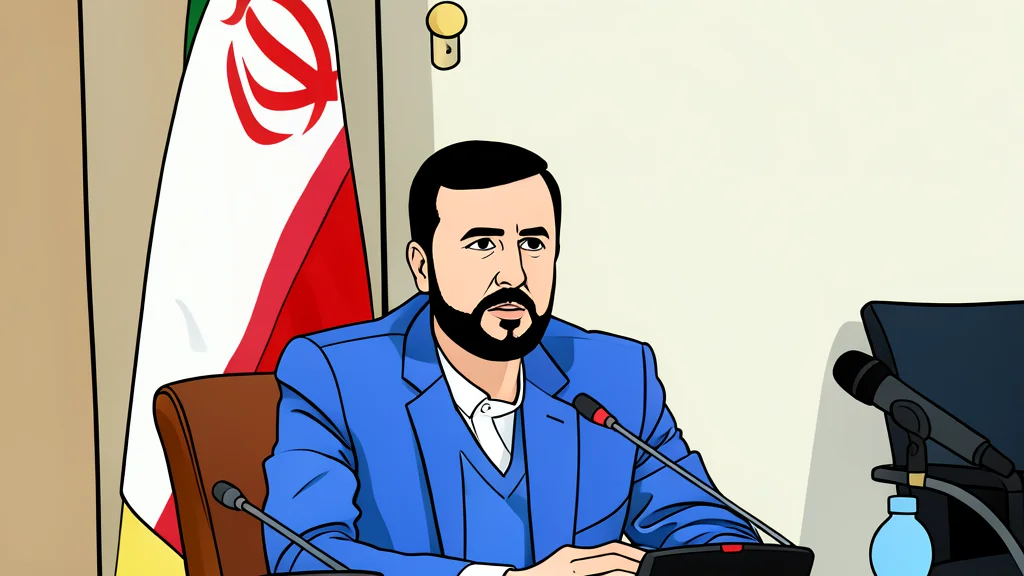
Iranian officials have formally accused the leadership of the International Atomic Energy Agency of facilitating the justification for recent military operations against the country. According to reports from the GN auto geopolitics/middle-east: Iran nuclear desk, Foreign Ministry spokesman Esmaeil Baqaei stated that the IAEA director general’s annual reports created a narrative that Washington and Tel Aviv later exploited to legitimize their actions.
Baqaei emphasized that Iran views its nuclear program as exclusively peaceful and has long maintained that its activities are transparent. He characterized the agency's recent assessments as ambiguous and inaccurate, arguing that they undermined the credibility of the UN body while providing a diplomatic pretext for what Tehran describes as unlawful aggression.
Allegations of Prohibited Weaponry
The accusations were made during a press conference in Lamerd, a southern city reportedly targeted by US forces. Baqaei described the strike as a war crime, citing Iranian findings that prohibited cluster munitions were deployed. He detailed that these weapons released significant amounts of fragmentation, causing widespread damage to the urban environment.
Furthermore, the Iranian Health Ministry has claimed to have identified chemical agents mixed into the ordnance to increase lethality. Tehran asserts that US acknowledgment of testing a new missile type in the area, combined with local forensic evidence, contradicts official American explanations and points to deliberate targeting of civilian infrastructure.
Civilian Toll and Diplomatic Context
Baqaei highlighted the impact on local communities, noting that the strikes hit a volleyball stadium, a school, and a blood transfusion center within a short timeframe. He cited the deaths of teenagers and young children as symbols of the civilian cost of the conflict, urging the international community to support calls for an independent investigation into the incident.
These remarks coincide with the 70th General Conference of the IAEA, where Iranian senior officials are present in Vienna. The timing suggests an effort by Tehran to place the diplomatic and legal dimensions of the recent hostilities at the center of the global nuclear dialogue, challenging the traditional framework of non-proliferation oversight.