Iran Nuclear Stalemate and the Limits of Military Force
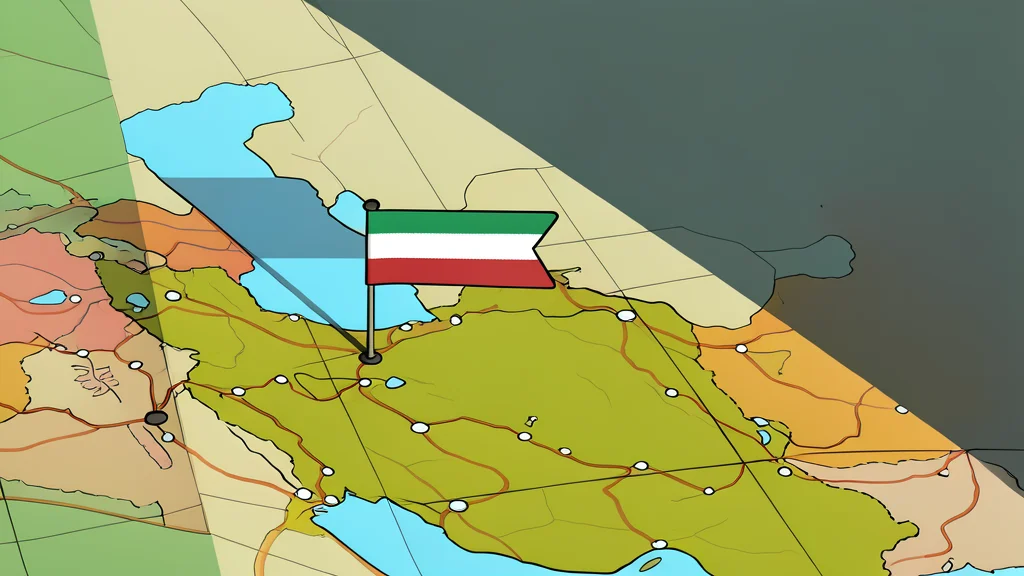
Historical precedents suggest that military strikes cannot permanently dismantle a determined state's nuclear program, raising difficult questions about the future of regional security.
The prospect of renewed negotiations between the United States and Iran, or their potential collapse, has reignited a central debate in Middle Eastern geopolitics. According to recent analysis from GN auto geopolitics/middle-east: Iran nuclear, the fundamental question remains whether any form of military coercion can permanently end Tehran’s pursuit of nuclear capability. As diplomatic channels face uncertainty, the focus shifts to the historical efficacy of force as a tool for non-proliferation, a topic that demands careful examination rather than immediate assumption.
A review of historical conflicts indicates that no practical military method exists to durably stop a technologically capable state from pursuing nuclear weapons without resorting to full-scale occupation and regime change. This conclusion is drawn from the Allied efforts during World War II and the subsequent Cold War dynamics. The implication is that if conventional means fail to deter a determined adversary, the security landscape could shift toward more extreme, and currently hypothetical, scenarios involving the use of undeclared nuclear arsenals for national survival.
Historical Lessons from Failed Strikes
The Manhattan Project provides the earliest case study in preventing nuclear proliferation. Allied forces conducted intensive operations to sabotage German nuclear infrastructure, including attacks on heavy-water facilities in Norway and uranium-processing plants. However, these strikes did not solely determine the outcome. Germany’s atomic project ultimately failed due to scientific misjudgments and the total military defeat of the Third Reich. This suggests that military action complements, but does not replace, the broader strategic collapse of a regime’s capacity to develop weapons.
In the post-war era, the United States rejected preventive strikes against the Soviet Union, China, and North Korea. Political leaders concluded that even limited attacks carried an unacceptable risk of escalating into large-scale conventional or nuclear war. Instead, the international community relied on deterrence, accepting that stable nuclear balances could preserve peace even if proliferation was not entirely prevented. This approach stands in contrast to the Middle East, where confidence in deterrence has historically been lower.
Regional Precedents for Preventive Action
The Middle East has served as the primary arena for preventive military action against nuclear programs. Israel’s destruction of Iraq’s Osirak reactor in 1981 and the 2007 strike on Syria’s al-Kibar reactor are frequently cited examples. These operations demonstrate that military force can eliminate specific facilities under certain circumstances. However, these actions were targeted strikes against specific sites, not comprehensive eliminations of a state’s entire nuclear capability, which remains a distinct and more challenging objective.
Future Scenarios and Strategic Uncertainty
The current strategic environment is characterized by increasing diplomatic isolation and uncertainty regarding enduring American support for regional allies. If conventional deterrence is perceived as implausible, the discussion turns to the gravest imaginable circumstances. The analysis suggests that a durable negotiated resolution is the most responsible path forward, as military options alone cannot guarantee the permanent cessation of nuclear ambitions without extreme, high-cost consequences.
Observers should watch for shifts in diplomatic engagement between Washington and Tehran, as well as any indications of accelerated enrichment activities. The next critical development will likely involve whether international actors can sustain a framework that balances security guarantees with strict non-proliferation requirements, avoiding the escalation dynamics that have historically complicated regional stability.