Iran Proposes Bill to Criminalize Foreign Contact
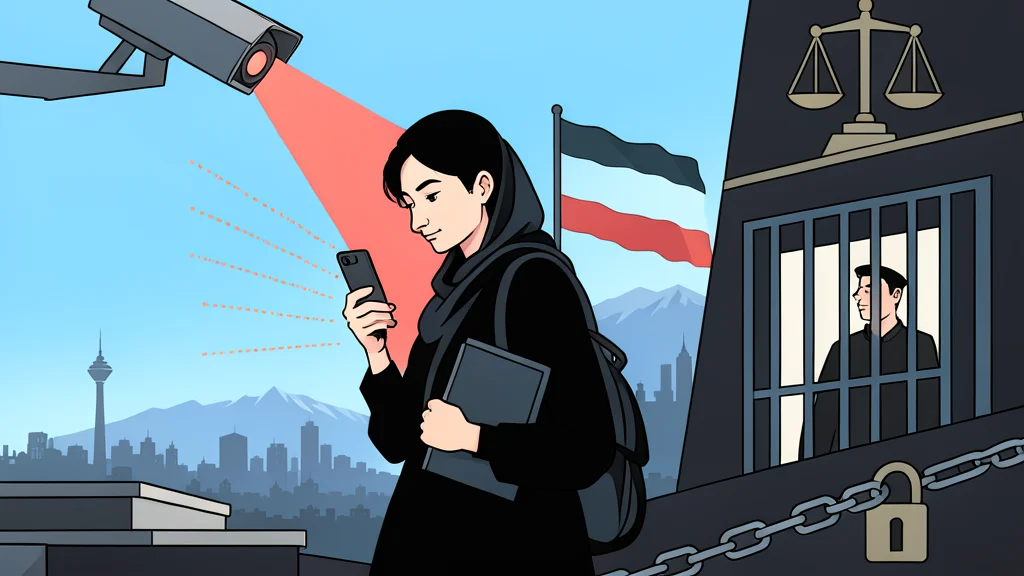
New legislation in Iran aims to grant security agencies broad powers to monitor and punish citizens for communicating with the outside world, raising concerns about severe isolation.
Iranian lawmakers have advanced a draft law that would significantly restrict citizens' ability to maintain relationships with foreign entities. According to the Center for Human Rights in Iran, the proposed legislation grants intelligence services extensive discretion to define and penalize interactions deemed threatening to national security, effectively turning ordinary academic and professional exchanges into potential criminal offenses.
The bill, which received preliminary approval from parliament earlier this month, introduces penalties for vague infractions that can include decades of imprisonment. Critics argue that the broad language allows authorities to determine after the fact what constitutes a crime, creating an environment of uncertainty for journalists, artists, and scholars who rely on international cooperation.
Broad Surveillance Powers Defined
The core of the proposal centers on expanding the mandate of the security establishment to monitor communications and activities that involve any foreign element. The text prohibits a wide range of actions, from financial transactions and academic research to cultural exchanges and media interactions, if they are perceived to violate national unity or Islamic principles. This approach shifts the burden of proof onto citizens, who must justify their connections to the outside world to state authorities.
Bahar Ghandehari, director of advocacy at the Center for Human Rights in Iran, described the legislation as an extraordinary intrusion into private life. She noted that the vague definitions allow security agencies to exercise enormous discretion, laying the groundwork for arbitrary prosecutions. The bill effectively institutionalizes the notion that engaging with the global community requires state permission, fundamentally altering the legal landscape for civil society.
Severe Penalties for Civic Engagement
Violations of the proposed law carry some of the harshest penalties in recent Iranian legal history. Individuals found guilty of unauthorized foreign contact face imprisonment of up to thirty years, substantial fines, and the confiscation of assets. Furthermore, the legislation permits the dissolution of non-governmental organizations, unions, and political parties if they are deemed to have engaged in prohibited activities. Such measures threaten to dismantle the infrastructure of independent civic life within the country.
The scope of the law extends to various professional fields, including journalism, academia, and the arts. Activities such as participating in conferences, securing scholarships, or producing film and theater are explicitly listed as actions that may require reporting to security services. This comprehensive list suggests an intent to control not just political dissent, but the broader flow of ideas and cultural exchange, potentially isolating Iranian society from global developments.
International Reaction and Next Steps
In response to the draft, the Center for Human Rights in Iran has urged international human rights organizations and academic bodies to condemn the legislation. The organization echoes calls from the United Nations for the Iranian authorities to withdraw the bill immediately. Advocates argue that public pressure is essential to highlight the potential impact on freedom of expression and association, particularly for those working in sensitive fields like medicine and science.
Although the general outline of the "Countering Foreign Infiltration" bill was approved by a significant parliamentary margin, the final details of its thirty-three provisions are still subject to review. Observers will watch closely for how the specific definitions are finalized, as the exact wording will determine the extent of the state's reach into private and professional life. The coming months are critical for understanding whether this draft will become law, potentially marking a new era of restricted connectivity for Iranians.