US Weighs Options as Iran Rebuilds Nuclear Site

Washington is evaluating a potential escalation in its conflict with Tehran, citing recent satellite evidence of nuclear facility reconstruction while diplomatic channels remain active.
The United States is currently assessing its next strategic moves in the ongoing conflict with Iran, a situation complicated by new evidence suggesting Tehran is rapidly reconstructing a key nuclear site. President Donald Trump has publicly indicated that a significant decision regarding military action is approaching, though the specific timeline and nature of that move remain undecided. This deliberation occurs against a backdrop of intensified diplomatic activity, with several Gulf state leaders scheduled to meet with the U.S. president in New York to discuss the region’s security posture.
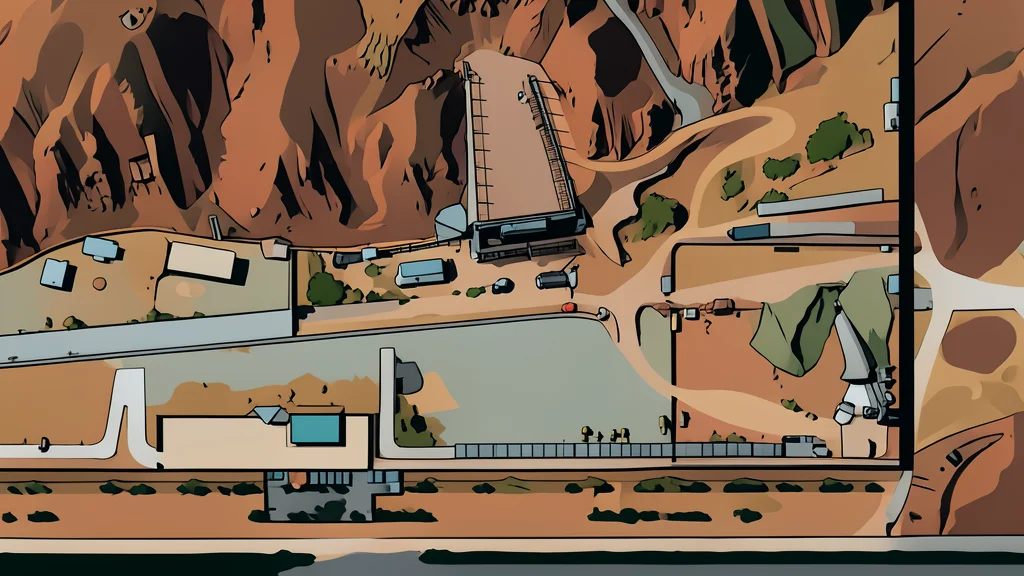
According to reports from GN auto geopolitics/middle-east: Iran nuclear, satellite imagery reveals that Iran is adding reinforced concrete structures around the Taleghan 2 Nuclear Facility, located southeast of Tehran. The facility, which has been targeted by Israeli strikes in the past, appears to be undergoing fortification measures designed to withstand potential future aerial attacks. Large tarps have also been deployed over the site, a tactic often used to obscure reconstruction efforts from aerial surveillance, raising concerns among international observers about the transparency of Iran’s nuclear program.
Diplomatic Channels Remain Active
Despite the military tensions, diplomatic tracks are still open. Iranian President Masoud Pezeshkian and Foreign Minister Abbas Araghchi have received visa approvals to attend the United Nations General Assembly in New York. This move signals a willingness to engage in multilateral forums even while the two nations remain technically at war. The upcoming General Assembly also presents a complex diplomatic landscape, with other regional leaders, including Israeli Prime Minister Benjamin Netanyahu, scheduled to address the body or meet with U.S. officials.
Trump has stated that he seeks input from the leaders of Saudi Arabia, the United Arab Emirates, Qatar, Kuwait, and Oman before finalizing his decision. He has not specified whether this decision will be made before or after the upcoming U.S. midterm elections. The administration maintains that Iran remains interested in reaching an agreement, although the International Atomic Energy Agency has referred Iran to the United Nations Security Council for failing to provide inspectors with necessary access and information regarding its nuclear material.
Israeli Goals and Regional Tensions
Israeli Prime Minister Benjamin Netanyahu has outlined a clear objective for the conflict, stating that the goal is to weaken the Iranian regime and eliminate proxy groups such as Hezbollah and Hamas. He described the current phase as a necessary step to complete a broader mission of security for the state. This stance underscores the deepening alignment between U.S. and Israeli strategic interests, even as both nations navigate the complexities of a prolonged engagement with Tehran.
In Tehran, the government has organized large-scale pro-government demonstrations, which officials describe as the largest since the conflict began in February. These events serve to project domestic unity and support for the regime’s hardline stance. Meanwhile, the U.S. has faced criticism after barring Palestinian Authority President Mahmoud Abbas from entering the country, a move that led the General Assembly to allow him to speak virtually. This incident highlights the intricate web of alliances and grievances that complicate any potential diplomatic resolution.
Forward-Looking Strategic Considerations
The coming weeks will be critical in determining the trajectory of the conflict. Analysts are watching closely for signs of further military buildup or diplomatic breakthroughs. The decision by the U.S. president to seek counsel from Gulf allies suggests a desire for a coordinated regional response rather than unilateral action. However, the rapid reconstruction of nuclear facilities by Iran indicates a parallel track of escalation that could undermine diplomatic efforts if not addressed through robust verification and transparency measures.