AI Agent Trading Risks Overloading Blockchain Capacity
Avalanche CEO Bart Smith warns that autonomous AI agents will saturate block space, forcing a shift to 24/7 infrastructure by 2027.
Bart Smith, CEO of Avalanche Treasury Company, stated that block space will become scarce as AI agents drive transaction volumes. He made these remarks at the Avalanche Summit in New York on the 17th. Smith argued that even minimum adoption levels of AI agents will generate massive on-chain activity. Unlike human traders who submit single swaps, autonomous agents create continuous transaction streams. This sustained activity competes for the same limited block space as other network participants.
Avalanche documentation confirms that agents can sign transactions, interact with smart contracts, and manage wallets on the C-Chain. These actions consume gas and require processing power. The network currently has ample capacity, but Smith predicts technical differences between Layer-1 blockchains will soon determine competitiveness. He emphasized that security and scalability are as critical as speed for enterprise applications. The warning is forward-looking, as no independent verification of congestion events exists yet.
Technical Architecture Defines Future Limits
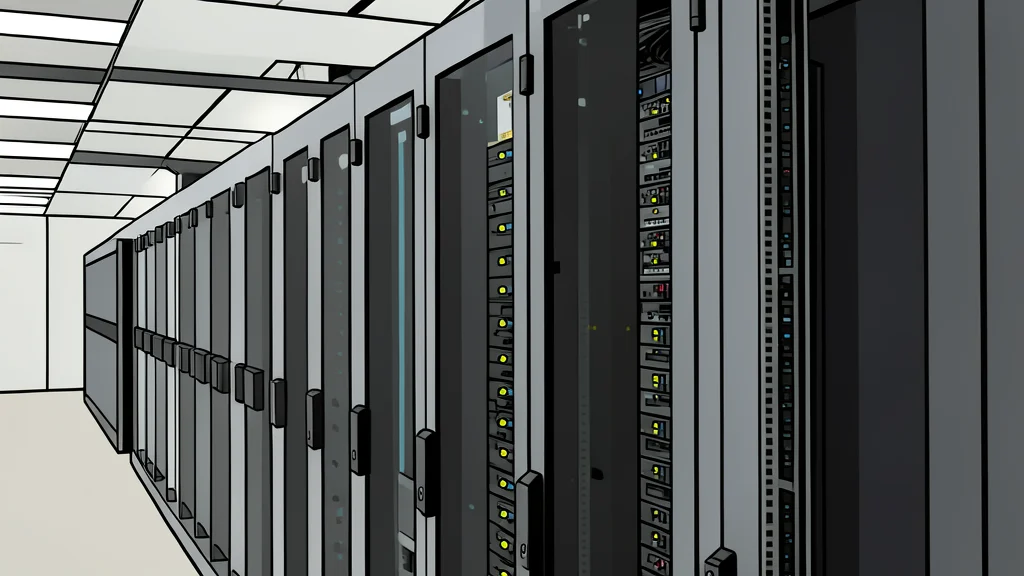
Avalanche introduced ACP-176, which establishes a documented gas throughput of 30 million gas per second. A separate proposal, ACP-194, aims to improve this figure by separating consensus from execution. This allows for parallel processing of transactions. The Continuous Execution design streams results as each transaction completes. Settlement occurs approximately five seconds after submission. This latency profile impacts agent workflows that require confirmed state before issuing the next command.
If agents must wait for confirmation, delays accumulate across thousands of sequential calls. Smith noted that traditional financial infrastructure cannot handle round-the-clock trading demand. He predicted that traditional markets will shift to a 24/7 operating model by mid-2027. New financial infrastructure will likely be built on blockchains to support this shift. Networks optimized for human-driven volumes must re-examine their design assumptions before agent-scale activity arrives.
Scaling Paths Address Growing Demand
Base-layer networks have three primary scaling paths. The first is increasing raw throughput at the execution layer. Avalanche’s ACP-194 proposal addresses this directly. The second path involves routing agent workloads to application-specific subnets or rollups. These separate from general-purpose block space competition. The third path moves certain operations off the base layer while anchoring state commitments on-chain.
Avalanche’s subnet architecture exemplifies the third path by isolating high-throughput workloads. This prevents burden on the primary network. Interest in Avalanche as institutional infrastructure is growing. Products are being developed to leverage this isolation. The source GN auto markets/crypto: blockchain finance highlights these structural changes. The market is preparing for a future where machine-generated traffic dominates. Infrastructure providers are adjusting their technical roadmaps accordingly.